Arquitectura De Teotihuacan
Teotihuacan, one of the most iconic archaeological sites in Mesoamerica, is renowned for its monumental architecture, intricate urban planning, and cultural significance. The architecture of Teotihuacan reflects the sophistication and ingenuity of a civilization that thrived between the first and seventh centuries CE. Visitors to the site are immediately struck by the grand scale of its pyramids, the alignment of its avenues, and the complexity of its residential compounds. The architectural style not only served functional and ceremonial purposes but also symbolized the social hierarchy, religious beliefs, and cosmological understanding of its builders. Studying Teotihuacan’s architecture provides valuable insights into the urban planning, artistic expression, and engineering prowess of one of ancient Mesoamerica’s most influential cities.
Urban Planning and Layout
The urban layout of Teotihuacan is one of its most striking features, demonstrating careful planning and organization. The city is arranged along a central axis known as the Avenue of the Dead, which stretches over two kilometers and is flanked by monumental structures, residential compounds, and smaller temples. The alignment of the avenue and the placement of key buildings suggest that urban planning was influenced by cosmological beliefs, with structures oriented to celestial events and cardinal directions. This integration of astronomy and urban design indicates a society deeply aware of its environment and the symbolic significance of space.
The Avenue of the Dead
The Avenue of the Dead is the main thoroughfare of Teotihuacan and serves as a central organizing principle for the city. Lined with platforms, pyramids, and administrative buildings, the avenue connects major ceremonial and residential areas. The width and length of the avenue reflect the importance of public and ritual activities, allowing processions, gatherings, and religious ceremonies to take place. Its centrality also highlights the hierarchical nature of the city, as the largest and most elaborate structures were positioned near the main axis, signaling the power and authority of religious and political elites.
Pyramidal Structures
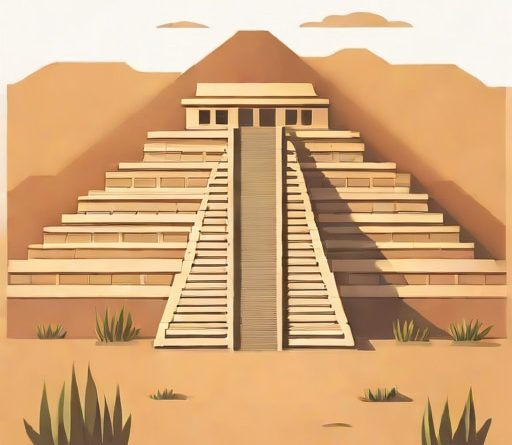
Teotihuacan is perhaps best known for its pyramids, which are among the largest in the ancient world. The Pyramid of the Sun and the Pyramid of the Moon are the most famous examples, each serving religious, ceremonial, and possibly astronomical functions. These pyramids were constructed using layers of stone and adobe, with platforms and terraces that allowed for processional movement and ritual activity.
Pyramid of the Sun
The Pyramid of the Sun is the largest structure in Teotihuacan and dominates the city’s skyline. It rises approximately 65 meters above the surrounding landscape and is aligned with the Avenue of the Dead and certain astronomical events, such as the setting sun during specific times of the year. The scale and precision of its construction demonstrate advanced engineering skills and a deep understanding of geometry. Its terraces and staircases facilitated ritual ceremonies, indicating that the pyramid served both as a religious center and a symbol of the city’s power.
Pyramid of the Moon
The Pyramid of the Moon, located at the northern end of the Avenue of the Dead, is slightly smaller but equally significant. It overlooks the Plaza of the Moon, a ceremonial space used for public rituals. Excavations have revealed offerings, including ceramics, figurines, and human remains, suggesting that the pyramid was central to religious practices and may have served as a site for sacrificial ceremonies. Its alignment with nearby mountains and celestial markers further emphasizes the integration of architecture and cosmology in Teotihuacan’s design.
Residential Compounds
Beyond the monumental pyramids, Teotihuacan’s architecture includes numerous residential compounds that housed the city’s population. These compounds were typically organized around central courtyards and included multiple rooms, suggesting extended family or communal living arrangements. Walls were often decorated with murals depicting religious and mythological scenes, reflecting both artistic skill and cultural identity.
Apartment Compounds
The apartment compounds of Teotihuacan were multi-family structures that provided housing for artisans, laborers, and elites alike. The compounds were constructed using stone and adobe, with uniform layouts that facilitated community interaction and shared resources. Some compounds contained workshops and storage areas, indicating that domestic and economic activities were integrated. The density and organization of these compounds illustrate the city’s sophisticated approach to urban planning and social structure.
Religious and Ceremonial Architecture
Religious architecture played a central role in Teotihuacan, with temples, plazas, and ceremonial platforms designed to accommodate worship and ritual practices. The city’s architecture reflects a worldview in which human activity, religious observance, and cosmic order were interconnected. Temples and pyramids often incorporated symbolic elements, such as staircases representing the ascent to the heavens or plazas oriented to celestial events.
Temple of the Feathered Serpent
The Temple of the Feathered Serpent, also known as the Temple of Quetzalcoatl, is a prominent ceremonial structure adorned with intricate stone carvings and serpent motifs. The temple served as both a religious center and a site for elite gatherings. Its elaborate decoration demonstrates the importance of symbolism and artistic expression in Teotihuacan’s architectural design. The structure’s alignment and design suggest that it may have been used for astronomical observations and ritual events related to the agricultural calendar.
Architectural Techniques and Materials
Teotihuacan’s architecture showcases advanced construction techniques and the use of locally available materials. Builders employed stone, adobe, and volcanic rock to create durable structures capable of withstanding environmental challenges. Construction methods included layering stones, creating terraced platforms, and reinforcing walls with compacted earth. The precision of these techniques reflects skilled craftsmanship and a sophisticated understanding of engineering principles.
Mural Art and Decorative Elements
Decorative elements, including murals and carvings, were integral to Teotihuacan’s architecture. Murals often depicted religious themes, mythological narratives, and daily life, providing insight into the cultural and spiritual values of the society. Carvings on pyramids and temples served both aesthetic and symbolic purposes, reinforcing the connection between architecture, religion, and political authority.
Legacy and Influence
The architectural style of Teotihuacan influenced subsequent Mesoamerican civilizations, including the Toltecs and Aztecs. Elements such as pyramid construction, urban planning, and symbolic decoration were adopted and adapted in later cities, demonstrating the enduring impact of Teotihuacan’s design principles. Modern architects and historians continue to study Teotihuacan to understand its innovative techniques, spatial organization, and cultural significance.
Key Lessons from Teotihuacan’s Architecture
- Integration of urban planning with religious and cosmological principles.
- Use of durable construction techniques and locally sourced materials.
- Incorporation of symbolic elements in monumental and residential structures.
- Emphasis on communal living and efficient organization of residential compounds.
- Influence on subsequent Mesoamerican civilizations and architectural traditions.
The architecture of Teotihuacan stands as a testament to the ingenuity, vision, and cultural sophistication of its builders. From monumental pyramids to residential compounds, the city demonstrates an advanced understanding of urban planning, engineering, and symbolic expression. Teotihuacan’s design integrated functional, religious, and cosmological considerations, creating a city that was both practical and spiritually meaningful. Studying the architectural achievements of Teotihuacan provides valuable insights into the social organization, artistic expression, and technological capabilities of ancient Mesoamerican societies. Its legacy continues to inspire scholars, architects, and visitors who seek to understand the remarkable accomplishments of one of the world’s most influential ancient civilizations.