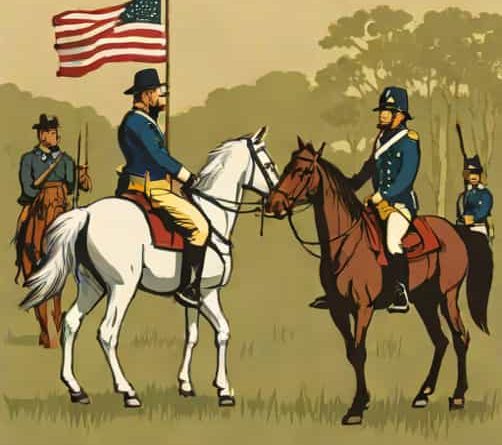
Battle Of Chancellorsville Date
The Battle of Chancellorsville is remembered as one of the most remarkable and complex engagements of the American Civil War. Fought in the dense forests of Virginia, this battle is best known for the brilliant tactics of Confederate General Robert E. Lee and the tragic loss of one of his most trusted commanders, General Thomas Stonewall Jackson. The date of the Battle of Chancellorsville marks a significant turning point in the war, symbolizing both Confederate triumph and devastating loss. To understand its importance, one must look closely at when the battle occurred, what led to it, and how its consequences shaped the course of history.
The Date and Duration of the Battle of Chancellorsville
The Battle of Chancellorsville took place fromApril 30 to May 6, 1863, in Spotsylvania County, Virginia. These dates represent one of the most intense weeks of the Civil War, where strategic decisions, bold movements, and unexpected outcomes defined the battle. Although fighting continued for several days, the most significant clashes occurred between May 1 and May 3, 1863. During this short but critical period, the Confederate Army of Northern Virginia achieved one of its greatest victories despite being vastly outnumbered.
The exact dates of the battle are important because they highlight the context of the war at that moment. By the spring of 1863, the Union Army sought to regain momentum after earlier setbacks. Under the command of Major General Joseph Hooker, the Union launched a bold plan to flank the Confederate army. However, the decisions made between April 30 and May 6 would demonstrate how unpredictable and brutal warfare could be in the Civil War era.
Background and Build-Up to the Battle
Before the Battle of Chancellorsville began, the Union Army of the Potomac was reorganized under General Hooker after its defeat at Fredericksburg in December 1862. Hooker had spent months rebuilding morale and planning a major offensive to crush Lee’s forces once and for all. His strategy was well-conceived he would move his army across the Rappahannock and Rapidan rivers to strike at Lee’s rear, forcing the Confederates into a defensive position.
On April 27, 1863, Hooker began moving his troops, initiating what would become the opening maneuver of the Battle of Chancellorsville. By April 30, the Union army over 130,000 strong had crossed the rivers and concentrated near a small crossroads known as Chancellorsville. Meanwhile, General Robert E. Lee commanded a much smaller force of around 60,000 men, but he possessed a deep understanding of the terrain and a willingness to take extraordinary risks.
The Battle Begins Early Clashes and Confederate Strategy
The fighting began in earnest onMay 1, 1863. Instead of retreating, as Hooker expected, Lee made the bold decision to divide his army in the face of a superior enemy. This maneuver would become one of the most daring tactics of the Civil War. Lee sent General Thomas Stonewall Jackson with a large portion of the Confederate army on a flanking march to surprise the Union right flank. The dense wilderness surrounding Chancellorsville helped conceal this risky movement.
OnMay 2, 1863, Jackson launched his famous surprise attack late in the afternoon. His corps emerged from the woods and struck the Union XI Corps with devastating effect. The surprise was total, and Union forces were thrown into chaos. This day became one of the most significant in the entire campaign, as Jackson’s maneuver broke the Union’s confidence and set the stage for Confederate victory.
Tragedy in the Midst of Victory
Despite the Confederate success, the night of May 2 brought one of the most tragic moments of the war. After his successful attack, General Stonewall Jackson rode forward with his staff to scout enemy positions. In the confusion of darkness, Confederate pickets mistook them for Union cavalry and opened fire. Jackson was struck by friendly fire, resulting in severe injuries that led to the amputation of his left arm. He succumbed to pneumonia eight days later on May 10, 1863. His death marked a devastating loss for the Confederacy and cast a shadow over the triumph at Chancellorsville.
The Climax of the Battle
The heaviest fighting occurred onMay 3, 1863, when Lee and his remaining forces pressed the attack on Hooker’s army. Confederate troops stormed the Union positions at Chancellorsville, forcing Hooker’s men to withdraw toward the Rappahannock River. Though the Union army held superior numbers, confusion and poor coordination undermined their efforts. Hooker himself was briefly knocked unconscious when an artillery shell struck the wall of the house he was using as headquarters.
By May 4, Hooker ordered a retreat, and by May 6, the Battle of Chancellorsville officially ended. Lee had achieved a stunning victory against overwhelming odds. However, the cost was immense the Confederates suffered over 13,000 casualties, while Union losses were more than 17,000. Despite the victory, Lee’s army was weakened and would soon face the challenge of the Gettysburg Campaign just two months later.
Why the Date of the Battle Matters
The dates of April 30 to May 6, 1863, are more than just a historical record they represent a moment of transformation in the Civil War. The Battle of Chancellorsville showcased both the brilliance and the limitations of Confederate strategy. Lee’s victory proved that audacity and tactical genius could overcome numerical disadvantage, but it also exposed the fragility of his army. The death of Stonewall Jackson during this same period had a long-lasting impact, depriving Lee of his most effective subordinate just as the war was entering its most critical phase.
For the Union, these dates marked another painful lesson in leadership and execution. General Hooker’s hesitation and loss of initiative turned what could have been a decisive strike into a humiliating defeat. The events of those few days forced the Union army to rethink its approach, setting the stage for future leadership changes and strategic realignments.
Aftermath and Historical Significance
In the weeks following the Battle of Chancellorsville, both sides reassessed their positions. For the Confederacy, the victory emboldened Lee to launch his second invasion of the North, leading directly to the Battle of Gettysburg in July 1863. Many historians view Chancellorsville as Lee’s greatest tactical success but also as the high point of Confederate fortunes in the war. The dates of this battle, therefore, symbolize both peak achievement and the beginning of decline.
For the Union, the loss reinforced the need for stronger, more decisive leadership. President Abraham Lincoln, though disappointed, continued to search for the general who could finally defeat Lee. Eventually, that leader would emerge in the form of Ulysses S. Grant, whose strategies in 1864 and 1865 would bring the war to its conclusion.
Key Dates to Remember
- April 27, 1863Union army begins crossing the Rappahannock River.
- April 30, 1863Main Union force concentrates near Chancellorsville.
- May 1, 1863Battle officially begins with initial clashes.
- May 2, 1863Stonewall Jackson’s famous flank attack.
- May 3, 1863Intense fighting as Lee presses the advantage.
- May 6, 1863Union army retreats across the river, ending the battle.
Lessons from the Battle of Chancellorsville
The Battle of Chancellorsville teaches several enduring lessons about leadership, strategy, and human cost. It reminds historians and military scholars alike that victory often comes with great sacrifice. The dates of the battle capture the delicate balance between boldness and recklessness between tactical brilliance and irreversible loss.
For modern readers, the story of Chancellorsville underscores the unpredictability of war. Even the best-laid plans can crumble, and moments of triumph can be shadowed by tragedy. As one of the most studied battles of the Civil War, it continues to offer insight into the minds of military leaders and the enduring complexity of human conflict.
The Battle of Chancellorsville, fought from April 30 to May 6, 1863, remains one of the defining moments of the American Civil War. Its date stands as a symbol of both Confederate brilliance and devastating loss. Within that single week, General Robert E. Lee secured one of his most famous victories, while the South mourned the death of Stonewall Jackson. The echoes of those days continue to resonate through American history, reminding us that courage, strategy, and fate often intertwine in the most unexpected ways.