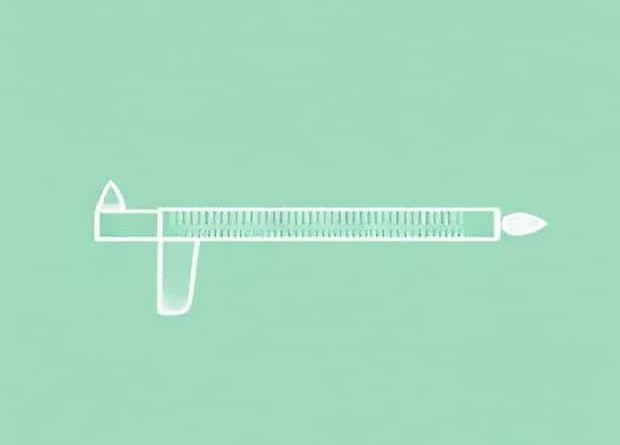
Calculation Of Vernier Caliper
Measuring instruments have always played an important role in science, engineering, and everyday applications. Among these tools, the vernier caliper stands out as one of the most precise devices for taking measurements of length, depth, and diameter. To use this tool effectively, one must understand the calculation of vernier caliper readings, which involves interpreting both the main scale and the vernier scale. This process may seem complex at first, but with practice, the method becomes straightforward and highly reliable for achieving accuracy in measurement.
Understanding the Vernier Caliper
A vernier caliper is a precision instrument designed to measure internal dimensions, external dimensions, and depths with high accuracy. It consists of two main scales the main scale and the vernier scale. The main scale is marked like a ruler in millimeters or inches, while the vernier scale provides finer subdivisions, allowing measurements down to fractions of a millimeter or hundredths of an inch.
The tool is widely used in mechanical workshops, laboratories, and classrooms because it bridges the gap between ordinary rulers and more advanced instruments like micrometers. To perform accurate measurements, it is essential to master the calculation of vernier caliper readings.
Parts of a Vernier Caliper
Before learning how to calculate readings, it helps to understand the key parts of the vernier caliper
- Main scaleThe fixed scale that provides the base reading, usually marked in millimeters or inches.
- Vernier scaleA smaller, movable scale that provides precise subdivisions of the main scale.
- External jawsUsed to measure the outside dimensions of objects.
- Internal jawsDesigned for measuring the inside diameter of hollow objects.
- Depth rodA slender rod for measuring depths of holes or cavities.
- Thumb screwHelps in locking the position to prevent errors while reading measurements.
Each part contributes to the accuracy and versatility of the instrument.
Principle of Vernier Caliper
The principle behind a vernier caliper is the difference between the value of one main scale division and one vernier scale division. By aligning these scales, the vernier caliper allows readings to be made with much higher accuracy than a simple ruler. The least count of the instrument, which is the smallest measurement it can accurately show, depends on the design of the scales.
For example, if 10 divisions on the vernier scale equal 9 millimeters on the main scale, the difference between one main scale division and one vernier division is 0.1 millimeter. This becomes the least count of the instrument.
Steps in the Calculation of Vernier Caliper
The calculation of vernier caliper readings involves a few systematic steps
- Step 1Read the measurement on the main scale just before the zero mark of the vernier scale. This is known as the main scale reading.
- Step 2Check which division on the vernier scale exactly coincides with a division on the main scale. This gives the vernier scale reading.
- Step 3Multiply the vernier scale reading by the least count of the instrument.
- Step 4Add the main scale reading and the vernier scale contribution to obtain the final measurement.
This method ensures that measurements are precise and reliable.
Example of Vernier Caliper Calculation
Consider a vernier caliper with a least count of 0.1 millimeter. Suppose the main scale reading just before the zero of the vernier scale is 25 millimeters. Next, the 7th division of the vernier scale aligns with the main scale.
The calculation is as follows
- Main scale reading = 25 mm
- Vernier scale reading = 7 Ã 0.1 mm = 0.7 mm
- Total reading = 25 mm + 0.7 mm = 25.7 mm
This shows how the vernier caliper allows us to measure up to a tenth of a millimeter with ease.
Least Count in Vernier Calipers
The least count is the smallest measurement that can be taken accurately with the vernier caliper. It is calculated by the formula
Least Count = Value of one main scale division – Value of one vernier scale division
For instance, if one main scale division equals 1 millimeter and 10 vernier scale divisions equal 9 millimeters, then one vernier scale division equals 0.9 millimeters. The least count becomes 1 – 0.9 = 0.1 millimeter. This precision is why vernier calipers are trusted for high-accuracy work.
Zero Error and Its Calculation
One important factor in the calculation of vernier caliper readings is zero error. If the zero mark of the vernier scale does not align with the zero of the main scale when the jaws are fully closed, the instrument has a zero error. This error can be either positive or negative.
- Positive zero errorWhen the zero of the vernier scale is ahead of the main scale zero.
- Negative zero errorWhen the zero of the vernier scale is behind the main scale zero.
To correct for zero error, the observed reading must be adjusted accordingly. This ensures accurate final measurements.
Different Uses of Vernier Caliper
The calculation of vernier caliper readings is applied in different ways depending on what is being measured
- External measurementsMeasuring the outside dimensions of rods, spheres, or blocks using external jaws.
- Internal measurementsDetermining the diameter of holes or hollow cylinders using internal jaws.
- Depth measurementsMeasuring the depth of cavities or holes using the depth rod.
Each use follows the same calculation principle but applies to different dimensions of an object.
Advantages of Using a Vernier Caliper
Some advantages of vernier calipers include
- High precision with a least count as small as 0.1 mm or even 0.02 mm in fine instruments.
- Ability to measure different types of dimensions including depth, internal, and external.
- Durability and long-term accuracy with proper care.
- Affordable compared to digital instruments while still offering high accuracy.
These benefits explain why vernier calipers remain popular in various fields of science and engineering.
Common Mistakes in Calculation
While calculating vernier caliper readings, beginners may make some errors
- Misreading the main scale by not checking the last full division before the zero mark.
- Selecting the wrong coinciding line on the vernier scale.
- Forgetting to account for zero error.
- Applying too much pressure with the jaws, which may alter the reading.
Avoiding these mistakes ensures accurate and consistent results.
Educational Importance
In schools and technical institutes, learning how to calculate vernier caliper readings is an important exercise. It teaches students about precision, measurement, and the concept of least count. These skills are fundamental for future engineers, scientists, and technicians who will rely on accurate measurements in their careers.
Hands-on practice with the vernier caliper allows learners to appreciate the role of observation and careful calculation in scientific work.
Conclusion on the Calculation of Vernier Caliper
The calculation of vernier caliper readings is a skill that combines observation, understanding of scales, and attention to detail. By reading the main scale, identifying the coinciding vernier mark, and accounting for least count and zero error, precise measurements can be obtained. This instrument has stood the test of time as a reliable tool for measuring length, diameter, and depth with accuracy. Whether used in classrooms, workshops, or laboratories, mastering the calculation of vernier caliper readings continues to be essential for anyone working with precise dimensions in science and engineering.