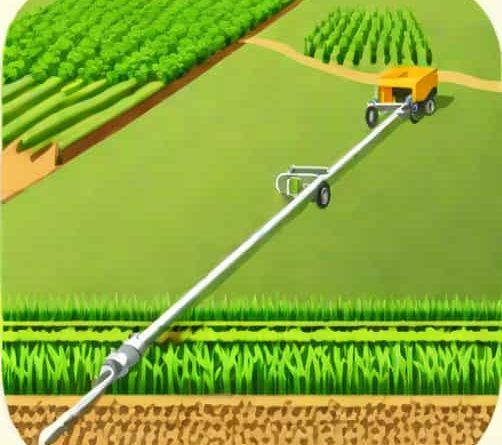
Efficiency Of Furrow Irrigation
Furrow irrigation is one of the oldest and most widely used surface irrigation methods in agriculture, particularly for row crops such as maize, cotton, and vegetables. It involves channeling water along small parallel channels, or furrows, dug between crop rows to supply moisture directly to plant roots. Understanding the efficiency of furrow irrigation is essential for optimizing water usage, improving crop yield, and reducing environmental impacts. Efficiency in this context refers to how effectively water applied through furrows meets the crop’s needs while minimizing losses due to runoff, deep percolation, or evaporation. By examining factors that influence furrow irrigation efficiency, farmers and agricultural planners can make informed decisions to maximize productivity and sustainability.
Principles of Furrow Irrigation
Furrow irrigation relies on the controlled flow of water through narrow channels along the field. Water infiltrates the soil gradually, moving from the furrow into the root zone of crops. This method is particularly suitable for crops planted in rows, as it allows for precise control over water distribution. The design and management of furrows, including their slope, length, and spacing, significantly affect water movement and distribution, directly impacting irrigation efficiency. Properly designed furrows help reduce water wastage and improve uniformity, ensuring that crops receive adequate moisture for optimal growth.
Key Components
- Furrow DesignLength, width, depth, and slope of furrows influence water flow and infiltration.
- Water SourceAvailability, pressure, and flow rate determine the amount of water applied.
- Soil TypeTexture, structure, and permeability affect water absorption and distribution.
- Crop TypeRoot depth and spacing influence water requirements and furrow spacing.
- Management PracticesTiming, frequency, and monitoring help optimize water use and prevent losses.
Factors Affecting Efficiency
The efficiency of furrow irrigation is influenced by several interrelated factors. Soil characteristics play a crucial role, as sandy soils tend to have high infiltration rates but low water-holding capacity, while clay soils may retain water longer but risk surface runoff. The slope of the field affects how quickly water moves along the furrows; too steep a slope can cause erosion and uneven distribution, whereas too gentle a slope may lead to insufficient water reaching the end of the furrow. Furrow length, spacing, and irrigation duration also impact efficiency, along with proper scheduling to match crop water demand.
Major Influencing Factors
- Soil texture and infiltration capacity
- Field slope and topography
- Furrow length, spacing, and depth
- Water application rate and duration
- Crop type and growth stage
- Weather conditions, including temperature and evapotranspiration
Measuring Furrow Irrigation Efficiency
Irrigation efficiency is commonly expressed as the ratio of water effectively used by the crop to the total water applied. In furrow irrigation, efficiency can be affected by deep percolation below the root zone, surface runoff, and evaporation losses. Measuring efficiency involves monitoring soil moisture levels, runoff volumes, and crop performance. Advanced tools, such as soil moisture sensors and remote sensing technologies, are increasingly used to optimize irrigation scheduling and improve efficiency. By accurately assessing water use, farmers can make adjustments to reduce waste and increase crop productivity.
Methods of Assessment
- Water balance method comparing input water and output through crop uptake, runoff, and percolation.
- Field measurements monitoring soil moisture at different points along the furrows.
- Remote sensing using satellite or drone imagery to assess soil and crop conditions.
- Crop response analysis observing growth, yield, and water stress indicators.
- Modeling and simulation predicting irrigation performance under varying conditions.
Advantages of Furrow Irrigation
Furrow irrigation offers several benefits when properly managed. It is relatively simple to implement and does not require sophisticated equipment, making it accessible to smallholder farmers. It allows for targeted water delivery directly to plant roots, reducing water loss compared to flooding methods. Furrow irrigation can also be adapted to different soil types and topographies, and with appropriate scheduling, it can maintain adequate soil moisture levels while conserving water. Additionally, this method can help reduce weed growth between rows, as water is concentrated in the furrows rather than over the entire field.
Key Benefits
- Cost-effective and low-tech irrigation method
- Targeted water application to crop root zones
- Adaptable to different soil types and field conditions
- Potential to conserve water and reduce runoff
- Reduction in weed growth between crop rows
Challenges and Limitations
Despite its advantages, furrow irrigation also presents challenges that can limit efficiency. Uneven water distribution is common, especially in long furrows or fields with variable slopes. Soil erosion and nutrient leaching may occur if water flows too rapidly. Labor-intensive management is often required to monitor and adjust irrigation schedules. Additionally, furrow irrigation may not be suitable for all crops, particularly those that require uniform surface moisture or are sensitive to waterlogging. Addressing these limitations involves careful design, proper field preparation, and ongoing monitoring to ensure optimal water use.
Common Challenges
- Uneven water distribution along furrows
- Soil erosion and nutrient loss
- Labor-intensive monitoring and management
- Risk of waterlogging in low-lying areas
- Unsuitability for certain crops or soil conditions
Improving Efficiency
Several strategies can enhance the efficiency of furrow irrigation. Shorter furrows and controlled flow rates help maintain uniform water distribution. Laser leveling and field contouring can optimize slope and reduce erosion. Mulching and soil amendments can improve water retention, while scheduling irrigation based on crop growth stage and soil moisture reduces wastage. Integrating modern technologies such as soil moisture sensors, drip systems in combination with furrows, and computerized irrigation management can further increase efficiency and productivity.
Strategies for Optimization
- Shortening furrow length and adjusting spacing
- Laser leveling and contouring for uniform slope
- Mulching to reduce evaporation and conserve soil moisture
- Monitoring soil moisture to schedule irrigation appropriately
- Combining furrow irrigation with modern technologies like sensors or drip systems
Furrow irrigation remains a vital method of water management in agriculture, particularly for row crops. Its efficiency depends on careful consideration of soil type, field slope, furrow design, water application, and crop requirements. While challenges such as uneven distribution and labor demands exist, proper planning, monitoring, and modern technological integration can enhance efficiency significantly. Understanding the efficiency of furrow irrigation is crucial for sustainable water use, higher crop yields, and improved agricultural productivity. By implementing best practices and optimizing irrigation management, farmers can achieve a balance between conserving water and ensuring healthy crop growth.