From What Country Is The Ardabil Carpet
The Ardabil Carpet is often mentioned in discussions about the world’s most famous and historically important carpets, yet many people still ask a simple question from what country is the Ardabil Carpet? Understanding its origin helps explain why this carpet holds such a special place in art history, museum collections, and cultural heritage studies. More than just a decorative object, the Ardabil Carpet tells a story of craftsmanship, religion, politics, and identity that goes back several centuries. Its design, materials, and inscriptions all point clearly to a specific cultural and geographic background.
The Country of Origin of the Ardabil Carpet
The Ardabil Carpet comes from Iran, a country historically known as Persia. This origin is not a matter of debate among historians and art experts. The carpet is widely recognized as a masterpiece of Persian carpet weaving, created during the Safavid period, one of the most influential eras in Iranian history. At the time of its creation in the 16th century, Persia was a center of art, architecture, and skilled craftsmanship.
The name Ardabil refers to the city of Ardabil in northwestern Iran. This city was an important religious and political center during the Safavid dynasty. The association with Ardabil is a key reason why the carpet is so closely linked to Iranian heritage and identity.
Historical Background of the Ardabil Carpet
To fully understand from what country the Ardabil Carpet comes, it is important to look at the historical context in which it was made. The carpet dates back to around 1539-1540 and was produced during the reign of Shah Tahmasp I, a powerful ruler of the Safavid Empire. This period marked a golden age for Persian arts, including miniature painting, calligraphy, and carpet weaving.
The Safavid rulers invested heavily in the arts to strengthen their political authority and promote Shi’a Islam as the state religion. Carpets were not just household items; they were symbols of power, faith, and cultural refinement. The Ardabil Carpet reflects this environment, combining technical excellence with deep spiritual meaning.
The Safavid Dynasty and Persian Identity
The Safavid dynasty played a crucial role in shaping modern Iranian identity. By unifying large parts of Iran and promoting a shared religious and cultural vision, the Safavids created conditions for artistic achievements like the Ardabil Carpet. The carpet is often seen as a visual representation of Persian aesthetics during this era.
Its production in Iran is supported by historical records, stylistic analysis, and inscriptions woven into the carpet itself. These elements leave little doubt about its Iranian origin.
The Connection to Ardabil City
Ardabil is more than just a name associated with the carpet; it is central to its story. The city of Ardabil is located in present-day Iran, near the border with Azerbaijan. It was the ancestral home of the Safavid family and an important religious center due to the shrine of Sheikh Safi al-Din Ardabili, the founder of the Safavid order.
The Ardabil Carpet was originally created for this shrine. An inscription woven into the carpet mentions Sheikh Safi and includes a date, further confirming its connection to Ardabil and Iran. This inscription is written in Persian, which strengthens the argument for its Iranian origin.
Design and Materials Reflecting Iranian Craftsmanship
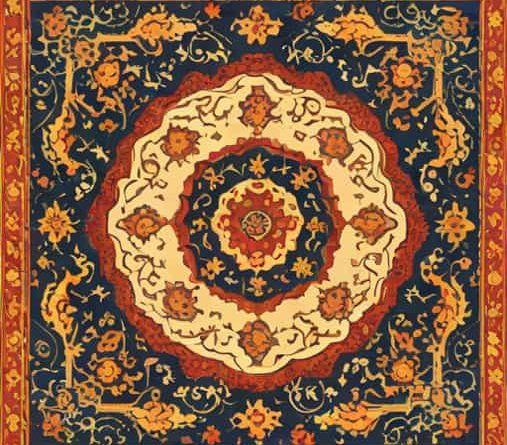
The design of the Ardabil Carpet is a clear example of Persian artistic tradition. It features a large central medallion, surrounded by intricate floral patterns and balanced geometric elements. This layout became highly influential and can be seen in many later Persian carpets.
The materials used also reflect Iranian weaving practices of the time. The carpet is made primarily of silk and fine wool, dyed with natural pigments. The knotting technique and high knot density demonstrate the advanced skills of Persian weavers working in royal workshops.
Symbolism in the Ardabil Carpet
Many scholars believe the design of the Ardabil Carpet has symbolic meaning related to spirituality and the cosmos. The central medallion is sometimes interpreted as a representation of the sun or a heavenly dome, while the surrounding patterns suggest order and harmony. These themes were common in Persian art and reflect Islamic philosophical ideas prevalent in Iran during the Safavid period.
Where the Ardabil Carpet Is Today
Although the Ardabil Carpet comes from Iran, it is no longer located there in its original form. In fact, there were originally two similar carpets made for the Ardabil shrine. Over time, they were separated and eventually sold. Today, the most famous Ardabil Carpet is housed in the Victoria and Albert Museum in London.
Another related carpet, sometimes referred to as the companion carpet, is kept in a museum in Los Angeles. Despite their current locations, both carpets are universally recognized as Iranian cultural treasures. Their presence in international museums often raises discussions about cultural heritage and historical ownership.
Why People Ask About Its Country of Origin
The question from what country is the Ardabil Carpet is common because the carpet is often discussed in global art history rather than national history. Its fame sometimes overshadows its origins, leading people to focus on where it is displayed instead of where it was created.
In addition, the region where Ardabil is located has a complex history involving various empires and cultural influences. This complexity can cause confusion, especially for those unfamiliar with Middle Eastern history. However, historical evidence consistently points to Iran as the country of origin.
The Ardabil Carpet as a Symbol of Iran
Today, the Ardabil Carpet is considered one of the greatest achievements of Iranian art. It represents the height of Persian carpet weaving and serves as a symbol of Iran’s rich cultural past. Art historians, collectors, and museum visitors often cite it as a benchmark for quality and design in carpets.
For Iran, the Ardabil Carpet is more than a historical object; it is a source of national pride. It reflects centuries of artistic knowledge passed down through generations of Iranian craftsmen. The carpet continues to inspire modern weavers and designers who study its patterns and techniques.
Conclusion on the Origin of the Ardabil Carpet
In summary, the answer to the question of from what country the Ardabil Carpet comes is clear it originates from Iran. Created in the city of Ardabil during the Safavid period, the carpet is deeply rooted in Persian history, culture, and artistic tradition. Its design, materials, inscriptions, and historical context all confirm its Iranian origin.
Understanding the country behind the Ardabil Carpet allows us to appreciate it not just as a beautiful object, but as a meaningful expression of Iran’s cultural heritage. Even though it now resides far from its original home, the Ardabil Carpet remains a lasting symbol of Persian art and craftsmanship.