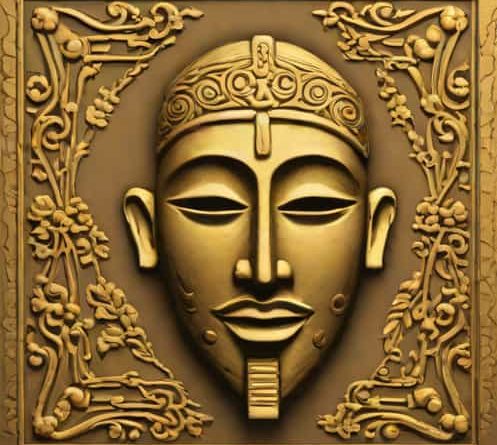
Funerary Mask Of Yuya
The funerary mask of Yuya is one of the most remarkable artifacts from ancient Egypt, providing a fascinating glimpse into the art, culture, and religious beliefs of the 18th Dynasty. Yuya, a high-ranking official and the father-in-law of Pharaoh Amenhotep III, was buried with honors reflecting his status and influence in Egyptian society. His funerary mask, crafted with extraordinary skill and attention to detail, symbolizes both his earthly prominence and his intended journey to the afterlife. The mask stands as a testament to ancient Egyptian craftsmanship, religious symbolism, and the cultural emphasis on preserving identity beyond death.
Historical Context of Yuya
Yuya lived during the reign of Amenhotep III, a period often regarded as a pinnacle of Egyptian civilization, characterized by wealth, artistic achievement, and religious devotion. As a powerful court official and priest, Yuya held significant influence, overseeing temple activities and participating in the administration of royal affairs. His familial connection to the pharaoh through his daughter, Tiye, who became the Great Royal Wife of Amenhotep III, further elevated his status. The prominence of Yuya in both the royal court and religious institutions is reflected in the opulence of his burial, including the elaborate funerary mask that adorned his mummy.
Design and Material
The funerary mask of Yuya is celebrated for its exquisite craftsmanship and use of precious materials. Unlike some masks that employed primarily gold or stone, Yuya’s mask integrates a combination of gilded wood, inlays, and pigments to create a lifelike and regal appearance. The mask was designed to capture the features of Yuya with striking realism, highlighting his facial contours, prominent nose, and expressive eyes. The careful application of gold leaf symbolizes divine illumination and eternal life, while the inlaid eyes and painted details bring the mask to life, emphasizing both the earthly likeness and the spiritual essence of the deceased.
Symbolism and Religious Significance
In ancient Egyptian culture, funerary masks served multiple purposes beyond mere decoration. They were essential in preserving the identity of the deceased and ensuring a successful transition to the afterlife. The mask of Yuya embodies several symbolic elements that reflect Egyptian beliefs about death and immortality
- Preservation of IdentityThe lifelike features of the mask helped the soul, or ka, recognize its body, a crucial element in achieving eternal life.
- Divine ProtectionGold, considered the flesh of the gods, was used to protect the deceased and signify their transformation into a divine being.
- Religious IconographyThe mask often includes depictions of protective deities, sacred symbols, and inscriptions intended to guide and safeguard the soul in the afterlife.
- Symbol of StatusThe lavish materials and intricate craftsmanship demonstrate Yuya’s high rank and the esteem in which he was held by the royal family and society.
Artistic Techniques
The artistry of Yuya’s funerary mask reflects the advanced techniques of Egyptian artisans during the 18th Dynasty. Craftsmen utilized a combination of carving, gilding, and painting to achieve both realism and symbolic resonance. The mask’s gilded surface was carefully applied to wooden molds, while inlays of semi-precious stones, glass, and colored pigments enhanced the eyes, eyebrows, and ceremonial adornments. These methods not only highlighted Yuya’s features but also adhered to strict aesthetic principles that balanced symmetry, proportion, and divine symbolism. The result is a mask that embodies both artistic skill and profound spiritual significance.
Discovery and Archaeological Significance
Yuya’s tomb, designated KV46 in the Valley of the Kings, was discovered in the early 20th century and remains one of the most important archaeological finds from the New Kingdom period. The tomb contained a wealth of funerary goods, including the mask, coffins, canopic jars, and personal items, all preserved remarkably well. The discovery of the mask provided scholars with insights into funerary practices, social hierarchies, and the craftsmanship of the time. Its preservation also allows modern audiences to appreciate the aesthetic and symbolic sophistication of ancient Egyptian burial customs.
Comparison with Other Funerary Masks
While the funerary mask of Yuya shares common features with other masks from the New Kingdom, it is distinct in its realism and individualized portrayal. Unlike the more stylized masks of pharaohs and high-ranking royals, Yuya’s mask emphasizes personal likeness, capturing unique facial characteristics that reflect both the person and the idealized image of a divine afterlife. This approach demonstrates the evolving artistic conventions of the period, which combined traditional religious symbolism with an increasing interest in personal identity and human likeness.
Preservation and Display
Today, the funerary mask of Yuya is preserved in museum collections where it is displayed as a key example of ancient Egyptian art. Conservation efforts have focused on maintaining the integrity of the gilded surfaces, inlays, and pigments while ensuring that the mask remains accessible for study and public appreciation. Its display provides educational opportunities for understanding the cultural, religious, and artistic achievements of ancient Egypt, highlighting the ways in which funerary art reflected societal values and beliefs about life, death, and the afterlife.
Impact on Understanding Egyptian Culture
The funerary mask of Yuya offers more than aesthetic value; it is a cultural and historical document that enriches our understanding of ancient Egypt. Through its craftsmanship, symbolism, and preservation, the mask illuminates the complex relationship between art, religion, and social hierarchy. It demonstrates how Egyptians viewed death as a transition rather than an end, emphasizing continuity, divine protection, and the preservation of identity. Studying the mask allows historians, archaeologists, and the public to gain a deeper appreciation for the sophistication and spirituality of Egyptian civilization.
The funerary mask of Yuya stands as a remarkable testament to the artistry, religious beliefs, and social structures of ancient Egypt during the 18th Dynasty. Through its detailed craftsmanship, symbolic use of materials, and individualized portrayal, the mask not only honors Yuya’s status and identity but also reflects broader cultural values about the afterlife and divine protection. Its discovery and preservation provide invaluable insights into Egyptian funerary practices, highlighting the integration of art, religion, and personal legacy. As a masterpiece of ancient craftsmanship, the funerary mask of Yuya continues to captivate scholars and enthusiasts, offering a window into a civilization that valued beauty, spirituality, and the enduring presence of the individual beyond death.