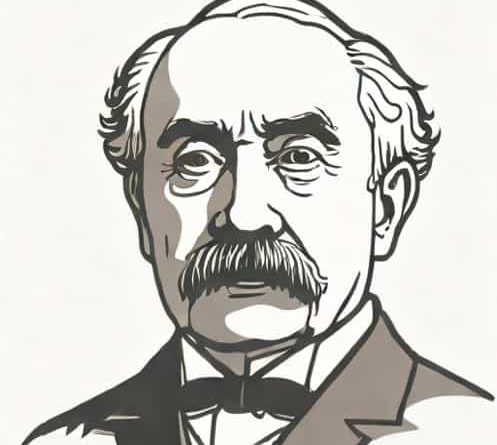
How Did Georges Clemenceau Die
Georges Clemenceau, one of France’s most influential statesmen, played a crucial role during and after World War I. Known as The Tiger for his fierce political determination and sharp leadership, Clemenceau left a lasting mark on French and world history. His life was filled with remarkable achievements and controversies, but like all great figures, it eventually came to an end. Understanding how Georges Clemenceau died gives insight into the final years of a man who shaped the destiny of modern France.
The Final Years of Georges Clemenceau
After the end of World War I, Georges Clemenceau’s political career gradually slowed down. Following the signing of the Treaty of Versailles in 1919, which he helped negotiate, he chose not to seek re-election as Prime Minister of France. Although his leadership was respected, Clemenceau faced criticism for the harsh conditions imposed on Germany, which some believed would create future conflicts. Despite this, he remained active intellectually and socially, writing and traveling well into his old age.
In his later years, Clemenceau withdrew from political life but not from the public eye. He turned his attention to literature, history, and reflection. He wrote memoirs and books that captured his philosophy, experiences, and vision for France. His most notable late work was Grandeurs et Misères d’une Victoire (The Greatness and Misery of a Victory), published in 1930, in which he revisited the events of the war and the peace negotiations.
Declining Health and Aging
By the late 1920s, Clemenceau’s health began to deteriorate. Having lived a long and active life filled with stress and public service, his body started showing the effects of age. He suffered from various ailments associated with old age, such as cardiovascular issues and fatigue. Yet even at over 80 years old, Clemenceau remained intellectually sharp and continued to write and receive visitors who sought his wisdom.
In 1929, Clemenceau traveled to North Africa for rest and recovery, hoping the warm climate would ease his declining health. Unfortunately, the improvement was temporary. Upon his return to France, his health continued to worsen, and he began spending more time in his Paris apartment and later at his country residence in Vendée, near the Atlantic coast.
The Circumstances of Georges Clemenceau’s Death
Georges Clemenceau died peacefully on November 24, 1929, at the age of 88. His death occurred at his home in Paris, where he had been confined due to illness. Reports from the time described his passing as calm and dignified, surrounded by those close to him. The immediate cause of death was natural – complications related to aging and heart failure. There were no dramatic events or prolonged suffering; Clemenceau simply succumbed to the inevitable toll of time.
Even in his final moments, Clemenceau was said to have maintained his characteristic spirit and composure. According to accounts, he expressed no fear of death and accepted it as a natural conclusion to his long and accomplished life. His final words were reportedly calm and reflective, fitting for a man who had faced war, revolution, and political storms throughout his life.
Funeral and Legacy
Following his death, Georges Clemenceau’s funeral was held with great national respect, though in accordance with his own wishes, it was not a grand state ceremony. He preferred simplicity, rejecting the pomp often associated with political leaders. Instead, his remains were transported to his beloved region of Vendée, where he was buried in a modest grave near the sea, a place he deeply loved.
Thousands of people across France mourned his passing. Newspapers around the world published tributes recognizing him as one of the great architects of modern Europe. His influence on the Treaty of Versailles and his determination to ensure France’s security after World War I earned him both admiration and criticism, but his courage and patriotism were undeniable.
The Impact of Clemenceau’s Death on France
When Georges Clemenceau died, France was still recovering from the scars of the Great War. His death symbolized the end of an era – the passing of a generation of leaders forged in the fires of war and revolution. Many French citizens viewed him as the embodiment of national strength and resilience. His leadership during the darkest hours of World War I had rallied the nation and given it hope when victory seemed uncertain.
In the years following his death, Clemenceau’s image remained strong in French memory. Streets, schools, and monuments were named after him, and his political philosophy continued to influence generations of leaders. His death also prompted renewed debates about his legacy – whether he had been too harsh in his peace terms or whether his firmness was necessary to secure lasting peace.
The Legacy Beyond Death
Georges Clemenceau’s death marked not just the end of a remarkable life but the continuation of an enduring legacy. As one of the principal architects of the post-World War I order, his ideas shaped European diplomacy for decades. He became a symbol of determination, rationality, and unwavering commitment to national interest.
His writings after retirement revealed his philosophical side. Clemenceau often reflected on human nature, justice, and the cost of peace. These works ensured that his intellectual contributions would survive long after his death. Historians and political scholars still study his speeches and writings to understand the mindset of one of France’s greatest wartime leaders.
Remembering The Tiger
The nickname The Tiger captured Clemenceau’s essence perfectly. He was fierce in debate, relentless in politics, and uncompromising in defense of his nation. Even in his final days, though physically weakened, he retained his strong personality and sharp wit. His death did not diminish the admiration of those who had witnessed his leadership during one of Europe’s most turbulent periods.
Today, more than a century after his political triumphs, Clemenceau’s name remains synonymous with strength, courage, and realism in leadership. His life story – from his early revolutionary days to his final breath in 1929 – stands as a powerful example of public service and dedication to principle.
Georges Clemenceau died of natural causes in November 1929, closing the final chapter of a life dedicated to France and freedom. His death was peaceful, but his influence endures through history. The way he lived – with conviction, passion, and an unyielding spirit – ensures that his legacy will never fade. Clemenceau’s final years were a reflection of the same calm strength that had guided him through war and politics, reminding the world that even the fiercest leaders face death with dignity and peace.
In the end, how Georges Clemenceau died matters less than how he lived. His life remains a story of courage, leadership, and an unshakable belief in the destiny of France – a story that continues to inspire those who study history, politics, and the enduring power of conviction.