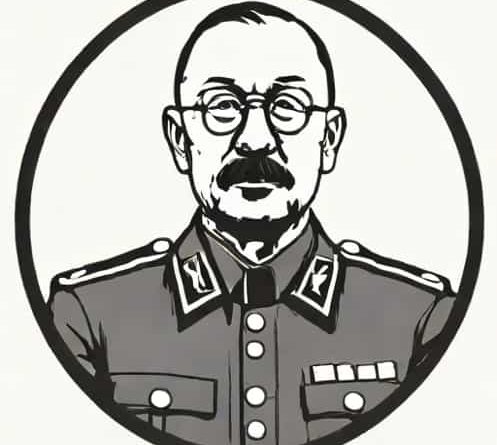
How Did Himmler Die
Heinrich Himmler, one of the most notorious figures of the Nazi regime, played a central role in orchestrating some of the worst atrocities in human history during World War II. As the head of the SS (Schutzstaffel) and a chief architect of the Holocaust, Himmler’s influence and actions left a lasting and horrifying legacy. His death, however, came in the chaotic aftermath of Germany’s surrender in May 1945, marking the end of his personal role in history but sparking ongoing interest and investigation. Understanding how Himmler died requires examining the context of Germany’s collapse, his attempts to evade capture, and the circumstances surrounding his final hours.
Himmler’s Role in Nazi Germany
Before delving into the details of his death, it is crucial to understand Himmler’s position and influence within Nazi Germany. Himmler was born in 1900 and rose to prominence under Adolf Hitler’s regime, eventually becoming Reichsführer-SS in 1929. He oversaw the SS, which grew from a small paramilitary organization into one of the most powerful and feared institutions in Nazi Germany. Under his command, the SS was responsible for policing, intelligence, and the systematic execution of the Holocaust.
Himmler’s influence extended into concentration camps, security forces, and even civil administration, making him a key figure in the enforcement of Nazi ideology. His meticulous organization and ruthless efficiency contributed to the mass murders of millions, earning him a reputation as one of the most feared men in Europe. By the spring of 1945, however, the Nazi regime was collapsing, and Himmler’s position, though powerful, became increasingly precarious.
The End of the Third Reich
By April 1945, Allied forces were closing in on Berlin from both the west and east, and Germany’s defeat was imminent. Himmler’s loyalty to Hitler was already strained; he sought to negotiate with the Allies to save himself, bypassing Hitler’s authority. These attempts at negotiation, known as Himmler’s secret overtures, included contacting Swedish diplomats and even proposing to surrender to the Western Allies while attempting to continue fighting the Soviet advance. Hitler, however, considered this an act of betrayal and dismissed Himmler from all positions of power on April 20, 1945.
After Hitler’s death on April 30, Germany surrendered on May 7, 1945. Himmler, aware that Allied forces were actively seeking him, attempted to go into hiding to avoid capture. This period of evasion set the stage for the events that led to his death.
Himmler’s Attempt to Escape
Following Germany’s surrender, Himmler adopted a false identity, trying to pass himself off as a low-ranking soldier. He carried civilian clothing, papers under the alias Heinrich Hitzinger, and minimal personal effects. Himmler’s attempts to hide were indicative of his awareness of the gravity of his crimes and the likelihood that the Allies would not offer leniency.
Himmler attempted to evade detection by moving through German towns and avoiding areas under direct Allied control. Despite these efforts, the British military intelligence services had intensified their search for top Nazi leaders, knowing the significance of capturing Himmler alive for both prosecution and intelligence purposes.
Capture by British Forces
On May 21, 1945, Himmler was captured by British forces near the town of Bremervörde in northern Germany. Initially, he presented himself under his assumed identity and tried to blend in with the general population. However, suspicions arose during routine checks, leading to the discovery of his true identity through physical examinations and interrogation.
Once identified as Heinrich Himmler, he was detained and placed under British custody for questioning. The Allies were keen to extract information about remaining Nazi operations, the extent of the SS network, and details regarding the Holocaust. Himmler, however, remained defiant and attempted to maintain control even in captivity, though the situation was rapidly slipping beyond his grasp.
The Circumstances of Himmler’s Death
While in British custody, Himmler was held in a temporary detention facility along with other high-ranking Nazis. During this period, he had access to limited personal items, including a hidden vial of cyanide. The exact circumstances of how he obtained or concealed the cyanide remain somewhat unclear, but it is widely reported that he carried it to avoid falling into the hands of Allied justice.
On May 23, 1945, during a medical examination, Himmler managed to ingest the cyanide capsule. The poison acted quickly, and he died shortly afterward, at the age of 44. His death prevented him from facing trial at Nuremberg, where other prominent Nazi leaders were prosecuted for war crimes and crimes against humanity.
Significance of His Death
Himmler’s death by suicide had several significant consequences. Firstly, it denied the Allies an opportunity to question him extensively about the inner workings of the SS and the Nazi leadership. While some intelligence was obtained prior to his death, many details regarding operations, networks, and orders remained undisclosed. Secondly, his death served as a grim symbol of the collapse of the Nazi regime. Even the most powerful figures could not escape accountability, yet Himmler avoided the formal judicial process.
From a historical perspective, Himmler’s suicide underscored the fear and desperation that permeated the upper ranks of Nazi leadership at the end of World War II. While Hitler had taken his own life in Berlin, Himmler’s attempt to negotiate survival ultimately failed, resulting in a rapid and ignominious end. His suicide also prompted historians to investigate his final days, his secretive attempts at escape, and the psychological state of one of history’s most infamous war criminals.
Legacy and Historical Perspective
Himmler’s actions and the magnitude of his crimes have made him a subject of extensive historical research. Scholars analyze his administrative skills, ideological fanaticism, and capacity for orchestrating mass violence to understand how individuals can perpetrate large-scale atrocities. His death without trial remains a point of discussion, as historians speculate on the insights and admissions that were never recorded in a courtroom setting.
Himmler’s suicide also raises questions about justice and accountability. While other Nazi leaders faced prosecution, Himmler’s evasion highlights the chaotic nature of post-war Europe and the challenges of bringing all perpetrators to justice. Nonetheless, the documented records, survivor testimonies, and remaining SS files continue to provide substantial evidence of his role in the Holocaust and other war crimes.
Key Takeaways
- Heinrich Himmler was a central figure in Nazi Germany, leading the SS and orchestrating the Holocaust.
- After Germany’s surrender, Himmler attempted to evade capture by adopting a false identity.
- He was captured by British forces on May 21, 1945, and detained for questioning.
- Himmler ingested cyanide on May 23, 1945, during a medical examination, resulting in his death at age 44.
- His suicide prevented him from standing trial, denying historians and prosecutors direct insight into his operations and mindset.
- Himmler’s death symbolized both the collapse of the Nazi regime and the desperate measures taken by its leadership to avoid accountability.
The death of Heinrich Himmler marked the end of one of the darkest chapters in modern history. As a principal architect of the Holocaust and a central figure in Nazi Germany, his life was defined by power, ideology, and cruelty. His suicide in May 1945, while under British custody, ended his personal story abruptly, preventing formal judicial reckoning. Yet, the historical record preserves the evidence of his crimes, ensuring that his actions are neither forgotten nor forgiven. Studying how Himmler died provides insight into the chaotic end of the Third Reich, the desperation of its leaders, and the broader lessons about accountability and the consequences of absolute power misused in the service of ideology.