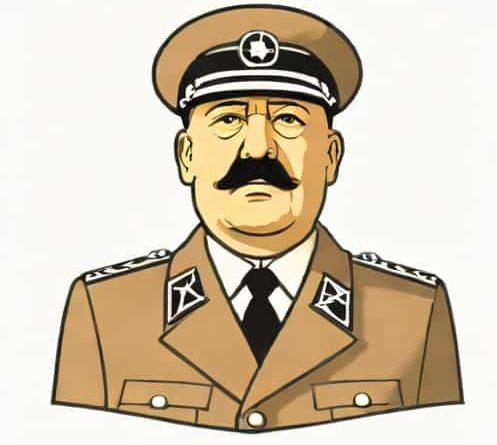
How Did Hitler Become Dictator
Adolf Hitler’s rise to power and eventual dictatorship in Germany is one of the most studied and significant events of the twentieth century. Understanding how Hitler became dictator involves examining the political, economic, and social conditions of post-World War I Germany, as well as Hitler’s personal ambitions, propaganda strategies, and manipulation of the democratic system. The period following the Treaty of Versailles left Germany politically unstable and economically devastated, creating fertile ground for extremist movements. Hitler’s rise was not instantaneous; it was a calculated and systematic process that combined charismatic leadership, opportunistic politics, and ruthless suppression of opposition, eventually transforming Germany into a totalitarian state under his control.
Political and Economic Context
After World War I, Germany faced immense political turmoil and economic hardship. The Treaty of Versailles imposed harsh reparations, territorial losses, and military restrictions on the country, leading to widespread resentment among the population. Hyperinflation in the early 1920s, coupled with the Great Depression of the 1930s, created high unemployment and social instability. The Weimar Republic, Germany’s democratic government established after the war, struggled to maintain legitimacy and public confidence. These conditions allowed extremist political movements, including the National Socialist German Workers’ Party (NSDAP), or Nazi Party, to gain traction by promising national revival, economic recovery, and strong leadership.
Hitler’s Early Political Activities
Adolf Hitler joined the German Workers’ Party in 1919, which later became the Nazi Party. He quickly emerged as a prominent figure due to his oratory skills, charismatic personality, and radical ideas. Hitler’s speeches appealed to nationalism, anti-Semitism, anti-communism, and the promise of overturning the Treaty of Versailles. By positioning himself as the savior of Germany, he attracted a growing base of supporters, including disillusioned veterans, middle-class citizens, and nationalist groups. Hitler’s early activities included propaganda dissemination, public rallies, and the formation of paramilitary groups like the Sturmabteilung (SA) to intimidate political opponents.
Exploitation of Democracy
Despite the Nazi Party’s extremist ideology, Hitler initially used democratic processes to gain power. The Nazis participated in elections and gradually increased their representation in the Reichstag, Germany’s parliament. By exploiting the weaknesses of the Weimar Republic and the fragmented political landscape, Hitler positioned the Nazi Party as a legitimate political force. In 1932, the Nazis became the largest party in the Reichstag, but they did not have an absolute majority. Hitler’s appointment as Chancellor on January 30, 1933, by President Paul von Hindenburg was a strategic move by conservative elites who believed they could control him while using his popularity to stabilize the government.
The Reichstag Fire and Enabling Act
The Reichstag Fire in February 1933 was a pivotal event that Hitler used to consolidate power. The fire, which destroyed the parliament building, was blamed on communists, and Hitler exploited it to push through emergency decrees restricting civil liberties and suppressing opposition. The Reichstag Fire Decree allowed the arrest of political adversaries and the censorship of the press, effectively dismantling democratic safeguards. Shortly afterward, the Enabling Act was passed, giving Hitler the authority to enact laws without parliamentary approval for four years. This legislation marked the legal foundation of Hitler’s dictatorship, as it allowed him to bypass democratic institutions entirely.
Suppression of Opposition
Once in power, Hitler moved quickly to eliminate political opposition. The Nazis targeted communists, social democrats, and other rival parties through intimidation, imprisonment, and violence. The SA and later the Schutzstaffel (SS) played key roles in enforcing Nazi policies and instilling fear. Trade unions were dissolved, and independent organizations were brought under Nazi control. By consolidating power in the hands of the party and dismantling competing institutions, Hitler ensured that no organized resistance could challenge his authority. The combination of legal measures, propaganda, and violent enforcement created a climate of totalitarian control.
Propaganda and Cult of Personality
Propaganda was central to Hitler’s ability to maintain and expand his power. Joseph Goebbels, as Minister of Propaganda, orchestrated campaigns that glorified Hitler, promoted Nazi ideology, and demonized enemies of the state. The use of mass rallies, radio broadcasts, newspapers, and films cultivated a cult of personality around Hitler, portraying him as Germany’s savior. This propaganda reinforced loyalty, suppressed dissent, and mobilized the population in support of Nazi policies. By controlling information and shaping public perception, Hitler secured widespread acceptance of his leadership and the actions of the Nazi regime.
The Night of the Long Knives
In 1934, Hitler further solidified his control through the Night of the Long Knives, a purge targeting the SA leadership and other potential rivals within the party. The SA, initially instrumental in Hitler’s rise, had become a potential threat due to its growing power and radical elements. Hitler ordered the execution of key SA leaders, including Ernst Röhm, demonstrating his willingness to use violence to eliminate any challenge to his authority. This purge reassured the military, conservative elites, and other influential groups that Hitler was firmly in control, paving the way for the declaration of Hitler as Führer after Hindenburg’s death in August 1934.
Consolidation of Absolute Power
Following President Hindenburg’s death, Hitler merged the offices of Chancellor and President, becoming the Führer of Germany. This act symbolized the culmination of his rise to dictatorship. With complete control over the government, military, and police forces, Hitler established a totalitarian state. The combination of legal authority, political suppression, propaganda, and personal charisma allowed him to maintain unchallenged power. Hitler’s dictatorship enabled the implementation of aggressive domestic and foreign policies, ultimately leading to World War II and the Holocaust.
Key Factors in Hitler’s Rise
- Economic and political instability in post-World War I Germany.
- Exploitation of nationalist sentiment and resentment toward the Treaty of Versailles.
- Charismatic leadership and effective use of propaganda.
- Manipulation of democratic institutions, including the Reichstag and presidential appointments.
- Suppression of opposition through legal measures and political violence.
- Strategic alliances with conservative elites and the military.
Adolf Hitler’s rise to dictatorship was a complex process shaped by historical circumstances, personal ambition, and calculated political maneuvers. Exploiting economic hardship, political instability, and societal resentment, Hitler leveraged democratic processes and propaganda to gain and consolidate power. Through the suppression of opposition, the manipulation of legal frameworks, and the establishment of a cult of personality, he transformed Germany into a totalitarian state under his absolute control. Understanding how Hitler became dictator provides critical lessons about the fragility of democratic institutions, the dangers of political extremism, and the importance of vigilance in protecting civil liberties. The systematic and strategic methods Hitler used to achieve and maintain power serve as a historical warning of how authoritarianism can emerge in a seemingly democratic society.
Ultimately, Hitler’s dictatorship was not an accident but the result of deliberate actions, societal conditions, and the vulnerabilities of the Weimar Republic. His rise underscores the importance of strong democratic safeguards, informed citizenry, and the constant defense of human rights to prevent the concentration of power in the hands of a single leader. The history of Hitler’s ascent remains a stark reminder of the consequences of political manipulation and unchecked authority.