Is A Bayonet A Knife
Many people wonder whether a bayonet can truly be called a knife. At first glance, it certainly looks like one a sharp blade, a handle, and a pointed tip designed for piercing. Yet, its history, purpose, and design set it apart from ordinary knives. Understanding what a bayonet is, how it functions, and why it was created helps clarify this question. The answer depends not only on its physical form but also on its intended use in both military and practical contexts.
What Is a Bayonet?
A bayonet is a blade that can be attached to the muzzle of a rifle or musket, converting the firearm into a spear-like weapon. This design allowed soldiers to fight effectively in close combat when they could no longer use ammunition or when enemies charged in tight formations. The concept originated centuries ago, combining the utility of a knife or short sword with the reach of a long firearm.
The term bayonet is believed to come from the French town of Bayonne, where the weapon may have first been developed in the 17th century. Early versions were simple plug bayonets, where the blade was inserted directly into the gun barrel. Later, more advanced socket and ring bayonets were invented, allowing soldiers to fire their weapons while the bayonet remained attached.
How a Bayonet Differs from a Knife
Although the bayonet looks like a knife, there are several key differences in design and purpose. A knife is primarily a cutting tool, while a bayonet is a hybrid weapon engineered for both stabbing and attachment to a firearm.
- PurposeA knife is typically used for cutting, slicing, or general utility tasks. A bayonet, however, is designed as a weapon for close combat situations when firearms are not practical.
- DesignBayonets often feature a long, narrow blade optimized for thrusting rather than slicing. Knives, by contrast, can have a wide variety of blade shapes meant for different functions.
- Mounting MechanismThe most defining feature of a bayonet is its ability to attach to a rifle. Modern versions include locking mechanisms that secure the blade to the weapon’s muzzle.
- BalanceKnives are balanced for hand use, while bayonets are balanced to extend the reach of a rifle without affecting shooting accuracy too much.
The Evolution of the Bayonet
Over time, the bayonet has evolved alongside firearms. In the 17th and 18th centuries, when muskets were slow to reload, soldiers relied heavily on bayonets for hand-to-hand combat. As firearms became more advanced, the role of the bayonet changed from a primary fighting weapon to more of a backup tool.
By the 20th century, bayonets became shorter and more versatile. Many designs incorporated features that made them useful as combat knives or utility blades when detached from the rifle. For example, the American M9 bayonet used with the M16 rifle doubles as a survival knife, capable of cutting wire, sawing wood, and other field tasks.
Is a Bayonet a Knife or a Spear?
This question can be tricky. Technically, a bayonet is a knife-like weapon, but it functions more like a spear when attached to a rifle. Its primary design intention is for thrusting, not cutting. When used independently, however, a bayonet can serve as a knife for many purposes, especially modern detachable models.
So, while a bayonet can act as a knife, not all knives can function as bayonets. The defining difference lies in the adaptability of the bayonet-it bridges the gap between a knife and a spear, depending on how it is used.
Types of Bayonets
There are several types of bayonets that have appeared throughout history. Each reflects technological changes in weaponry and shifts in combat strategy.
- Plug BayonetThe earliest design, inserted directly into the gun barrel, preventing the firearm from firing when attached.
- Socket BayonetIntroduced later, it fits around the barrel rather than inside it, allowing soldiers to shoot while the bayonet was fixed.
- Knife BayonetThe most common modern version, functioning as both a combat knife and a rifle attachment.
- Sword BayonetLonger blades that resemble short swords, used mainly in the 19th century when bayonets were intended for extended reach.
Modern Uses of Bayonets
In modern military practice, bayonets are less about combat and more about tradition, utility, and psychological effect. Many armies still issue bayonets as standard equipment, but their use in hand-to-hand fighting is extremely rare today. Instead, they serve as multipurpose tools for cutting, digging, or survival tasks in the field.
In some training programs, bayonet drills are still performed to build discipline, aggression, and physical coordination. These exercises are more symbolic now, representing the close-quarters combat spirit of earlier soldiers rather than practical battle tactics.
Examples of Modern Bayonets
- M9 BayonetUsed by the U.S. military, doubles as a multipurpose knife and wire cutter.
- AKM BayonetCommonly used in Soviet and Russian rifles, designed for durability and survival functions.
- L3A1 BayonetIssued with the British SA80 rifle, compact and efficient for fieldwork and ceremonial purposes.
Bayonets in Civilian Context
Outside of the military, bayonets are often collected by weapon enthusiasts and historians. Many vintage bayonets are prized for their craftsmanship, historical significance, and connection to key moments in world history. Some hunters and outdoorsmen also use modern bayonets as practical survival knives because of their rugged design.
However, because a bayonet is technically a weapon, there are legal restrictions in some countries regarding ownership, modification, or display. These laws vary widely and often depend on whether the bayonet is functional, collectible, or decorative.
Knife Characteristics Shared by Bayonets
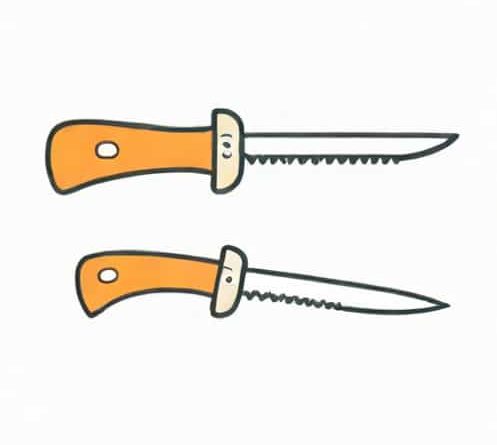
Even though a bayonet is primarily a combat attachment, it shares many physical traits with knives. Most bayonets have sharpened edges, a pointed tip, and a handle designed for grip and control. When detached, they can be used for slicing, cutting, or self-defense-functions identical to standard knives.
Modern designs often include serrated edges, sawback spines, and reinforced points, making them even more practical. In this sense, calling a bayonet a knife is not wrong; it simply has additional features that extend its function beyond that of a normal blade.
So, is a bayonet a knife? The answer is both yes and no. A bayonet is technically a type of knife-sharpened, bladed, and capable of cutting-but its primary purpose has always been as a weapon designed to attach to a rifle. It serves as a bridge between knife and spear, evolving from a soldier’s desperate tool of last resort to a versatile utility blade in modern times.
Understanding the difference lies in recognizing the bayonet’s dual identity part knife, part military innovation. Whether used for combat, ceremony, or survival, the bayonet remains one of the most iconic and enduring examples of human ingenuity in weapon design.