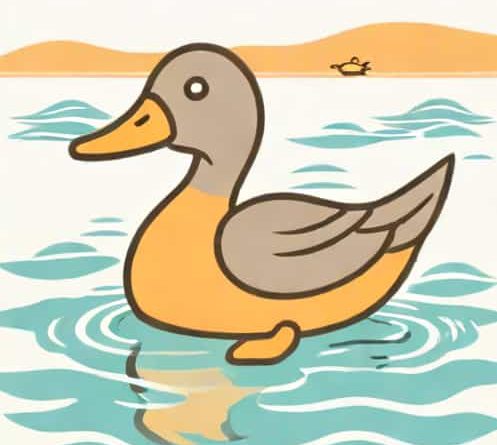
Is A Duck Amphibious
Ducks are fascinating creatures that inhabit a wide range of environments, from freshwater lakes and rivers to marshes and even urban parks. They are known for their unique adaptations that allow them to thrive both on land and in water. This versatility raises an interesting question are ducks amphibious? Understanding what it means to be amphibious and analyzing the biological characteristics of ducks can help clarify whether they truly fit this classification. While ducks exhibit traits that allow them to function in multiple habitats, their classification as amphibious requires careful consideration of their physiology, behavior, and evolutionary traits.
Defining Amphibious
To determine if ducks are amphibious, it is essential to define the term. Amphibious animals are typically those that can live and thrive both in water and on land during different stages of their life cycle. Classic examples of amphibians include frogs, salamanders, and newts. Amphibians usually have distinct physiological adaptations such as permeable skin for respiration in water and lungs for breathing on land. This dual lifestyle distinguishes them from animals that are primarily terrestrial or aquatic but only use the other environment occasionally.
Key Characteristics of Amphibians
- Ability to live both in water and on land
- Specialized respiratory systems for aquatic and terrestrial environments
- Lifecycle stages that often include both aquatic larvae and terrestrial adults
- Adaptations for movement in water and on land
By understanding these characteristics, we can compare them to ducks and examine whether ducks fit the strict definition of amphibious animals.
Physical Adaptations of Ducks
Ducks have several adaptations that enable them to interact effectively with both land and water environments. Their webbed feet act as efficient paddles in water, allowing them to swim with ease. Ducks also have waterproof feathers coated with oil from a gland near their tails, which helps them stay buoyant and dry while swimming. On land, ducks are capable of walking, although their gait is often waddling due to the placement of their legs.
Swimming Adaptations
Ducks excel in aquatic environments due to specialized physical traits
- Webbed feet for propulsion in water
- Streamlined bodies to reduce water resistance
- Waterproof feathers to maintain buoyancy and warmth
- Ability to dive or dabble for food
Terrestrial Adaptations
While not as agile on land as in water, ducks have adaptations that allow them to forage, nest, and move across terrestrial habitats
- Legs positioned for walking on solid surfaces
- Beaks designed for grazing, foraging, and filtering food
- Behavioral adaptations for nesting in grass, reeds, or soil
- Ability to escape predators using short bursts of flight or walking
Behavioral Considerations
Behavior also plays a role in understanding whether ducks are amphibious. Ducks spend a significant portion of their lives in water, feeding, swimming, and mating, but they also spend time on land for nesting and resting. Their ability to move between these environments daily demonstrates a form of ecological versatility. However, unlike amphibians that rely on water for breathing in early life stages, ducks rely entirely on their lungs, regardless of habitat.
Daily Habits
Ducks often exhibit the following behaviors
- Swimming in ponds, lakes, and rivers to feed and socialize
- Foraging on land for seeds, insects, and plants
- Nesting in terrestrial environments to protect eggs from aquatic predators
- Migrating between habitats seasonally, often covering both land and water areas
Differences Between Ducks and Amphibians
Despite their adaptability, ducks differ from true amphibians in several important ways. Ducks are birds, classified as avian species, and they possess feathers, beaks, and lungs optimized for life on land and in the air. They do not undergo an aquatic larval stage like frogs or salamanders, nor do they require moist skin for respiration. Their interactions with water are behavioral and anatomical adaptations rather than a fundamental component of their life cycle or respiration.
Respiratory System
Unlike amphibians, ducks rely solely on lungs for respiration, even when submerged underwater for short periods. Amphibians often use their skin and gills in addition to lungs, especially during larval stages, which allows them to absorb oxygen directly from water. This distinction is key in determining that ducks are not amphibious in the strict biological sense.
Lifecycle Differences
Amphibians typically undergo metamorphosis, transitioning from water-bound larvae to land-adapted adults. Ducks hatch as ducklings capable of walking and swimming shortly after birth, with no aquatic larval stage. Their development does not depend on an aquatic environment for survival beyond feeding and protection, which sets them apart from true amphibians.
Ecological Versatility of Ducks
While ducks are not amphibious in the strict scientific definition, they are often described as semi-aquatic. This means they are capable of thriving in both aquatic and terrestrial habitats without the physiological requirements of amphibians. This versatility allows ducks to exploit a range of ecological niches, escape predators, and access diverse food sources.
Examples of Semi-Aquatic Adaptations
- Ability to swim long distances and dive for food
- Nesting on land while feeding in water
- Migration across wetlands and fields
- Flexibility in diet, including aquatic plants, insects, and small fish
ducks exhibit many behaviors and physical adaptations that allow them to thrive in both water and on land. Their webbed feet, waterproof feathers, and foraging behaviors make them highly versatile and capable of surviving in a range of habitats. However, from a biological standpoint, ducks are not amphibious because they do not undergo an aquatic larval stage, do not rely on skin or gills for respiration, and are fully adapted as birds with lungs for breathing air. They are better described as semi-aquatic, demonstrating remarkable ecological adaptability without fitting the strict definition of amphibians. Understanding these distinctions enhances our appreciation of ducks’ unique abilities and clarifies common misconceptions about their lifestyle.
- Ducks are highly adaptable to both water and land environments
- They possess physical traits such as webbed feet and waterproof feathers
- Ducks rely entirely on lungs for respiration
- They do not undergo aquatic larval stages like amphibians
- They are best classified as semi-aquatic rather than amphibious
- Ecological versatility allows them to thrive in diverse habitats
Overall, ducks are remarkable creatures whose semi-aquatic nature allows them to navigate multiple environments efficiently. While they are not amphibious in the strict scientific sense, their lifestyle demonstrates the complex adaptations that enable birds to exploit both terrestrial and aquatic habitats effectively.