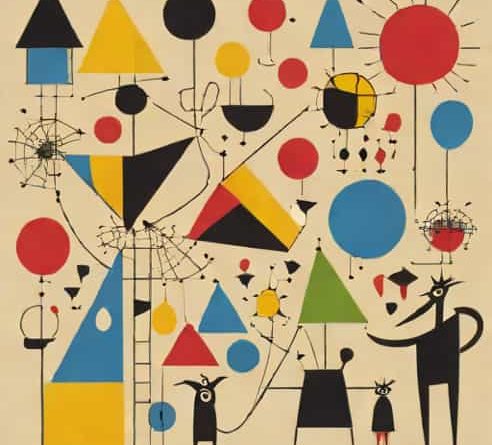
Joan Miro Harlequin’S Carnival
Joan Miró’s *Harlequin’s Carnival* stands as one of the most vivid and celebrated works in the artist’s body of painting, combining imagination, symbolism, and surrealist energy in a way that continues to captivate audiences nearly a century after its creation. Painted in 1924-1925, this oil on canvas portrays a fantastical carnival scene filled with whimsical figures, colorful shapes, and dreamlike details that reveal both Miró’s personal experiences and the broader influence of the Surrealist movement. The painting not only reflects the cultural and artistic innovations of its time but also offers an invitation to explore the subconscious mind in visual form. By blending playful imagery with symbolic depth, *Harlequin’s Carnival* remains a key masterpiece in modern art history and a powerful example of how abstract forms can convey emotional and imaginative resonance.
Context and Creation of the Painting
*Harlequin’s Carnival* (Spanish *Carnaval de ArlequÃn*) was created by the Spanish artist Joan Miró between 1924 and 1925, during a period when he began exploring Surrealism more fully. At the time, Miró was living in Paris, interacting with avantgarde artists and poets connected to the emerging Surrealist movement led by André Breton. Although Miró was never a doctrinaire member of the group, he found in Surrealism a means to express his own visions and subconscious thoughts through art, blending dreamlike imagery with abstract symbolism. This painting marked a significant moment in his artistic evolution, combining personal memory, fantasy, and imaginative forms that break from conventional representation.
Miró’s Personal Situation
The creation of *Harlequin’s Carnival* occurred during a challenging phase of Miró’s life. He struggled financially in Paris and often had little money, a hardship that may be reflected in certain elements of the work-such as the harlequin figure, whose patched costume and unusual body shape hint at both comic entertainment and vulnerability. The harlequin character itself refers to the stock figure in Italian commedia dell’arte, known for his checkered costume and playful, acrobatic persona. Miró drew from both this theatrical tradition and his own experiences to create a scene that feels both joyful and psychologically layered.
Description and Visual Elements
The canvas of *Harlequin’s Carnival* measures approximately 66 by 93 centimeters and is executed in oil on canvas. The composition is animated with a multitude of figures, shapes, and abstract forms that seem to float freely in a nonlinear space, defying traditional perspective and inviting viewers to engage with the imagery on an intuitive level. Rather than depicting a coherent narrative, the painting offers a visual feast of symbolic elements that evoke music, movement, celebration, and fantasy.
Characters and Symbols
At the center of the painting is the harlequin figure, whose body fuses elements of the theatrical character and a stringed instrument, suggesting both performance and personal expression. Around him are a variety of hybrid creatures and anthropomorphized objects-cats, ladders, musical notes, stars, and figures that suggest dance or play. These elements float and interact in a space that feels both joyous and dreamlike, creating a sense of carnival energy that is at once surreal and emotionally engaging.
Some key motifs in the painting include
- A ladder with an eye and ear, symbolizing escape, elevation, or spiritual ascent
- Anthropomorphic musical notes that suggest sound and rhythm floating in the air
- Floating creatures and shapes that evoke imagination, dreams, and play
- A globelike shape that reflects a sense of universal ambition or exploration
Each of these motifs contributes to the surreal atmosphere of the painting, creating a dynamic interplay between reality and fantasy that invites interpretation.
Surrealism and Artistic Influences
*Harlequin’s Carnival* is firmly positioned within the Surrealist movement, which sought to break free from traditional artistic constraints and explore the subconscious, dreams, and irrational associations. Surrealism emerged in the early 1920s and was shaped by the ideas of psychoanalysis and literary experimentation, encouraging artists to tap into spontaneous creativity and the inner life. Miró adopted these principles in his own way, using automatism-allowing forms to emerge without premeditated composition-to express a poetic, subconscious reality.
Miró’s Style and Innovation
Unlike some surrealists who focused on startling or grotesque imagery, Miró’s approach was playful, poetic, and symbolic. His color palette, use of abstract shapes, and fluid lines convey a sense of freedom and imagination. The composition of *Harlequin’s Carnival* feels improvised yet harmonious, with figures and forms interacting as if in a dream. This innovative style helped establish Miró’s reputation as a leading figure in modern art, influencing generations of artists interested in abstraction and subconscious imagery.
Interpretations and Meaning
Interpreting *Harlequin’s Carnival* involves looking beyond literal representation to consider symbolic meaning and emotional resonance. The carnival setting evokes celebration and communal experience, yet the central harlequin appears both playful and vulnerable, suggesting that joy and struggle are intertwined. Some art historians see this duality as reflective of Miró’s own experiences-his financial hardship, creative aspirations, and inner emotional world. The painting’s whimsical surface thus masks deeper themes of resilience, imagination, and personal expression.
The Subconscious and Personal Symbolism
Miró once described his interest in art as something emanating from the collective unconscious rather than purely from rational design. By allowing spontaneous forms to guide his compositions, he created images that resonate with viewers at an intuitive level, encouraging them to make their own associative connections. In this way, the chaotic yet vibrant scene of the carnival becomes a metaphor for the creative mind itself-full of unexpected connections, joyful impulses, and symbolic depth.
Legacy and Influence
Over nearly a century, *Harlequin’s Carnival* has become one of Joan Miró’s most iconic works and a defining example of Surrealist art. It is housed at the Buffalo AKG Art Museum in New York, where it continues to be admired for its imaginative power and artistic innovation. The painting’s enduring appeal lies in its ability to evoke emotion and curiosity, engaging audiences with its rich tapestry of shapes, colors, and symbols.
Impact on Modern Art
The influence of Miró’s surrealist vision extended beyond his own work to shape broader developments in 20thcentury art. His blending of abstraction, symbolism, and dreamlike imagery helped expand the possibilities of painting as a medium, inspiring other artists to explore inner psychological landscapes and the expressive potential of form and color. *Harlequin’s Carnival* remains a cornerstone of this legacy, demonstrating how the irrational and playful can coexist with intellectual and emotional depth.
*Harlequin’s Carnival* by Joan Miró stands as a testament to the artist’s ability to bridge the worlds of imagination and subconscious expression. Created during a period of personal challenge and artistic exploration, the painting captures the energy of a carnival scene filled with vibrant figures, symbolic shapes, and dreamlike forms. Its place in the Surrealist movement highlights the power of art to transcend realism and invite viewers into a realm of wonder, spontaneity, and emotional richness. Today, the work continues to captivate audiences around the world, celebrating creativity, playfulness, and the enduring impact of one of the 20th century’s most inventive artists.