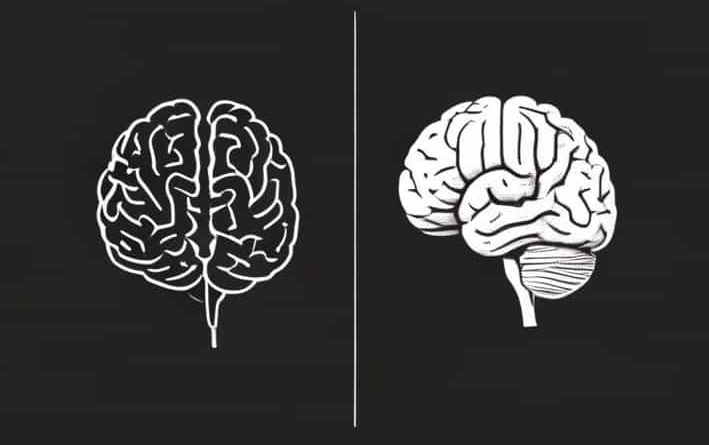
Left And Right Hemisphere Of The Brain
The human brain is one of the most complex and fascinating organs in the body, responsible for everything from basic survival to creativity and emotional expression. One of the most commonly discussed features of the brain is its division into two halves, known as the left and right hemispheres. Although they appear similar in structure, each hemisphere plays unique roles in how we think, learn, feel, and interact with the world. Understanding the left and right hemisphere of the brain helps explain many aspects of human behavior.
Basic Structure of the Brain Hemispheres
The brain is divided into two hemispheres by a deep groove called the longitudinal fissure. These hemispheres are connected by a thick bundle of nerve fibers known as the corpus callosum, which allows communication between the two sides.
Each hemisphere controls the opposite side of the body. This means the left hemisphere mainly controls movements and sensations on the right side, while the right hemisphere controls the left side of the body.
The Left Hemisphere of the Brain
The left hemisphere of the brain is often associated with logical thinking and analytical processes. It plays a major role in language, problem-solving, and mathematical reasoning.
Language and Communication
For most people, the left hemisphere is dominant for language. It handles tasks such as speaking, reading, writing, and understanding grammar. Areas involved in language processing are typically located on the left side of the brain.
This is why damage to the left hemisphere often results in language difficulties, such as trouble forming words or understanding speech.
Logical and Analytical Thinking
The left hemisphere excels at breaking information into smaller parts and analyzing details. It helps with tasks that require logic, sequence, and structured thinking.
- Mathematical calculations
- Logical reasoning
- Step-by-step problem solving
- Understanding cause and effect
These abilities are essential for tasks like planning, organizing, and decision-making.
The Right Hemisphere of the Brain
The right hemisphere of the brain is commonly linked to creativity, intuition, and emotional understanding. It processes information in a more holistic and visual way.
Creativity and Imagination
The right hemisphere plays a key role in creative thinking. It helps with activities such as drawing, music, and artistic expression. This side of the brain allows people to think outside the box and see patterns rather than details.
People often associate the right hemisphere with imagination and original ideas.
Spatial Awareness and Visual Processing
Understanding space, distance, and visual relationships is another strength of the right hemisphere. It helps people recognize faces, interpret maps, and judge depth.
- Visual memory
- Facial recognition
- Understanding shapes and patterns
- Interpreting visual cues
These skills are important for navigation and visual learning.
Emotional Processing and Social Skills
The right hemisphere plays a significant role in recognizing emotions, both in oneself and others. It helps interpret tone of voice, facial expressions, and body language.
Without this ability, social interactions can become difficult, as emotional cues are essential for communication and empathy.
How the Hemispheres Work Together
Although the left and right hemispheres are often described as having separate functions, they rarely work alone. Most tasks require both sides of the brain to communicate and cooperate.
For example, reading a story involves language processing from the left hemisphere and imagination from the right hemisphere. Playing music requires both technical skill and emotional expression.
Common Myths About Left-Brained and Right-Brained People
One popular myth suggests that people are either left-brained or right-brained, meaning they rely mostly on one hemisphere. While individuals may show preferences, scientific research shows that both hemispheres are active in most people.
The brain functions as an integrated system rather than two competing halves.
Brain Lateralization Explained
Brain lateralization refers to the tendency for certain functions to be more dominant in one hemisphere than the other. This does not mean that the other side is inactive or unimportant.
Lateralization helps the brain process information more efficiently by distributing tasks between hemispheres.
Effects of Brain Hemisphere Damage
Damage to one hemisphere can affect specific abilities. For example, left hemisphere damage may result in speech difficulties, while right hemisphere damage can affect spatial awareness and emotional recognition.
However, the brain has an amazing ability to adapt. Through a process called neuroplasticity, other areas of the brain can sometimes compensate for lost functions.
Development of the Brain Hemispheres
The left and right hemispheres develop throughout childhood and adolescence. Early experiences, learning environments, and education all influence how the hemispheres develop and interact.
Activities that encourage both analytical and creative thinking help support balanced brain development.
Hemispheres and Learning Styles
Understanding the roles of the left and right hemisphere of the brain can help explain different learning styles. Some people learn best through logical explanations, while others prefer visual or hands-on approaches.
Effective learning often involves engaging both hemispheres to strengthen understanding and memory.
Modern Research on Brain Hemispheres
Advances in brain imaging have revealed that the division between left and right hemisphere functions is more flexible than once believed. Modern research shows that the brain is highly interconnected and adaptable.
This has helped shift focus away from strict labels and toward a more balanced view of brain function.
Importance of Balanced Brain Activity
Using both hemispheres effectively supports mental health, creativity, and problem-solving. Activities like music, exercise, reading, and puzzles stimulate communication between the hemispheres.
A balanced brain allows individuals to approach challenges from multiple perspectives.
The left and right hemisphere of the brain each contribute essential functions that shape how humans think, feel, and behave. While the left hemisphere is often linked to logic and language, and the right hemisphere to creativity and emotion, both sides work together constantly.
Understanding the relationship between the hemispheres helps dispel myths and highlights the brain’s incredible complexity. Rather than favoring one side, nurturing balanced brain activity allows people to reach their full cognitive and emotional potential.