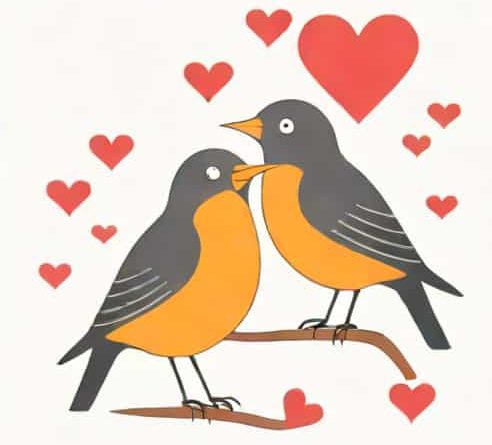
Love Is Like A Bird Rebellious
Love has always been one of the most mysterious and uncontrollable emotions known to humanity. It cannot be commanded, forced, or predicted, which is why many writers and poets compare love to a bird wild, free, and rebellious. The phrase love is like a bird rebellious captures the essence of love as something that resists boundaries, rules, and expectations. It can soar high in moments of happiness and flutter away just as quickly when confined. To understand this metaphor deeply, one must explore how love behaves, changes, and challenges those who try to possess it.
The Nature of Love and Freedom
Love, like a bird, thrives on freedom. When allowed to fly, it expresses beauty, joy, and creativity. But when caged or restricted by control, jealousy, or fear, it begins to lose its vitality. This comparison between love and a rebellious bird reflects the fragile balance between emotional connection and personal independence.
In relationships, people often try to hold on too tightly to the ones they love, fearing loss or betrayal. Yet, true love does not flourish under pressure. A bird cannot sing when trapped, and love cannot breathe when smothered by control. The more one tries to own love, the more it slips away, seeking the open sky of emotional freedom.
The Symbolism of the Rebellious Bird
The image of a rebellious bird is powerful and poetic. Birds symbolize flight, adventure, and the spirit of exploration. When described as rebellious, the bird becomes a metaphor for emotions that refuse to be contained. This is the essence of passionate love unpredictable, bold, and often irrational.
Throughout literature, birds have represented many aspects of love. The nightingale symbolizes the song of romance and devotion. The dove stands for peace and purity, while the hawk embodies passion and intensity. A rebellious bird, however, represents the love that defies convention the kind that challenges norms and refuses to be domesticated.
Love as an Act of Rebellion
When people fall in love, they often go against logic, societal expectations, and even personal fears. Love can be an act of rebellion against loneliness, despair, or social barriers. Like a wild bird that chooses its own path, love ignores rules and follows instinct.
- Against societal normsHistory is full of love stories that defied class divisions, cultural restrictions, or family opposition. These relationships show that love often rebels against what society dictates.
- Against fearLoving deeply means opening oneself to pain and vulnerability. Choosing love despite fear is itself a rebellious act of courage.
- Against time and distanceLove often endures despite separation or hardship. It refuses to be limited by space or circumstance, showing its defiant nature.
Emotional Wildness in Love
To say that love is rebellious is to acknowledge its emotional unpredictability. Love does not always follow a straight path. It can lift us to the highest joy or plunge us into despair without warning. Just as a bird changes direction mid-flight, love can change its form from affection to obsession, from joy to heartbreak.
This wildness is what makes love both exhilarating and terrifying. It cannot be planned or predicted. Some relationships last a lifetime, while others fade quickly, like a bird flying into the distance. Yet, even in its fleeting moments, love leaves an imprint, a memory of its flight through our hearts.
The Pain of Trying to Cage Love
When love is treated as something to control or possess, it loses its essence. Trying to cage love is like trapping a bird; it may stay for a while, but its song will grow silent. Many relationships struggle because one or both partners try to define love through ownership rather than connection.
Real love requires trust the willingness to let the other person fly freely, knowing that they choose to return. This trust transforms love from a power struggle into a partnership. The rebellious nature of love should not be seen as a flaw, but as a sign of its authenticity. It is real because it chooses, not because it is forced.
Love’s Connection to Individual Freedom
Every person is born with the desire for both connection and independence. Love tests the balance between these needs. When love is healthy, it respects individuality while nurturing intimacy. Like two birds flying side by side, lovers can share the same journey while maintaining their own wings.
This idea challenges the traditional notion of romantic possession. The phrase you complete me may sound romantic, but it implies dependency. In contrast, seeing love as a rebellious bird suggests that love completes life not through control but through shared flight. Both partners remain whole, yet they find joy in each other’s freedom.
Rebellion as Renewal
Rebellion in love is not always destructive. Sometimes, it renews relationships by breaking routine and rediscovering passion. Just as a bird flies higher after a storm, love often becomes stronger after conflict. Arguments, differences, and challenges can help partners understand each other more deeply and reignite emotional energy.
In this sense, rebellion is a natural part of love’s evolution. It pushes lovers to question assumptions, grow individually, and adapt together. Love that never rebels can grow stagnant, losing its vitality. Love that occasionally rebels keeps both hearts awake and alive.
Love in Art and Literature
Many poets, musicians, and artists have portrayed love as a bird precisely because of its fleeting and untamable nature. In opera, literature, and poetry, the metaphor captures the passion, risk, and vulnerability of human affection. The French composer Georges Bizet famously opened his opera *Carmen* with the line, Love is a rebellious bird that none can tame. This image conveys the universal truth that love answers to no master.
Artists understand that love cannot be fully understood through logic or reason. Like a bird in flight, it is beautiful precisely because it is free. To love is to take a risk to open one’s heart to the unknown. This willingness to embrace unpredictability is what makes love so profoundly human.
The Dual Nature of Love’s Rebellion
While love’s rebellion brings excitement and depth, it also carries pain. The same freedom that makes love beautiful can make it fragile. A bird that is free to fly is also free to leave. This duality is the core of human relationships the tension between desire and loss, closeness and distance.
Those who love deeply must accept this truth love cannot be guaranteed. It must be renewed every day through care, respect, and understanding. The rebellion of love teaches humility. It reminds us that affection cannot be earned through control but through constant openness and trust.
Embracing Love’s Rebellious Spirit
Instead of fearing love’s unpredictable nature, it is better to embrace it. Like a bird in flight, love is most beautiful when allowed to move freely. Embracing love’s rebellion means accepting its uncertainty and finding peace in its imperfection. It means understanding that love is not possession, but participation a shared journey between two souls who choose each other, again and again.
- Let love breathe and evolve naturally.
- Respect personal freedom within relationships.
- Accept that love’s rebellion is part of its truth.
- Find beauty in the unpredictability of emotion.
To say love is like a bird rebellious is to recognize that love is both fragile and fierce, gentle and wild. It resists confinement because it is born of freedom. It rebels against control because its nature is choice. Love’s rebellion is not a flaw it is its greatest strength. By allowing love to soar, we discover its true form an emotion that cannot be owned, only shared. Like a bird in the open sky, love lives best when it flies free, guided only by the wind of the heart.