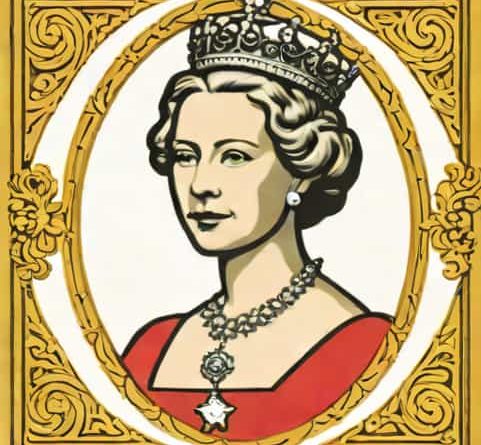
Queen Elizabeth Austrian Empire
The connection between Queen Elizabeth and the Austrian Empire may seem unusual at first glance, as they belonged to different nations and eras. However, exploring the parallels between the British monarchy and the Habsburg dynasty that ruled the Austrian Empire reveals fascinating insights into European history, royal diplomacy, and the evolution of monarchies across centuries. The Austrian Empire, with its complex web of alliances and traditions, provides a remarkable backdrop for understanding how royal figures like Queen Elizabeth I and Queen Elizabeth II influenced and interacted with continental powers, including Austria.
Understanding the Austrian Empire
The Austrian Empire was established in 1804 under Emperor Francis I and lasted until 1867, when it became the Austro-Hungarian Empire. It was one of Europe’s most powerful political entities during the 19th century, ruled by the Habsburg dynasty a family that had shaped Central European politics for centuries. The empire included diverse regions such as modern-day Austria, Hungary, the Czech Republic, parts of Italy, and the Balkans. Its influence extended beyond military power; it was a hub of art, music, and intellectual achievement.
During its existence, the Austrian Empire interacted with numerous European monarchies, including Great Britain. Although there was no Queen Elizabeth reigning during the Austrian Empire’s formation, both Elizabeth I of England (who ruled in the 16th century) and Elizabeth II (who reigned from 1952 to 2022) had indirect yet meaningful connections to Austria and its legacy through diplomacy, cultural exchange, and shared royal traditions.
Queen Elizabeth I and Early Austrian Relations
Queen Elizabeth I of England ruled from 1558 to 1603, long before the formal creation of the Austrian Empire. However, during her reign, the Habsburgs were already a dominant force in Europe, ruling the Holy Roman Empire a precursor to the Austrian Empire. Elizabeth’s relationship with the Habsburg dynasty was complex, shaped by religion, politics, and power.
At the time, Europe was divided by the Protestant Reformation. Queen Elizabeth I represented Protestant England, while the Habsburg rulers of Austria, including Emperor Ferdinand I and his successors, were staunch defenders of Catholicism. This religious divide created both rivalry and tension, influencing alliances, wars, and royal marriages across the continent.
Diplomatic Relations and Political Strategies
Elizabeth I was known for her diplomatic skill and her ability to navigate between powerful European rivals. She avoided marriage throughout her life, using her single status as a political advantage to negotiate alliances. The Habsburgs, recognizing England’s growing power, often attempted to influence her court through diplomatic channels. Although marriage proposals between Elizabeth and members of the Habsburg family never materialized, these negotiations demonstrated the delicate balance of European politics at the time.
While Elizabeth I never directly dealt with the Austrian Empire, her reign laid the groundwork for future Anglo-Austrian relations. England and Austria would later find common ground as both sought to counter French expansion and maintain stability in Europe.
The Rise of the Austrian Empire and British Connections
By the 18th and 19th centuries, the Austrian Empire had become one of the great powers of Europe. During this period, the British monarchy and the Habsburgs maintained a relationship defined by mutual respect and shared political interests. Both empires were deeply conservative and sought to preserve monarchical order during times of revolution and change.
In the Napoleonic era, Austria and Britain often found themselves allies against France. The two nations fought together in several coalitions to resist Napoleon Bonaparte’s domination of Europe. These military and political alliances strengthened diplomatic ties and led to greater cultural exchange between London and Vienna.
Royal Family Connections
The royal families of Britain and Austria shared many connections through intermarriage and noble lineage. The practice of strategic marriages among European monarchs meant that members of the British royal family were often related by blood or marriage to the Habsburgs. These ties fostered a sense of shared heritage that continued into the 20th century.
For example, Queen Victoria’s descendants married into various European royal families, including the Habsburgs. This network of alliances meant that Queen Elizabeth II, Victoria’s great-great-granddaughter, shared distant ancestry with Austrian royalty. Such connections were not merely symbolic they often played roles in diplomacy, politics, and the preservation of monarchical traditions.
Queen Elizabeth II and the Legacy of the Austrian Empire
By the time Queen Elizabeth II ascended to the throne in 1952, the Austrian Empire had long dissolved, replaced by the Republic of Austria after World War I. However, the cultural and historical ties between Britain and Austria remained strong. Queen Elizabeth II’s reign saw continued royal visits, diplomatic exchanges, and cultural collaborations that reflected centuries of shared European history.
One of the most symbolic moments came during her 1969 state visit to Austria. The Queen and Prince Philip were warmly welcomed in Vienna, where they met with Austrian President Franz Jonas. This visit highlighted the enduring friendship between the two nations, even as both had evolved into modern constitutional states. Queen Elizabeth II’s presence in Austria symbolized reconciliation and continuity a reminder that, despite wars and revolutions, royal diplomacy still played a unifying role.
The Influence of Austrian Culture on the British Monarchy
The Austrian Empire was a beacon of culture, particularly in music, architecture, and art. Vienna, its capital, was home to classical composers such as Mozart, Beethoven, and Strauss, whose works deeply influenced European high culture, including Britain’s own musical traditions. The British royal family often patronized classical music and maintained close ties with European cultural circles shaped by Austrian influence.
- MusicComposers from Austria were frequently performed at royal events in Britain, including coronations and state banquets.
- ArchitectureThe grand baroque style popularized in Vienna inspired architectural designs in parts of England during the Georgian and Victorian periods.
- Etiquette and CeremonyMany aspects of European royal court culture, including certain ceremonial traditions, had their roots in the Habsburg court system.
Parallels Between Queen Elizabeth and Austrian Monarchs
Both Queen Elizabeth I and Queen Elizabeth II share traits with the rulers of the Austrian Empire especially in their approach to power, diplomacy, and tradition. Like Empress Maria Theresa of Austria, who ruled from 1740 to 1780, the two Elizabeths were known for their intelligence, resilience, and reformist vision within a traditional framework.
Maria Theresa and Elizabeth I both reigned during times of great political and religious upheaval, navigating male-dominated environments with authority and grace. Similarly, Elizabeth II, much like Emperor Franz Joseph of Austria, represented stability during an era of modernization and social change. These comparisons show how monarchy, even across nations and centuries, often reflects similar challenges and ideals.
Shared Themes of Duty and Modernization
One of the most striking similarities between the British and Austrian monarchies is their commitment to balancing heritage with modernization. Both faced the challenge of maintaining relevance in a world increasingly dominated by democracy and social change. Queen Elizabeth II mastered this balance through quiet diplomacy and adaptability, just as Austrian rulers like Emperor Franz Joseph sought to preserve imperial dignity while embracing selective reforms.
The story of Queen Elizabeth and the Austrian Empire is not one of direct rule or shared governance, but of interconnected histories and parallel evolution. From the days of Queen Elizabeth I’s cautious diplomacy with the Habsburgs to Queen Elizabeth II’s symbolic visits to a modern Austria, the relationship between the British monarchy and the legacy of the Austrian Empire reflects the broader narrative of Europe’s royal past.
Both monarchies have stood as symbols of endurance amid change, guiding their nations through revolutions, wars, and modernization. The influence of the Austrian Empire’s grandeur and culture can still be seen in the refinement and traditions of the British crown. Ultimately, this shared heritage reminds us that monarchy, while deeply rooted in history, continues to adapt and connect nations through mutual respect, diplomacy, and a shared appreciation for culture and continuity.