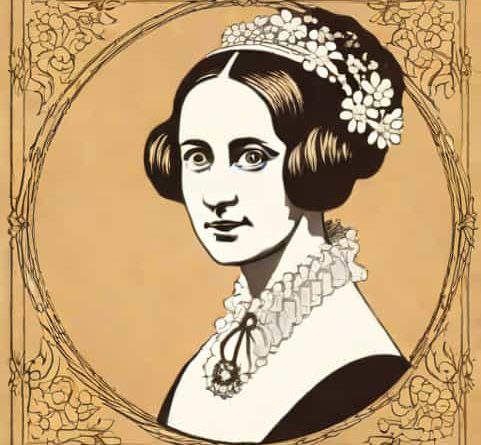
Short Note On Lady Ada Lovelace
Lady Ada Lovelace is often remembered as a visionary thinker whose ideas about computing appeared long before the modern computer existed. Her life blended mathematics, imagination, and scientific curiosity in a way that set her apart from many intellectuals of her time. Although she lived in the 19th century, her insights about analytical engines and algorithmic thinking continue to influence discussions about the origins of computer science today. Understanding her life and achievements helps reveal how one remarkable mind helped shape the foundations of a technological era that she never had the chance to witness.
Early Life and Influences
Ada Lovelace was born Augusta Ada Byron in 1815. She was the daughter of the famous poet Lord Byron and Annabella Milbanke, a woman known for her strong interest in mathematics. Although Ada never met her father after infancy, her upbringing was shaped by her mother’s desire to steer her away from poetic tendencies and toward logical, structured thinking. As a result, Ada studied mathematics, science, and logic subjects not commonly encouraged for women at the time.
Her tutors included respected mathematicians, and their guidance helped Ada develop a deep love for learning. Even as a young girl, she approached problems with a mixture of creativity and analytical thought. These early experiences played a significant role in forming her unique perspective on machines and computing.
Meeting Charles Babbage
A key moment in Ada Lovelace’s life came when she met Charles Babbage, a mathematician and inventor known for conceptualizing the Difference Engine and Analytical Engine. Babbage immediately recognized Ada’s intelligence, curiosity, and ability to grasp complex ideas. Their partnership marked the beginning of her most influential work.
Through her interactions with Babbage, Ada became fascinated by his mechanical designs. She saw possibilities that extended far beyond simple arithmetic. Her understanding of the Analytical Engine would later lead to her groundbreaking written work, which is considered one of the earliest contributions to computer programming.
The Analytical Engine
Unlike earlier calculating machines, the Analytical Engine was designed to handle a wide range of mathematical operations. Ada recognized that the machine operated through sequential instructions and could manipulate symbols, not just numbers. This realization allowed her to envision future uses for machines that others had not yet imagined.
Ada Lovelace’s Famous Notes
Ada Lovelace’s most well-known contribution came when she translated an topic about the Analytical Engine written by Italian engineer Luigi Menabrea. At Babbage’s suggestion, she expanded the translation with an extensive series of notes. These notes were longer and more detailed than the original topic, showcasing her exceptional ability to interpret and extend complex ideas.
The First Algorithm
Within her notes, Ada included a detailed method for calculating Bernoulli numbers using the Analytical Engine. This sequence of instructions is widely regarded as the first published algorithm intended for a machine. Because of this, Ada Lovelace is often celebrated as the world’s first computer programmer.
- She wrote step-by-step instructions for machine computation.
- Her algorithm predates modern computers by more than a century.
- Her work demonstrated that machines could follow ordered processes.
Visionary Insights
What makes Ada’s work especially remarkable is how far she imagined the potential of computing. She suggested that mechanical engines could someday create music, graphics, or any results based on symbolic manipulation. Her predictions echo modern technology, such as digital art, automated systems, and computer-generated music.
These ideas revealed her ability not only to understand existing machines but also to foresee future innovations. She described this potential as the machine’s ability to weave patterns, much like a loom producing intricate designs.
A Unique Blend of Imagination and Logic
Ada Lovelace’s approach to mathematics was deeply creative. She often referred to her method of thinking as poetical science, a term that highlights how she blended structured reasoning with imaginative vision. This combination allowed her to view technology in ways that many of her contemporaries could not.
Her interest in integrating logic with creativity gave her a broad perspective on mechanical possibilities. This perspective eventually helped shape discussions about artificial intelligence, automated processes, and symbolic computation long after her lifetime.
Challenges and Limitations
Despite her extraordinary intellect, Ada Lovelace faced challenges that limited her ability to pursue scientific work fully. As a woman in the 1800s, she had fewer opportunities for formal scientific engagement. Additionally, recurring health problems often interrupted her studies and projects.
However, Ada remained committed to learning. She continued corresponding with prominent scientists, studying advanced mathematics, and refining her ideas even during illness. Her determination ensured that her contributions would not fade into obscurity.
Legacy and Recognition
Although Ada Lovelace’s work received limited attention during her lifetime, her contributions have gained widespread recognition in the modern era. As computing technology evolved, scholars revisited her notes and realized how revolutionary her ideas were. Today she is remembered as a pioneer of computer science and a symbol of intellectual curiosity.
Several organizations and educational programs now celebrate Ada Lovelace’s legacy by encouraging young people especially girls to explore careers in science, technology, engineering, and mathematics. Her story highlights the importance of imagination, persistence, and bold thinking in shaping the future of innovation.
Lasting Impact on Technology
- Her algorithm is considered the first step toward modern programming.
- Her insights predicted computerized art, music, and data processing.
- Her ideas continue to inspire discussions about machine intelligence.
Why Ada Lovelace Still Matters
The importance of Lady Ada Lovelace extends far beyond historical interest. She represents the early origins of computing and reminds people that creativity and technical skill can work together to produce groundbreaking ideas. Her work encourages a broader view of technology not just as a tool but as a medium capable of transforming art, science, and communication.
Her story also challenges assumptions about who can contribute to scientific progress. She broke social expectations, engaged with challenging mathematical ideas, and articulated a vision of computing that stretched well beyond her era. This timeless perspective is one reason her contributions remain relevant.
A short note on Lady Ada Lovelace reveals her remarkable influence on the development of computer science. Through her studies, collaborations, and visionary notes, she laid the foundations for concepts that are now central to modern computing. Her ability to see beyond the technology of her time allowed her to imagine possibilities that would not be realized until decades later. Ada Lovelace remains an inspiring figure whose legacy continues to shape scientific thought, technological progress, and creative exploration.