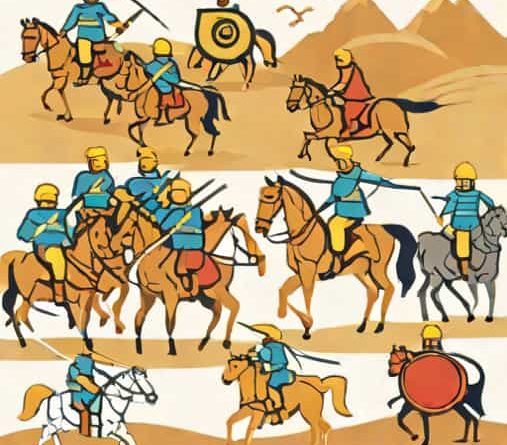
Short Summary Of The Battle Of Plataea
The Battle of Plataea, fought in 479 BCE, was one of the most decisive encounters of the Greco-Persian Wars, marking the end of Persian invasions into mainland Greece. This battle brought together a coalition of Greek city-states, led by Sparta and Athens, who had endured previous confrontations at Marathon, Thermopylae, and Salamis. The confrontation at Plataea not only showcased the strategic skills of the Greek generals but also demonstrated the unity and determination of the Greek people in defending their homeland against the mighty Persian Empire. Understanding this battle provides insight into ancient military tactics, the political landscape of Greece, and the long-lasting effects it had on Greek culture and identity.
Background of the Battle
The Persian Wars were initiated by the ambitious expansionist policies of King Xerxes I of Persia, who sought to conquer all of Greece. Prior to Plataea, Persian forces had achieved notable successes, including the capture of Athens after the Battle of Thermopylae and the naval engagements at Artemisium and Salamis. However, the Greek city-states, despite their differences and frequent rivalries, united in response to the Persian threat. By the summer of 479 BCE, both sides were preparing for a decisive land battle near the city of Plataea in Boeotia. The Greeks knew that their strategy, discipline, and terrain advantages could counter the larger Persian forces.
Greek Forces and Leadership
The Greek army was composed of troops from several city-states, with Sparta providing the core of heavily armed hoplites. The overall Greek strategy relied on the strength of their infantry formations and the ability to maintain cohesion during prolonged engagements. The Greek commander Pausanias, a Spartan regent, led the combined forces, with significant contributions from Athenian generals and soldiers. The coordination among different Greek states was critical, as they had to manage communication, supply lines, and morale in the face of a numerically superior enemy.
Persian Forces and Strategy
The Persian army, commanded by Mardonius after Xerxes’ retreat to Asia, was a massive and diverse force, including infantry, cavalry, and archers from various regions of the Persian Empire. Their strategy relied on overwhelming numbers, mobility, and the use of archery to weaken enemy formations before direct engagement. However, the Persian forces were also dealing with logistical challenges, unfamiliar terrain, and the difficulty of maintaining cohesion among soldiers from many different regions and cultures. These factors would ultimately influence the outcome of the battle.
Course of the Battle
The Battle of Plataea began with cautious maneuvering on both sides, as the Greeks sought advantageous positions on higher ground and the Persians attempted to provoke an attack. The fighting intensified when the Persian forces advanced, expecting the Greek army to break ranks under pressure. However, the disciplined Greek hoplites held their formations, repelling repeated Persian attacks. The terrain played a crucial role, as narrow areas limited the effectiveness of Persian cavalry and reduced their numerical advantage.
Key Events During the Fight
- The Greeks maintained strong defensive lines, using shields and spears effectively against the Persian onslaught.
- The Persian general Mardonius, confident in victory, led a major charge but was killed in the confrontation, which caused confusion and panic among Persian troops.
- Greek counterattacks exploited gaps in the Persian lines, gradually turning the tide of the battle.
- The combination of heavy infantry strength, strategic terrain use, and disciplined formations allowed the Greeks to rout the Persian forces.
Outcome and Consequences
The Battle of Plataea ended in a decisive Greek victory. Persian forces were either killed or forced to retreat, marking the effective end of Persian attempts to conquer Greece. The victory had far-reaching consequences for Greek civilization. It boosted the morale and confidence of Greek city-states, reinforced the importance of unity, and allowed Athens and Sparta to emerge as dominant powers in the region. Politically, it encouraged further cooperation among city-states, while culturally, it inspired art, literature, and the idealization of Greek military heroism for generations to come.
Significance in History
The battle is remembered as a turning point in the Greco-Persian Wars, demonstrating that a well-organized, disciplined army could defeat a larger but less coordinated force. It preserved Greek independence and laid the foundation for the Classical Greek period, during which art, philosophy, and democracy flourished. Military historians also study Plataea for its effective use of combined arms, terrain, and troop morale, offering lessons that continue to be referenced in strategic studies today.
Lessons from the Battle
- Unity and cooperation among diverse groups can overcome significant numerical disadvantages.
- Knowledge of terrain and strategic positioning is as critical as troop strength.
- Disciplined formations and trained soldiers can withstand repeated assaults even against larger armies.
- The morale of both leaders and troops can decisively impact the outcome of a battle.
The Battle of Plataea remains one of the most important military engagements in ancient history. By understanding the events, strategies, and consequences of the battle, we gain insight into the resilience and tactical skill of the Greek city-states in resisting Persian domination. The victory at Plataea not only secured Greek freedom but also allowed the flourishing of culture, governance, and intellectual achievements that shaped Western civilization. The battle is a reminder that careful planning, cooperation, and courage in the face of overwhelming odds can change the course of history.