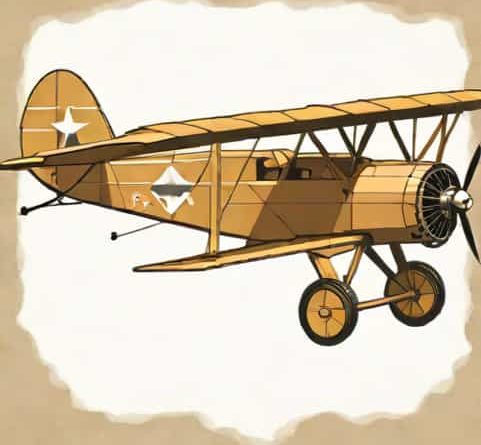
The Fokker Plane Ww1
The Fokker plane played a significant role during World War I, shaping the development of aerial combat and changing the way wars were fought in the sky. Designed by the Dutch engineer Anthony Fokker, these aircraft became some of the most iconic planes of the early 20th century. Known for their innovative synchronization gear, which allowed pilots to fire machine guns through the propeller without damaging the blades, Fokker planes revolutionized fighter aviation. Understanding the history, design, and impact of the Fokker plane in World War I provides insight into early military aviation, technological advancement, and the strategic importance of air superiority during the conflict.
Introduction to Fokker Planes
The Fokker plane refers to a series of aircraft designed and manufactured by Anthony Fokker and his company during World War I. Fokker, originally from the Netherlands, moved to Germany and became instrumental in producing planes for the German Air Service. These planes were primarily fighters, though some designs included reconnaissance and bomber variants. The Fokker Eindecker, in particular, gained fame as the first fighter plane equipped with a synchronized machine gun, giving German pilots a distinct advantage in air combat during 1915 and 1916.
Design and Engineering Innovations
The success of Fokker planes in World War I can be attributed to several key design and engineering innovations
- Synchronization GearThe development of the synchronization mechanism allowed bullets to pass through the spinning propeller safely, enabling pilots to aim directly at enemy aircraft with deadly accuracy.
- Monoplane DesignEarly Fokker planes like the Eindecker featured a monoplane configuration, which offered greater speed and maneuverability compared to many biplanes of the era.
- Lightweight ConstructionFokker planes were constructed using wood and fabric, creating a lightweight yet durable airframe that enhanced flight performance.
- Engine PowerEquipped with rotary engines, these planes could achieve significant speeds and climb rates for dogfighting advantages.
Fokker Eindecker The First True Fighter
The Fokker Eindecker was the first fighter aircraft to implement the synchronization gear, marking a turning point in aerial warfare. Introduced in 1915, it was a single-seat monoplane that allowed pilots to engage in more precise combat. The Eindecker’s innovation created a period known as the Fokker Scourge, during which German pilots gained air superiority over Allied forces. Despite its relatively simple design, the Eindecker’s combination of speed, maneuverability, and synchronized armament made it a formidable opponent in the early years of World War I.
Variants of the Eindecker
The Eindecker had several variants, each improving on the previous model
- E.IThe initial model equipped with a single synchronized machine gun.
- E.II and E.IIIImproved engine power, structural stability, and armament, enhancing combat effectiveness.
- E.IVFeatured two machine guns and a more powerful engine, though it appeared later in the war.
Impact on World War I Air Combat
The Fokker plane significantly influenced aerial strategies and combat tactics during World War I. The introduction of the synchronization gear allowed German pilots to dominate the skies temporarily, as Allied planes lacked comparable technology initially. This air superiority forced the Allies to develop new tactics, aircraft designs, and countermeasures, ultimately accelerating the technological race in aviation. Fokker planes also demonstrated the importance of fighter aircraft in reconnaissance, supporting ground operations, and engaging in dogfights that could influence the outcomes of battles on the ground.
Notable Fokker Pilots
Several famous World War I pilots flew Fokker planes, contributing to their legendary status
- Max ImmelmannKnown as the Eagle of Lille, he used the Fokker Eindecker to achieve multiple victories and develop aerial combat tactics.
- Oswald BoelckeCredited with formalizing fighter tactics, Boelcke’s experience with Fokker planes helped establish rules for air combat and formation flying.
- Kurt WintgensOne of the first German pilots to score victories with a synchronized machine gun, showcasing the effectiveness of the Fokker design.
Evolution of Fokker Aircraft
After the Eindecker, Fokker continued to innovate with new aircraft designs. Biplanes like the Fokker D.I and D.III followed, incorporating more powerful engines, improved maneuverability, and stronger airframes. The Fokker Dr.I triplane, famously flown by the Red Baron, Manfred von Richthofen, became an iconic symbol of World War I aviation. Each subsequent design aimed to overcome the limitations of earlier models while maintaining the advantages of synchronization gear, agility, and combat effectiveness.
Fokker Triplane
The Fokker Dr.I triplane introduced in 1917 was notable for its maneuverability and climb rate. Although it was slower than some contemporary Allied aircraft, its ability to turn sharply and climb rapidly made it a deadly weapon in dogfights. Pilots who mastered the Dr.I could outmaneuver opponents and control engagements, demonstrating the importance of aircraft handling in addition to technological innovation.
Legacy of the Fokker Planes
The Fokker plane’s influence extends beyond World War I. Its innovations in synchronization gear, fighter tactics, and aircraft design laid the groundwork for modern aerial combat. Fokker’s engineering principles influenced future generations of aircraft designers, and the company continued producing planes after the war, contributing to commercial aviation. The Fokker planes of World War I also hold historical significance, symbolizing the early evolution of air warfare and the technological arms race that shaped 20th-century military aviation.
Preservation and Historical Significance
Several Fokker aircraft are preserved in museums and aviation collections, allowing modern audiences to understand their design, function, and historical context. Exhibits often showcase replicas or restored planes like the Eindecker and Dr.I, illustrating the ingenuity of early aviation and the bravery of pilots who flew in challenging conditions. These preserved planes highlight the historical importance of Fokker aircraft in the development of air combat tactics and military aviation history.
The Fokker plane played a pivotal role in World War I, introducing technological innovations that changed the course of aerial combat. From the pioneering Eindecker with its synchronized machine gun to the legendary Dr.I triplane, Fokker aircraft demonstrated the importance of speed, maneuverability, and firepower in the skies. Their impact on pilots, tactics, and aircraft development influenced the trajectory of military aviation and established a legacy that persists in historical memory and aviation studies. Understanding the Fokker plane highlights the ingenuity, strategy, and courage that defined early 20th-century air warfare.