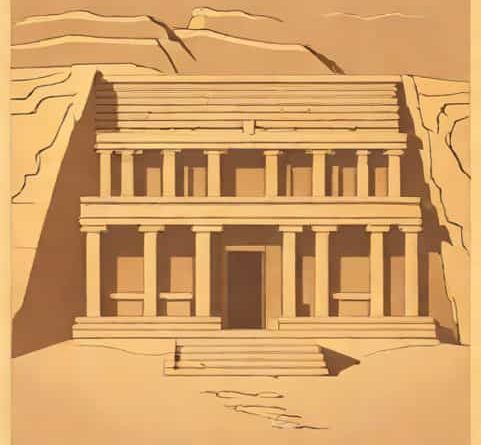
The Funerary Complex Of Djoser
The funerary complex of Djoser stands as one of the most remarkable monuments of ancient Egypt, reflecting both architectural innovation and deep spiritual significance. Built during the 27th century BCE for Pharaoh Djoser of the Third Dynasty, this site represents a crucial transition from earlier mudbrick mastabas to the grand stone pyramids that would later define the Old Kingdom. Located at Saqqara, near the ancient city of Memphis, the complex not only served as a tomb for the king but also as a symbol of eternal life, royal authority, and the advanced engineering skills of the time. Understanding the funerary complex of Djoser offers insight into the origins of pyramid construction, the evolution of Egyptian religion, and the enduring legacy of one of history’s earliest monumental builders.
Historical Background of the Complex
The funerary complex of Djoser was constructed during the reign of Pharaoh Djoser, around 2667-2648 BCE. His architect, the genius Imhotep, is credited with designing a revolutionary structure that departed from traditional mastabas. Instead of a single flat tomb, Imhotep envisioned a series of stacked terraces that eventually formed the iconic Step Pyramid. This marked the beginning of large-scale stone construction in Egypt and set the precedent for future pyramid building in the Old Kingdom. The project demonstrated not only the power of the king but also the growing sophistication of Egyptian society and its ability to mobilize labor and resources on an unprecedented scale.
The Step Pyramid as the Core of the Complex
At the heart of the funerary complex of Djoser lies the Step Pyramid, a six-tiered structure rising approximately 62 meters above the desert plateau. Originally conceived as a simple mastaba, the pyramid underwent multiple design changes, with each layer added to create a towering monument that symbolized the king’s ascent to the heavens. The Step Pyramid is considered the earliest colossal stone building in history and served as both a royal tomb and a spiritual ladder connecting the earthly realm with the divine. Beneath the pyramid lies a vast network of tunnels and chambers, including the burial chamber where Djoser’s sarcophagus was placed, though it was likely plundered in antiquity.
Architectural Innovations
The funerary complex of Djoser introduced groundbreaking techniques in construction and design. The use of limestone blocks, precisely cut and carefully fitted, marked a significant departure from the mudbrick structures of earlier dynasties. Imhotep’s planning included not just the pyramid but also a surrounding enclosure wall, ceremonial courtyards, and a variety of temples and chapels. The geometric precision of the pyramid and its alignment with the cardinal points reflect the ancient Egyptians’ deep understanding of mathematics and astronomy. These innovations paved the way for the later smooth-sided pyramids, including the Great Pyramid of Giza, which would follow in the Fourth Dynasty.
The Enclosure Wall and Courtyards
Surrounding the Step Pyramid is a massive limestone wall measuring approximately 10 meters in height and extending for over 1.5 kilometers in length. This wall, adorned with false doors and decorative niches, created a sense of sacred isolation, separating the complex from the outside world. Inside the enclosure, large courtyards served ceremonial purposes, including rituals meant to ensure the king’s eternal life. The Heb-Sed court, in particular, was designed for the celebration of the king’s rejuvenation festival, symbolizing his renewed power and ability to rule in the afterlife.
Temples and Chapels Within the Complex
The funerary complex of Djoser contained numerous buildings intended for religious ceremonies and offerings. Among these were the mortuary temple, where priests would perform rituals to honor the deceased king, and several dummy chapels that represented the king’s presence in various parts of Egypt. Although some of these structures were purely symbolic and not meant for practical use, they reflected the Egyptians’ belief in the importance of ritual spaces for maintaining cosmic order. The South Tomb, another key feature of the complex, may have served as a symbolic burial place or a repository for sacred objects.
Religious and Symbolic Significance
Beyond its architectural achievements, the funerary complex of Djoser held profound religious meaning. Ancient Egyptians believed that death was not the end but the beginning of an eternal journey. The Step Pyramid symbolized the pharaoh’s ascent to the afterlife, while the surrounding temples and courtyards facilitated rituals that ensured his safe passage and continued influence. The complex also reinforced the divine nature of kingship, presenting Djoser as a mediator between gods and humans. Each element of the design, from the orientation of the pyramid to the placement of ceremonial spaces, carried symbolic weight tied to concepts of rebirth, immortality, and cosmic balance.
Role of Imhotep
Imhotep, the chief architect of the funerary complex, played a pivotal role in transforming Egyptian architecture. Revered as a polymath skilled in engineering, medicine, and astronomy, Imhotep was later deified and worshiped as a god of wisdom and healing. His ability to design a complex that combined functionality with spiritual symbolism made the Step Pyramid one of the most influential structures in ancient history. Imhotep’s legacy continued to inspire generations of builders and thinkers across Egypt and beyond.
Preservation and Modern Exploration
Over the millennia, the funerary complex of Djoser faced natural erosion, earthquakes, and looting, yet it remains remarkably well-preserved compared to other monuments of similar age. Modern archaeologists and restoration teams have worked extensively to stabilize the Step Pyramid and its surrounding structures. Excavations have revealed intricate details of the underground chambers, decorative reliefs, and artifacts that shed light on the rituals and daily life of the Old Kingdom. These ongoing efforts ensure that future generations can continue to study and admire this extraordinary site.
Visitor Experience Today
Today, the funerary complex of Djoser is a major tourist attraction and an essential stop for anyone exploring Egypt’s ancient wonders. Visitors can walk through the grand entrance colonnade, explore the vast courtyards, and marvel at the towering Step Pyramid. Informational displays and guided tours provide insight into the historical and religious significance of the site, allowing travelers to connect with a civilization that thrived more than 4,600 years ago. The complex remains a testament to the ingenuity, devotion, and enduring legacy of ancient Egyptian culture.
Legacy of the Funerary Complex
The funerary complex of Djoser represents a turning point in human architectural history. It bridged the gap between simple burial mounds and the great pyramids that would dominate the Egyptian skyline in later centuries. More than just a royal tomb, it was a statement of power, faith, and innovation. The Step Pyramid’s influence can be seen not only in subsequent Egyptian monuments but also in the broader history of architecture as one of the earliest examples of large-scale stone construction. By studying this complex, historians and archaeologists gain invaluable insights into the technological advances and spiritual beliefs of one of the world’s greatest ancient civilizations.
Enduring Inspiration
Even after thousands of years, the funerary complex of Djoser continues to inspire awe. Its combination of artistic beauty, engineering brilliance, and spiritual depth makes it more than just an archaeological site. It is a reminder of humanity’s timeless quest to honor the dead, reach for the heavens, and leave a lasting mark on the earth. As modern visitors stand before the Step Pyramid, they witness not only the burial place of a king but also the birth of monumental architecture that would shape civilizations for millennia.