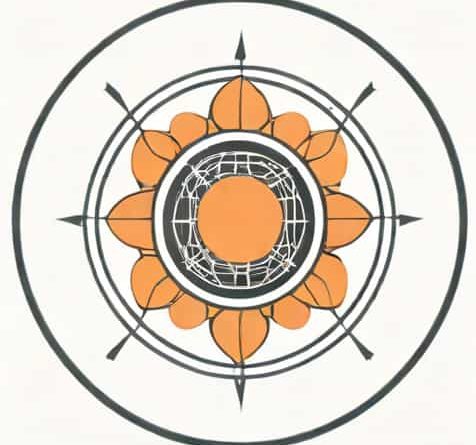
The Microcosm Is The Macrocosm
The phrase the microcosm is the macrocosm captures an ancient and powerful idea that the small and the vast mirror one another in profound ways. This concept suggests that the structure of the universe is reflected in every detail of existence, from the human body and mind to the stars and galaxies. It is a notion that has influenced philosophy, science, spirituality, and art for centuries. By exploring how the microcosm relates to the macrocosm, we uncover patterns of unity that connect individuals to the cosmos and reveal the interconnectedness of all things.
Origins of the Microcosm and Macrocosm Concept
The relationship between microcosm and macrocosm has its roots in ancient philosophy. Greek thinkers such as Plato and the Stoics believed that the universe, or the macrocosm, was a vast organism with its own order and balance. Humans, considered the microcosm, were thought to be smaller reflections of that order. Similar parallels are found in Indian and Chinese traditions, where cosmic patterns were seen in human life, nature, and spiritual systems.
Greek Influence
Plato argued that the human soul and body reflected the harmony of the universe. Later philosophers, such as Plotinus, emphasized the idea that by understanding oneself, one could understand the greater order of existence. This philosophical framework inspired both mystical traditions and the development of natural sciences in the West.
Eastern Perspectives
In Hinduism and Buddhism, the human being is seen as a small-scale version of the universe. The chakras, for example, are believed to align with cosmic energies, creating balance between the individual and the cosmos. In Daoist thought, the principle of harmony between heaven, earth, and humanity echoes the same concept of microcosm and macrocosm.
Scientific Reflections of the Idea
Although the microcosm and macrocosm concept began in philosophy and spirituality, it resonates with discoveries in modern science. Patterns found at small scales often resemble those at larger scales, revealing a deep connection between different levels of reality.
Fractals and Natural Patterns
Fractals are repeating geometric shapes that look similar at different scales. Examples include snowflakes, tree branches, and even blood vessels. These patterns illustrate how the same principles govern both the microcosm of biology and the macrocosm of nature.
Physics and the Universe
In physics, the structure of atoms mirrors the structure of solar systems in a symbolic way. Electrons orbiting a nucleus evoke the planets orbiting a star, suggesting that similar forces shape both the microscopic and the cosmic. While the mechanisms differ, the comparison highlights the beauty of universal design.
The Human Being as a Microcosm
Humans are often described as microcosms of the universe because our bodies, minds, and spirits reflect larger cosmic forces. This idea reinforces the belief that by studying the self, one can understand the cosmos.
Body and Nature
The human body reflects natural cycles the heartbeat mirrors rhythms of waves, breathing aligns with the cycles of wind, and biological clocks echo the patterns of day and night. Even the elements within us-water, air, fire, and earth-symbolize universal principles that operate on a grander scale.
Mind and Cosmos
Our thoughts and emotions are influenced by cosmic rhythms. Ancient astrologers believed planetary alignments shaped human character and destiny. Even in modern psychology, the collective unconscious has been linked to universal archetypes that show humanity’s connection to the larger universe.
Spiritual and Mystical Interpretations
Mystical traditions across the world have long embraced the phrase the microcosm is the macrocosm as a way to understand spiritual unity. This perspective emphasizes that humans are not separate from the cosmos but are instead integral parts of its living order.
Hermetic Philosophy
The Hermetic tradition from ancient Egypt and Greece explicitly teaches that as above, so below. This principle captures the essence of the microcosm-macrocosm relationship. In Hermeticism, exploring the self is a pathway to cosmic truth, as the inner and outer worlds are seen as mirrors of each other.
Alchemy and Transformation
Alchemists used the microcosm and macrocosm framework to explain the transformation of matter and spirit. They believed that the same processes that change metals in the laboratory also transform the human soul. In this way, the universe’s cycles of birth, death, and renewal are reflected in individual human lives.
Modern Relevance of the Concept
Even in today’s fast-paced and scientific world, the idea that the microcosm reflects the macrocosm remains deeply relevant. It influences how we view ecology, society, and personal growth, highlighting the interconnectedness of all existence.
Ecological Insights
The health of ecosystems often parallels the health of individuals and societies. When small systems break down, larger ones are affected. By caring for the microcosm-such as local environments-we contribute to the well-being of the global macrocosm.
Personal Development
Self-reflection and personal growth can be understood through the lens of microcosm and macrocosm. By harmonizing the mind and body, individuals align with universal principles of balance and order. This creates a sense of unity with the cosmos and inspires a more meaningful life.
Applications in Art and Literature
Artists and writers have long used the microcosm-macrocosm relationship as inspiration. Literature often portrays human lives as symbolic of greater cosmic struggles. Similarly, visual art uses patterns that repeat on small and large scales to communicate unity and infinity.
- Poets like William Blake explored the idea of seeing the world in a grain of sand, illustrating the universe within the smallest object.
- Architects designed structures based on sacred geometry, believing that small-scale harmony mirrored universal design.
- Modern artists and filmmakers continue to explore themes where individual stories reflect broader cosmic truths.
Challenges and Criticisms
While the concept of microcosm and macrocosm is inspiring, it has also been questioned. Critics argue that drawing parallels between small and large systems can sometimes oversimplify reality. Scientific explanations require precision, and symbolic connections may not always align with measurable data. However, even with these critiques, the idea retains its philosophical and cultural value.
Symbolism vs. Science
It is important to distinguish symbolic truths from scientific ones. The orbit of electrons and planets may not function in the same way, but the symbolic connection still carries meaning. The value of the microcosm-macrocosm principle lies not in strict science but in its ability to inspire deeper understanding of relationships in the universe.
The phrase the microcosm is the macrocosm reminds us that existence is interconnected, from the smallest patterns of life to the vast expanse of the cosmos. Rooted in ancient philosophy yet echoed in modern science, it bridges spirituality, ecology, art, and personal growth. By recognizing that the universe is reflected within us and that we, in turn, reflect the universe, we cultivate a greater sense of harmony and belonging. This timeless concept continues to guide humanity toward an awareness of unity, reminding us that the small and the infinite are part of the same living whole.