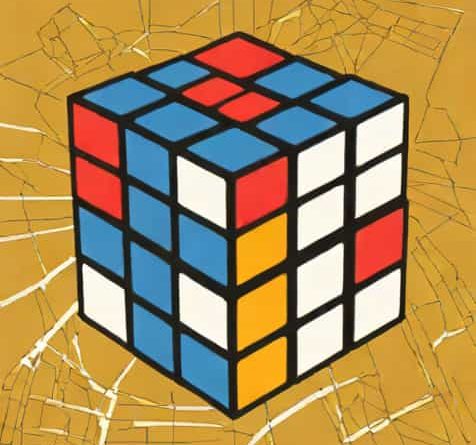
Unsolvable Rubik’S Cube Solver
The Rubik’s Cube is one of the most iconic puzzles in the world, celebrated for its complexity, colorful design, and the challenge it presents to enthusiasts of all ages. While millions of people have successfully solved the cube using logic and algorithms, some configurations are deemed unsolvable due to physical tampering, disassembly, or stickers being rearranged incorrectly. An unsolvable Rubik’s Cube poses a unique challenge and has led to the development of specialized tools and software, often referred to as unsolvable Rubik’s Cube solvers, designed to detect issues and attempt solutions within the bounds of possibility. Understanding these solvers requires knowledge of cube mechanics, algorithms, and the limits of puzzle-solving technology.
Understanding the Rubik’s Cube
The standard Rubik’s Cube consists of 26 smaller cubes, or cubies, arranged in a 3x3x3 structure. Each face contains nine stickers of a single color, and the puzzle is considered solved when each face displays a uniform color. Solving the cube relies on algorithms, sequences of rotations that manipulate pieces while preserving the structure’s integrity. The cube’s popularity stems from its blend of spatial reasoning, memory, and logical problem-solving skills. However, not all cubes are created equal-some configurations cannot be solved without intervention.
What Makes a Rubik’s Cube Unsolvable?
There are several reasons why a Rubik’s Cube may become unsolvable. Understanding these scenarios is crucial for grasping the role of an unsolvable Rubik’s Cube solver
- Physical TamperingRotating individual cubies or altering the internal mechanism can lead to configurations that algorithms cannot correct.
- Sticker RearrangementSwapping stickers incorrectly can create impossible patterns that violate the cube’s inherent color relationships.
- Disassembly ErrorsIf the cube is taken apart and reassembled incorrectly, certain positions of edges and corners cannot be solved using standard algorithms.
- Mechanism LimitationsSome high-complexity cubes or defective cubes may lock pieces in ways that prevent proper alignment.
What is an Unsolvable Rubik’s Cube Solver?
An unsolvable Rubik’s Cube solver is a tool-either software or a physical guide-that helps identify why a cube cannot be solved and attempts to provide corrective measures. Unlike standard cube solvers, which assume a solvable configuration, these solvers are designed to detect errors, suggest repairs, or provide step-by-step guidance for restoring the cube to a solvable state.
Software-Based Solvers
Modern technology has enabled the creation of software that can analyze a Rubik’s Cube configuration. By inputting the current arrangement of the stickers or the positions of cubies, the software can
- Determine whether the cube is in a solvable state.
- Identify incorrectly placed or oriented pieces.
- Suggest rotations or corrective steps to bring the cube back to a solvable configuration.
- Provide visualizations of moves to assist users in understanding errors.
These solvers often use combinatorial algorithms and group theory principles to detect inconsistencies. They can differentiate between cubes that are unsolvable due to misassembly and those that are simply scrambled in a challenging but solvable state.
Physical or Manual Approaches
For cubes that are physically altered, a manual approach may involve disassembly and proper reassembly. An unsolvable Rubik’s Cube solver, in this context, acts as a guide, providing instructions for
- Careful removal of cubies without damaging the mechanism.
- Correct reorientation of corners and edges based on color relationships.
- Reassembly that restores the cube to a state solvable by traditional algorithms.
Manual guides complement software solvers, particularly for physical tampering issues that cannot be corrected through algorithmic moves alone.
Techniques Used in Unsolvable Cube Solvers
Solvers employ several techniques to address the challenges presented by unsolvable configurations
Permutation and Orientation Analysis
The solver analyzes the permutation of pieces (positions) and their orientation (rotation). By comparing the current configuration against valid states, it can identify impossible arrangements, such as a single twisted edge or swapped corner pair, which are indicators of unsolvability.
Error Detection Algorithms
Software solvers utilize error detection algorithms to pinpoint which pieces violate the cube’s intrinsic rules. These rules include color distribution, parity constraints, and the legal positions of corners and edges. Detecting errors allows users to make targeted corrections without guessing.
Guided Correction Steps
Once errors are identified, solvers provide guided instructions. In software, this may include visual step-by-step rotations, while in physical guides, it includes disassembly and proper reorientation of pieces. This structured approach prevents further mistakes and ensures the cube is restored to a solvable state.
Applications of Unsolvable Rubik’s Cube Solvers
Unsolvable Rubik’s Cube solvers have a range of applications, extending beyond casual puzzle solving
Educational Uses
These solvers help students and enthusiasts understand the underlying mathematics of the cube, including combinatorial theory and group theory. By exploring unsolvable scenarios, learners gain insight into what makes a configuration impossible and how algorithms function to restore order.
Competitive Puzzle Solving
In competitive settings, detecting unsolvable cubes quickly can save time and prevent frustration. Solvers ensure that competitors use cubes that are in a valid state for competitions, maintaining fairness and consistency.
Cube Restoration and Maintenance
For collectors or hobbyists, solvers assist in restoring cubes that may have been altered, damaged, or misassembled. This ensures that the cubes remain functional, aesthetically pleasing, and usable for regular solving practice.
Challenges and Limitations
Despite their usefulness, unsolvable Rubik’s Cube solvers have limitations. Software solvers require accurate input and cannot physically fix mechanical issues, while manual guides depend on the user’s precision and careful handling. Additionally, cubes with extensive damage or sticker removal may be beyond repair, making some configurations permanently unsolvable.
Unsolvable Rubik’s Cube solvers represent a fascinating intersection of logic, mathematics, and practical problem-solving. Whether through software analysis or physical guidance, these tools help users identify errors, understand the principles behind cube configurations, and restore puzzles to a solvable state. By studying unsolvable cubes, enthusiasts not only improve their problem-solving skills but also gain deeper insight into the mechanics and mathematics that make the Rubik’s Cube a timeless and universally recognized challenge. From casual hobbyists to competitive solvers, the ability to recognize and correct unsolvable configurations enhances both the enjoyment and mastery of this iconic puzzle.