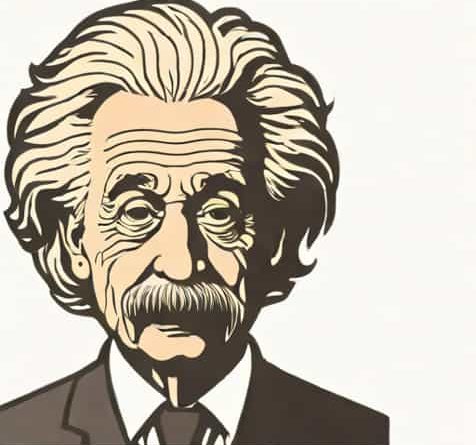
What Did Albert Einstein Flunk
Albert Einstein is often remembered as one of the greatest scientific minds in history, but a surprising number of myths surround his early education. Many people wonder what did Albert Einstein flunk and whether his path to genius was filled with academic failures. Stories about him struggling in school or failing mathematics have circulated for decades. While some of these tales contain kernels of truth, others are exaggerations or misunderstandings. Exploring Einstein’s actual academic record reveals a more accurate and fascinating story of a boy whose unconventional brilliance sometimes clashed with traditional education.
The Myth of Einstein Failing Math
One of the most popular myths about Einstein is that he flunked mathematics as a student. This rumor has been repeated countless times, giving the impression that even the greatest genius of the 20th century once struggled with basic numbers. In reality, Einstein did not fail math at all. By the time he was fifteen, he was already ahead of his peers in both algebra and calculus. His performance in mathematics was strong throughout his youth, contradicting the widespread belief that he had difficulties in the subject.
The Entrance Exam Story
So, what did Albert Einstein actually flunk? The truth is that he failed an entrance examination to the Swiss Federal Polytechnic in Zurich in 1895. At the age of sixteen, Einstein applied to this prestigious institution to pursue a career in science and engineering. While he excelled in the sections related to physics and mathematics, he did not perform well in other areas. Specifically, he struggled with subjects outside his main interests, such as languages, history, and geography. Because of these weaknesses, Einstein did not achieve the overall score required to gain admission on his first attempt.
Why Einstein Struggled with Certain Subjects
Einstein’s poor performance in non-scientific subjects did not reflect a lack of intelligence but rather a lack of interest. From a young age, he showed a strong passion for mathematics, philosophy, and the natural sciences. However, when it came to memorization-heavy subjects like language and history, he often grew impatient and bored. His educational environment also played a role, as traditional teaching methods emphasized rote learning, which did not suit Einstein’s creative and questioning mind.
What Happened After the Failure
Failing the entrance exam did not end Einstein’s academic journey. Instead, it redirected him. His family encouraged him to complete additional schooling to improve his weaker subjects. He attended a Swiss school in Aarau, where the teaching style was less rigid and more open to critical thinking. This environment suited him far better, allowing his talents to shine. After completing his studies there, he reapplied to the Polytechnic and was admitted in 1896. This pivotal moment demonstrates how one academic setback did not define his future.
Einstein’s School Years A Closer Look
Before the Zurich Polytechnic exam, Einstein’s school record was mixed. As a child in Germany, he was considered a good student, especially in math and science, but his teachers often misunderstood him. His curiosity and tendency to ask deep questions sometimes clashed with strict classroom discipline. Teachers who preferred obedient students often labeled him as difficult. While Einstein excelled when he could think freely, he struggled in environments that valued conformity over creativity.
The Role of Standardized Education
Einstein’s experiences highlight the challenges that unconventional thinkers often face in standardized education systems. His struggles were not with intellectual ability but with the rigidity of traditional schooling. In subjects requiring memorization and repetitive drills, he underperformed, while in areas that rewarded logical reasoning and imagination, he thrived. This contrast explains why he could fail part of an entrance exam yet later revolutionize physics with groundbreaking theories.
The Persistence Behind the Genius
The fact that Albert Einstein once flunked an important exam shows that failure can be a stepping stone rather than an endpoint. He did not allow the setback to discourage him. Instead, he continued learning, found an environment that matched his strengths, and eventually became one of the greatest physicists of all time. This story has inspired countless students who face difficulties in their studies, reminding them that early struggles do not determine lifelong potential.
Other Academic Struggles
Although the entrance exam is the most well-documented example of Einstein failing, he faced other academic challenges as well. During his university years, he often clashed with professors and resisted traditional methods of instruction. His independent spirit sometimes worked against him, making it harder to form academic connections. After graduation, he initially struggled to find a teaching position. Instead, he worked at a patent office in Bern, where he used his spare time to develop revolutionary scientific ideas. These challenges illustrate how even someone with immense talent must navigate setbacks along the way.
Lessons from Einstein’s Academic Journey
Einstein’s story teaches valuable lessons about education and success
- Failure is not finalOne failed exam did not stop Einstein from pursuing his dreams.
- Passion drives successHis love for science pushed him forward even when school did not support his learning style.
- Different learners need different approachesEinstein thrived in environments that encouraged questioning and creativity rather than rote memorization.
- Persistence pays offDespite rejection and challenges, Einstein kept working toward his goals.
Debunking the Myths
It is important to separate fact from fiction when asking what did Albert Einstein flunk. He never failed math, as many people believe. In fact, he was quite advanced in mathematics from an early age. The truth is that he failed only parts of a general entrance exam, specifically in subjects outside his passion. This distinction matters because it prevents the spread of false information while still acknowledging that even Einstein faced academic obstacles.
The Broader Meaning of Failure
Einstein’s experience reveals that failure should not be seen as a sign of weakness but as part of the learning process. Many great thinkers, inventors, and leaders have faced rejection, mistakes, or setbacks before achieving success. Einstein’s flunked exam reminds us that failure can redirect us toward better opportunities. Without that early setback, Einstein might not have attended the Swiss school in Aarau, which played a crucial role in shaping his later achievements.
When exploring the question of what did Albert Einstein flunk, the answer is clear he failed parts of the entrance exam for the Swiss Federal Polytechnic in Zurich at the age of sixteen, particularly in subjects unrelated to his strengths. He did not, however, fail mathematics as the popular myth suggests. This story reflects not a lack of intelligence but the challenges of fitting a creative mind into rigid educational systems. More importantly, it demonstrates how setbacks can serve as turning points. Einstein’s journey from failure to groundbreaking discoveries shows that persistence, passion, and resilience are far more powerful than a single exam result.