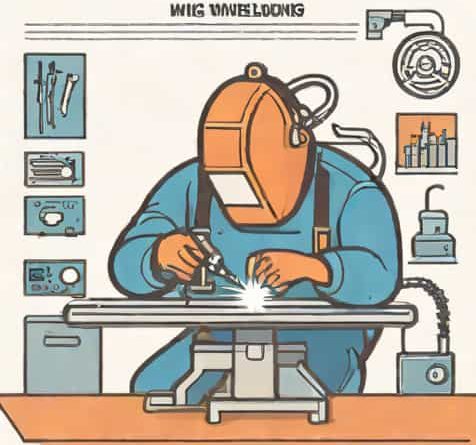
What Is Mig Welding
MIG welding, short for Metal Inert Gas welding, is a widely used welding process that enables the joining of metals with high efficiency and precision. It is popular in industries ranging from automotive manufacturing to construction and home DIY projects due to its speed, ease of use, and versatility. MIG welding uses a continuous solid wire electrode that is fed through a welding gun, while an inert shielding gas protects the weld pool from contamination by the surrounding air. This process allows welders to create strong, clean joints with minimal spatter, making it suitable for both professional and amateur applications. Understanding MIG welding, its techniques, equipment, and safety measures is essential for anyone interested in metal fabrication or repair work.
Overview of MIG Welding
MIG welding, also known as Gas Metal Arc Welding (GMAW), was developed in the mid-20th century and has since become one of the most common welding techniques. Its primary advantage lies in its ability to produce high-quality welds with relatively low skill requirements compared to other welding methods such as TIG welding or stick welding. The process involves feeding a continuous wire electrode from a spool through the welding gun, where it melts and fuses the metals together. A shielding gas, usually argon or a mixture of argon and carbon dioxide, protects the molten metal from oxidation and other atmospheric contamination.
Key Components of MIG Welding
- Welding GunThe handheld device through which the wire electrode and shielding gas are delivered to the weld site.
- Wire ElectrodeA continuous wire that acts as both the filler material and the electrical conductor for the arc.
- Shielding GasInert or semi-inert gases that prevent oxidation and contamination of the weld pool.
- Power SourceProvides a constant current or voltage to sustain the welding arc.
- Wire Feed SystemMechanism that controls the speed at which the electrode wire is fed through the gun.
How MIG Welding Works
The MIG welding process begins by establishing an electric arc between the wire electrode and the base metal. The arc generates intense heat, typically ranging from 6,000 to 12,000 degrees Fahrenheit, which melts the wire and the metal surfaces being joined. As the wire melts, it fills the joint, creating a strong bond. The shielding gas flows around the arc to prevent contamination, ensuring a smooth, clean weld. MIG welding is versatile and can be used on a variety of metals, including steel, stainless steel, and aluminum.
Step-by-Step Process
- Prepare the workpiece by cleaning the metal surfaces to remove rust, oil, or paint.
- Select the appropriate wire electrode and shielding gas for the type of metal being welded.
- Set the welding machine’s voltage and wire feed speed according to material thickness and welding position.
- Position the welding gun at the correct angle, usually between 10 and 15 degrees from vertical.
- Start the arc by pulling the trigger on the welding gun, allowing the wire to melt and form the weld pool.
- Move the gun steadily along the joint, maintaining a consistent arc length and speed to ensure uniform penetration.
- After completing the weld, allow it to cool slightly before inspecting for quality and making any necessary clean-up.
Advantages of MIG Welding
MIG welding offers numerous benefits that make it a preferred choice for many metalworking applications
Ease of Use
- Requires less skill compared to other welding methods, making it suitable for beginners.
- Continuous wire feed reduces the need to stop and change electrodes frequently.
- Simplified setup and control of parameters allow for consistent weld quality.
Speed and Efficiency
- MIG welding is faster than many other methods, especially for long welds or production work.
- Reduces downtime because of minimal cleaning or finishing required after welding.
- Ideal for both thin and thick materials, providing high deposition rates.
Versatility
- Can be used on a wide range of metals, including carbon steel, stainless steel, and aluminum.
- Applicable in various positions, including flat, horizontal, vertical, and overhead welding.
- Compatible with both indoor and outdoor work when appropriate shielding gases are used.
Limitations and Challenges
Despite its advantages, MIG welding has some limitations that welders must consider
Equipment Costs
MIG welding machines and consumables such as wire spools and shielding gases can be more expensive than stick welding setups, especially for beginners or hobbyists.
Outdoor Use Considerations
The shielding gas can be blown away by wind, causing contamination and poor weld quality. Specialized gas nozzles or flux-cored wire may be required for outdoor applications.
Skill and Technique
Although easier than TIG welding, maintaining a steady hand, proper gun angle, and correct speed is crucial to avoid defects such as porosity, incomplete fusion, or spatter.
Applications of MIG Welding
MIG welding is used across multiple industries for both structural and decorative purposes. Its versatility and efficiency make it suitable for a variety of applications
Automotive Industry
- Bodywork repair, including welding panels and frames.
- Manufacturing of car components and assembly line welding.
Construction and Fabrication
- Structural steel welding for buildings, bridges, and infrastructure.
- Fabrication of metal furniture, gates, and railings.
Manufacturing
- Production of metal equipment, machinery, and appliances.
- Assembly of metal parts and industrial products.
Safety Measures in MIG Welding
Welding involves high heat, intense light, and electrical currents, so safety is critical. Key precautions include
- Wearing appropriate personal protective equipment, including welding helmets, gloves, and flame-resistant clothing.
- Ensuring proper ventilation to avoid inhaling hazardous fumes and gases.
- Maintaining a clean and organized work area to reduce fire hazards.
- Following equipment manuals and training guidelines to operate the welding machine safely.
MIG welding is a highly efficient and versatile method of joining metals that offers speed, ease of use, and strong weld quality. It is suitable for a variety of industries, including automotive, construction, and manufacturing. By understanding the components, process, advantages, limitations, and safety measures of MIG welding, both professionals and hobbyists can achieve excellent results in metal fabrication projects. Its combination of precision, reliability, and adaptability continues to make MIG welding one of the most popular choices for metalworkers around the world.