Where Is Rfa Proteus
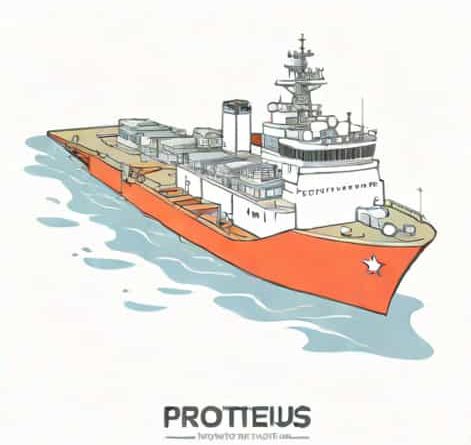
RFA Proteus is a specialized vessel operated by the United Kingdom’s Royal Fleet Auxiliary (RFA). Originally constructed as the offshore support vessel MV Topaz Tangaroa, it was acquired by the UK Ministry of Defence in early 2023 and subsequently converted into a Multi-Role Ocean Surveillance Ship (MROSS). This strategic move underscores the UK’s commitment to safeguarding its critical undersea infrastructure, such as communication cables and energy pipelines, from potential threats. The vessel’s primary mission is to conduct surveillance, survey, and seabed warfare operations in both British and international waters, ensuring the protection of vital underwater assets.
Geographical Location and Operational Base
RFA Proteus is registered in the United Kingdom and operates primarily in British territorial waters, including the English Channel and the Irish Sea. The vessel is homeported in Birkenhead, UK, where it underwent significant conversion work at the Cammell Laird shipyard to prepare for its new role. Its operations are not confined to UK waters; the ship is also deployed in international waters to monitor and protect undersea infrastructure globally. The vessel’s strategic positioning allows it to respond swiftly to emerging threats and conduct surveillance missions effectively.
Current Position and Deployment
As of the latest reports, RFA Proteus is stationed in the English Channel, actively engaged in its surveillance and seabed warfare operations. The vessel’s current location is monitored via Automatic Identification System (AIS) data, ensuring real-time tracking of its movements. Its deployment is part of a broader strategy to enhance maritime security and protect critical undersea infrastructure from potential adversaries. The vessel’s capabilities enable it to operate in various maritime environments, adapting to the specific requirements of each mission.
Design and Capabilities
RFA Proteus is a purpose-built vessel designed to support subsea operations. It features a 120-tonne crane and is equipped with a hangar and workshops capable of accommodating remotely operated vehicles (ROVs) and unmanned underwater vehicles (UUVs). These features enable the vessel to conduct deep-sea surveillance and survey operations, reaching depths of up to 6,000 meters. The ship’s design ensures it can perform complex tasks such as seabed mapping, infrastructure inspection, and the deployment of unmanned systems for various missions.
Operational Role and Mission
The primary mission of RFA Proteus is to safeguard the UK’s critical undersea infrastructure. This includes monitoring and protecting submarine communication cables, energy pipelines, and other vital assets that are susceptible to interference or sabotage. The vessel’s operations are crucial in the context of increasing concerns over the vulnerability of these infrastructures to hostile actions. By conducting regular surveillance and employing advanced technologies, RFA Proteus plays a pivotal role in ensuring the security and resilience of the UK’s maritime infrastructure.
Historical Background
Before its acquisition by the UK Ministry of Defence, RFA Proteus was known as MV Topaz Tangaroa. Built in 2019 by Vard Brattvaag in Norway, the vessel was initially operated by Topaz Marine, a subsidiary of P&O Maritime Logistics. During its commercial service, it supported various offshore projects, including the construction of the Greater Changhua offshore wind farm near Taiwan. Its design and capabilities made it an ideal candidate for conversion into a military surveillance vessel, leading to its purchase and subsequent transformation into RFA Proteus.
Conversion and Commissioning
The conversion of MV Topaz Tangaroa into RFA Proteus was carried out at the Cammell Laird shipyard in Birkenhead, UK. The transformation involved significant modifications to equip the vessel with the necessary tools and systems for its new role. This included the installation of advanced surveillance equipment, the creation of specialized spaces for unmanned systems, and the adaptation of the vessel’s infrastructure to support military operations. The conversion was completed in September 2023, and RFA Proteus was officially commissioned into the Royal Fleet Auxiliary in October 2023, marking a significant milestone in the UK’s maritime defense capabilities.
Strategic Importance
RFA Proteus represents a strategic asset in the UK’s efforts to protect its undersea infrastructure. The vessel’s capabilities allow it to conduct comprehensive surveillance and respond to potential threats swiftly. Its operations contribute to the broader objectives of maritime security and defense, ensuring that the UK’s critical undersea assets remain secure against evolving threats. The commissioning of RFA Proteus underscores the UK’s commitment to maintaining a robust and adaptable maritime defense posture in an increasingly complex global security environment.
Future Prospects
Looking ahead, RFA Proteus is expected to continue playing a vital role in the UK’s maritime security strategy. Its advanced capabilities and strategic positioning enable it to adapt to emerging threats and challenges in the maritime domain. As technology evolves and new risks emerge, the vessel’s role may expand to encompass additional responsibilities, further enhancing the UK’s ability to safeguard its undersea infrastructure and maintain maritime security. The continued development and deployment of such specialized vessels will be crucial in addressing the dynamic nature of global maritime threats.