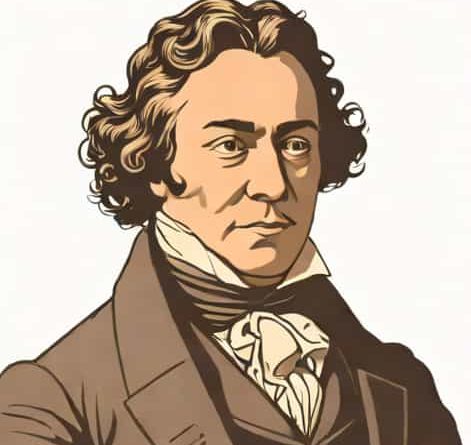
Who Is Samuel Taylor Coleridge
Samuel Taylor Coleridge was one of the most influential English poets, literary critics, and philosophers of the late 18th and early 19th centuries. Best known for his works as a key figure in the Romantic Movement, Coleridge’s contributions to poetry, literary theory, and philosophy have left an indelible mark on English literature. Born on October 21, 1772, in Ottery St Mary, Devon, Coleridge displayed early talent in writing and intellectual curiosity. His works often explored the imagination, nature, and the human experience, blending supernatural themes with profound philosophical inquiry. Beyond his poetry, Coleridge also shaped literary criticism and collaborated with contemporaries such as William Wordsworth, influencing generations of writers and thinkers.
Early Life and Education
Coleridge grew up in a family of modest means, the youngest of ten children. His father, a vicar, provided a religious and intellectual environment that encouraged early learning. Coleridge attended Christ’s Hospital School in London, where he excelled academically and developed a passion for classical literature, philosophy, and language. Later, he briefly attended Jesus College, Cambridge, though his studies were interrupted due to financial difficulties. Despite these challenges, Coleridge’s education fostered a lifelong engagement with literature, philosophy, and critical thought. His early exposure to intellectual inquiry influenced his approach to poetry and criticism, blending imagination with analytical depth.
Personal Struggles and Growth
Throughout his life, Coleridge faced personal struggles, including poor health, financial instability, and addiction to opium. These difficulties profoundly affected his work and outlook, yet they also provided a source of creative inspiration. Coleridge’s introspective nature and exploration of human suffering and emotion are evident in his poetry and prose. His personal challenges added depth and authenticity to his reflections on the human condition, imagination, and the interplay between reality and the supernatural. Despite his hardships, he maintained intellectual productivity and continued to contribute to literary and philosophical discourse.
Major Works and Literary Contributions
Samuel Taylor Coleridge is best remembered for his major poetic works, which exemplify the Romantic fascination with nature, imagination, and the supernatural. One of his most famous poems,The Rime of the Ancient Mariner, combines vivid imagery, moral reflection, and supernatural elements to create a haunting narrative that explores guilt, redemption, and human connection with nature. Another celebrated poem,Kubla Khan, reflects Coleridge’s fascination with the power of imagination, presenting a dreamlike vision of beauty, creativity, and the mystical aspects of human thought. Coleridge’s poetry often merges narrative and lyric elements, emphasizing the emotional and psychological dimensions of experience.
Collaboration with William Wordsworth
Coleridge’s collaboration with William Wordsworth was pivotal in shaping the Romantic Movement. Together, they publishedLyrical Balladsin 1798, a work that challenged traditional poetic forms and emphasized the use of everyday language and themes drawn from nature and common life. Coleridge contributed notable poems such asThe Rime of the Ancient Marinerto this collection, blending supernatural storytelling with moral and philosophical exploration. Their collaboration marked a turning point in English literature, promoting an emphasis on emotion, imagination, and personal reflection over classical conventions. Coleridge’s critical essays in the prefaces also provided a theoretical foundation for Romantic poetry, emphasizing the role of the imagination and the importance of creativity in artistic expression.
Philosophy and Literary Criticism
In addition to his poetry, Coleridge made significant contributions to philosophy and literary criticism. He engaged deeply with German philosophy, particularly the works of Immanuel Kant, Friedrich Schelling, and Johann Gottlieb Fichte, integrating their ideas into his reflections on the imagination, morality, and aesthetics. Coleridge’s critical writings explored the relationship between the mind, perception, and creative expression, emphasizing the transformative power of imagination. His essays on poetry and criticism helped establish the theoretical framework for Romantic literature and influenced later thinkers and writers. Coleridge’s interdisciplinary approach bridged literature, philosophy, and theology, demonstrating the depth and breadth of his intellectual pursuits.
The Concept of Imagination
Central to Coleridge’s philosophy is the concept of imagination, which he distinguished from mere fancy. According to Coleridge, imagination is a creative force that synthesizes experience, memory, and perception to produce new meaning and insight. This concept is particularly evident in works likeKubla KhanandThe Rime of the Ancient Mariner, where imaginative vision enables a deeper understanding of human emotion, moral dilemmas, and the natural world. Coleridge’s emphasis on imagination not only defined his poetry but also influenced Romantic thought, inspiring generations of writers to explore the interplay between inner consciousness and external reality.
Influence on Literature and Culture
Coleridge’s influence on English literature and culture extends beyond his own writings. He helped redefine the possibilities of poetic expression, championing the use of natural speech, emotional depth, and imaginative exploration. His ideas about the supernatural, morality, and human consciousness resonated with contemporaries and shaped the trajectory of Romanticism. Coleridge also influenced later literary movements, including Victorian poetry and modernist explorations of consciousness. Beyond literature, his engagement with philosophy, theology, and psychology contributed to broader intellectual discourse in Europe and established him as a versatile and enduring thinker.
Legacy and Recognition
- Co-author ofLyrical Ballads, foundational to the Romantic Movement.
- Author of iconic poems such asThe Rime of the Ancient MarinerandKubla Khan.
- Contributor to literary theory, emphasizing imagination, emotion, and creativity.
- Philosopher and critic engaging with German idealism and Romantic thought.
- Influential figure whose work shaped subsequent generations of writers and intellectuals.
Later Life
In his later years, Coleridge continued to write, lecture, and engage with philosophical and literary communities. Despite ongoing health issues and financial difficulties, he remained intellectually active, producing critical essays, literary reviews, and biographical works. Coleridge maintained a network of correspondences with notable literary figures and continued to mentor younger writers, further extending his influence. He passed away on July 25, 1834, in Highgate, London, leaving behind a rich legacy of poetry, criticism, and philosophical thought that continues to be studied and admired today.
Enduring Significance
Samuel Taylor Coleridge’s enduring significance lies in his ability to merge imagination, philosophy, and poetic craftsmanship. His works explore universal themes of nature, morality, human emotion, and the supernatural, making them timeless and accessible to readers across generations. Coleridge’s insights into the human mind and creative process continue to inspire literary scholars, poets, and thinkers, reinforcing his status as one of the most important figures in English literature. His life and work embody the intellectual curiosity, emotional depth, and imaginative power that define the Romantic era.
Samuel Taylor Coleridge was a poet, critic, and philosopher whose contributions shaped the course of English literature and Romantic thought. From his early education and personal struggles to his major works and philosophical writings, Coleridge demonstrated a remarkable combination of imagination, intellect, and emotional insight. His collaboration with Wordsworth, his engagement with German philosophy, and his exploration of the supernatural and moral dimensions of human experience solidified his position as a key figure in literary history. Coleridge’s legacy endures through his poetry, critical writings, and influence on subsequent generations, making him a lasting symbol of creativity, intellect, and artistic vision.
In summary, Samuel Taylor Coleridge remains a towering figure in literature whose work continues to inspire, educate, and captivate. His exploration of imagination, emotion, and philosophical inquiry offers timeless insights into the human experience. Coleridge’s life, marked by brilliance, struggle, and intellectual curiosity, demonstrates the power of literature to transcend time, culture, and personal challenges, ensuring his place as a seminal figure in the Romantic era and in the broader history of English letters.