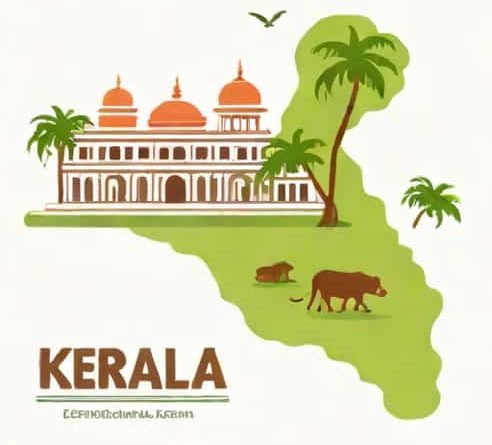
Kerala Name Changed To Keralam
Kerala, one of India’s most literate and culturally rich states, has recently drawn public attention due to a growing discussion about renaming it Keralam. The change might seem small, but it carries deep cultural, linguistic, and historical significance. For decades, Malayalis have referred to their state as Keralam, a term rooted in the local language and tradition. The debate around the official name change is not just about spelling-it represents the assertion of cultural identity and linguistic authenticity.
Understanding the Origin of the Name Kerala
The word Kerala is widely believed to have originated from Keralam, which is derived from the combination of two Malayalam words Kera, meaning coconut tree, and Alam, meaning land. Thus, Keralam translates to the land of coconuts, an apt description of a region known for its lush greenery and abundant coconut palms. Over time, British colonial influence and administrative convenience shortened the name to Kerala, which was adopted officially when the state was formed in 1956 under the States Reorganization Act.
The Cultural Significance of Keralam
To many Malayalis, Keralam feels more authentic because it reflects their mother tongue and heritage. In everyday Malayalam speech, people naturally use Keralam instead of Kerala. The word resonates with local traditions, literature, and music. Therefore, the recent movement to change the name from Kerala to Keralam is seen as an effort to align the state’s official identity with its linguistic and cultural roots.
Supporters of the name change argue that using Keralam officially would restore the state’s indigenous name and reflect its true pronunciation in Malayalam. They believe it would also follow a growing global trend where nations and states revert to native names after centuries of colonial modification. Examples include Ceylon becoming Sri Lanka and Bombay being renamed Mumbai.
The Political Process Behind the Name Change
The proposal to officially rename Kerala as Keralam has been under discussion in both political and cultural circles. According to Indian constitutional procedures, changing the name of a state requires an amendment approved by the central government. The process typically begins with a resolution passed by the state assembly, followed by the central government’s consideration and approval by Parliament.
In this case, Kerala’s government has expressed interest in initiating this change, emphasizing that the new name would better represent the state’s linguistic identity. However, the process is not simple. It requires coordination between the state government, the Ministry of Home Affairs, and both houses of Parliament. Some critics argue that the change is largely symbolic and might divert attention from more pressing administrative or developmental issues. Nonetheless, for many residents, the symbolic importance of reclaiming Keralam outweighs bureaucratic complexity.
Why the Name Change Matters
The movement to rename Kerala as Keralam is not merely about semantics. It touches on deeper issues of cultural preservation, postcolonial identity, and linguistic pride. India is a country where names carry immense historical and emotional weight. Renaming can serve as a form of cultural reclamation-restoring authenticity to places whose identities were altered by external forces. By embracing Keralam, Malayalis are reinforcing their connection to the state’s Dravidian heritage, ancient traditions, and Malayalam language.
- Cultural ReconnectionUsing Keralam acknowledges local language and oral traditions that predate colonial rule.
- Linguistic AccuracyKeralam reflects the correct pronunciation in Malayalam, the state’s official language.
- Global IdentityThe name change could encourage global recognition of Kerala’s indigenous culture and linguistic richness.
Historical Context of Kerala’s Formation
When Kerala was officially formed on November 1, 1956, it unified the Malayalam-speaking regions of Travancore, Cochin, and Malabar. The day is celebrated as Kerala Piravi, meaning the birth of Kerala. At that time, Kerala was adopted as the English and official name for administrative uniformity. However, Keralam remained in widespread use among locals. The current debate revisits that moment in history, questioning whether linguistic authenticity was compromised for bureaucratic convenience.
Comparing with Other Indian States’ Name Changes
Kerala is not the first Indian state to seek a name that aligns better with local pronunciation or language. For instance, Orissa officially became Odisha, and its language name changed from Oriya to Odia in 2011. Similarly, Bangalore was renamed Bengaluru, and Calcutta became Kolkata. These changes were made to reflect native linguistic patterns and regional identity. If approved, the renaming of Kerala to Keralam would continue this pattern, ensuring consistency between the spoken and official name.
Reactions from the Public
The public’s reaction to the proposed change has been mixed. Many Malayalis welcome the idea, viewing it as a long-overdue correction that honors their heritage. Social media discussions often highlight pride in the Malayalam language and enthusiasm for restoring Keralam as the official name. On the other hand, some citizens express concern that the process might require unnecessary administrative spending and paperwork changes for official documents, signboards, and educational materials.
Despite differing opinions, the conversation reflects the state’s deep awareness of its cultural identity. Even if the transition takes time, the debate itself has already reignited interest in Malayalam language preservation and the history behind the name Kerala.
Possible Impacts of the Name Change
If Kerala is officially renamed to Keralam, several practical and symbolic effects could follow. Government offices, educational institutions, and travel documents would gradually adapt to the new name. Internationally, Keralam might be used in diplomatic communication, tourism promotion, and global trade branding. The state’s tourism tagline, God’s Own Country, would likely remain the same, but with an updated emphasis on linguistic authenticity.
- Government departments would need to revise stationery, signage, and legal documents.
- Textbooks and school curricula might include lessons on the linguistic history of Keralam.
- Digital platforms and databases would update their entries to reflect the new name.
The Broader Cultural Message
Beyond administrative implications, the shift from Kerala to Keralam sends a powerful cultural message. It reminds citizens and the world that identity is deeply tied to language and history. For Malayalis, it reaffirms pride in their linguistic heritage and acknowledges the continuity of their ancient civilization. The word Keralam embodies not just geography but also collective memory-of literature, art, and centuries-old traditions rooted in the land’s unique spirit.
The Future of the Name Keralam
As discussions continue, the decision rests on how both the state and central governments weigh the symbolic importance against administrative practicality. Regardless of the outcome, the debate has sparked valuable cultural introspection among Malayalis worldwide. The possibility of the official name Keralam reinforces that heritage and modernity can coexist, and that a name is more than just a label-it’s a story carried forward through generations.
In the end, whether it remains Kerala or becomes Keralam, the essence of the state will continue to shine through its people, language, and traditions. But if the change does happen, it will be seen not merely as a linguistic correction, but as a proud declaration of identity-an affirmation that the people of this beautiful land are ready to embrace their roots fully and officially as Keralam.