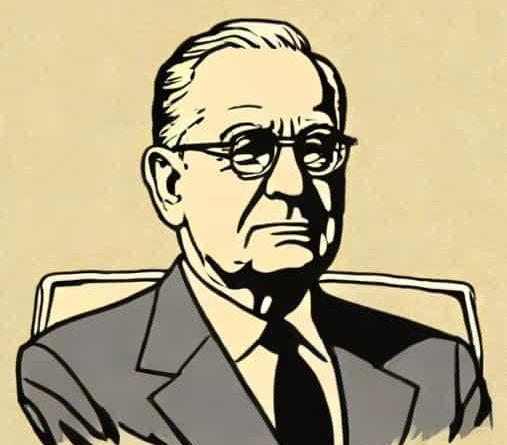
Assassination Attempt On Truman
The assassination attempt on President Harry S. Truman is one of the most dramatic and little-known events in American history, highlighting the dangers faced by world leaders even in times of peace. Occurring just a few days after the end of World War II, this attempt took place in Washington, D.C., and involved two Puerto Rican nationalists who sought to bring attention to their cause through violent means. The incident not only underscored the risks to the President but also exposed tensions related to Puerto Rico’s political status and independence movement. Understanding the assassination attempt on Truman provides insight into the political climate of the postwar United States, the motivations of radical actors, and the security challenges facing American presidents.
Background of the Assassination Attempt
In the mid-1940s, Puerto Rico was experiencing growing nationalist sentiment as a response to U.S. colonial governance. While some advocated peaceful political reform, others became frustrated with the lack of progress and sought drastic measures to draw attention to the issue of Puerto Rican independence. Among these radicals were members of the Puerto Rican Nationalist Party, which was founded in 1922 and led by Pedro Albizu Campos. The party promoted the idea of an independent Puerto Rican nation and, by the 1940s, had gained a small but determined following willing to use militant tactics to achieve their goals.
Political Climate in the United States
- End of World War II created a period of heightened domestic attention on national security.
- Puerto Rico’s status as a U.S. territory fueled debates over citizenship, governance, and independence.
- Radical movements were increasingly monitored by federal authorities, but some extremist activities slipped under the radar.
- President Truman had recently survived the intense pressures of wartime leadership and the early stages of postwar reconstruction.
This combination of political unrest and postwar transition set the stage for the assassination attempt that would target Truman in November 1950.
The Attack at Blair House
On November 1, 1950, President Truman was residing at Blair House, the temporary presidential residence while the White House was undergoing renovations. Two Puerto Rican nationalists, Oscar Collazo and Griselio Torresola, planned an armed assault on the residence with the goal of assassinating Truman. The conspirators carried handguns and arrived in Washington, D.C., prepared to confront the President directly. Their plan involved storming the building, overpowering the security detail, and killing Truman to draw international attention to the Puerto Rican independence movement.
The Confrontation
- Torresola approached Blair House from the west side, while Collazo attacked from the east.
- White House police officers, including Officer Leslie Coffelt, confronted the attackers immediately.
- A gunfight ensued, resulting in the death of Torresola on the scene and the wounding of Collazo.
- Officer Coffelt was fatally shot but managed to fire at Collazo, critically wounding him and ending the assault.
Despite their plan, Truman was unharmed due to the quick response of the Secret Service and police officers stationed at Blair House. The bravery of the security personnel was widely recognized and praised, as their actions prevented what could have been a national catastrophe.
Motivations of the Attackers
The assassination attempt was deeply rooted in the political ideology of the Puerto Rican nationalist movement. Collazo and Torresola believed that violent action was necessary to bring attention to the cause of independence and to force the U.S. government to reconsider its control over Puerto Rico. For them, attacking the President symbolized a direct challenge to U.S. authority and an effort to gain international recognition for their movement. Their actions reflected a willingness to sacrifice their lives for political ideals, a common theme among radical nationalist groups of the era.
Ideological Drivers
- Desire for Puerto Rican independence from U.S. colonial rule.
- Frustration with lack of progress through peaceful political channels.
- Belief in symbolic acts of violence to draw attention to a political cause.
- Influence of the Puerto Rican Nationalist Party’s leadership and propaganda.
While their methods were violent, the attackers’ underlying motivations were grounded in longstanding political and social grievances that had persisted for decades.
Aftermath and Legal Consequences
Following the failed assassination attempt, Oscar Collazo was tried and convicted of murder and other crimes related to the attack. He was initially sentenced to death, but President Truman later commuted his sentence to life imprisonment. Torresola was killed during the gunfight, leaving Collazo as the sole surviving conspirator. The attack had lasting implications for U.S. security measures, particularly regarding presidential protection. The Secret Service implemented stricter protocols for guarding the President, both at official residences and during public appearances.
Impact on U.S. Security
- Increased vigilance at the White House and Blair House.
- Expansion of Secret Service personnel and training programs.
- Development of rapid response protocols for armed threats against national leaders.
- Heightened awareness of domestic political threats, including radical movements.
The event also influenced U.S. policy regarding Puerto Rico, though it did not lead to immediate political changes. The attack highlighted the tension between radical activism and national security, serving as a cautionary tale for both policymakers and law enforcement agencies.
Historical Significance
The assassination attempt on Truman is significant for several reasons. It demonstrated the vulnerabilities of national leaders even in peacetime, underscored the political struggles of Puerto Rico, and tested the effectiveness of U.S. security measures. The incident is often cited in historical accounts of postwar America as an example of how domestic political tensions can escalate into acts of violence. Additionally, the bravery and quick action of law enforcement officers like Leslie Coffelt became part of the narrative surrounding the resilience and dedication of those tasked with protecting the President.
Legacy of the Event
- Recognition of the role of law enforcement and Secret Service in preventing presidential assassinations.
- Highlighting the intersection of political activism and radicalism in U.S. history.
- Influence on subsequent measures to secure presidential residences and public events.
- Historical awareness of Puerto Rican nationalist movements and their impact on U.S. domestic policy.
Today, the failed assassination attempt remains a notable episode in American history, studied for its implications on presidential security, domestic politics, and radical activism.
The assassination attempt on President Harry S. Truman in 1950 was a dramatic and consequential event in American history. Carried out by two Puerto Rican nationalists, the attack was motivated by political ideology and a desire to draw attention to the issue of Puerto Rican independence. Although Truman escaped unharmed, the bravery of officers like Leslie Coffelt and the rapid response of the Secret Service prevented a potential tragedy. The incident had lasting effects on U.S. security protocols and highlighted the challenges posed by radical political movements. Understanding this historical event provides insight into the intersection of domestic politics, national security, and the vulnerabilities of leadership, reminding us of the complex environment in which presidents operate.