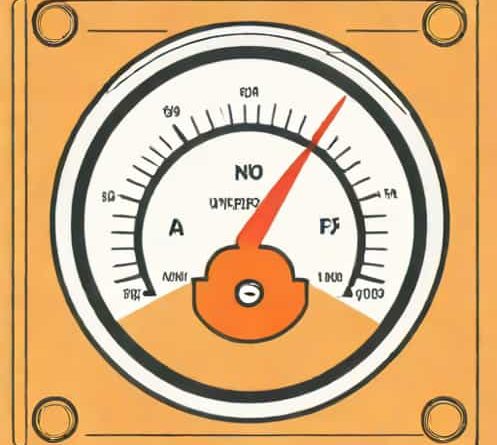
Full Name Of Ammeter
The ammeter is one of the most commonly used instruments in electrical engineering and physics, yet many people may not know its full name or the extent of its applications. Essentially, an ammeter measures the electric current flowing through a circuit, allowing engineers, technicians, and students to monitor and control electrical systems safely and effectively. The term ammeter is widely recognized, but understanding its full name, history, and functionality provides a deeper appreciation of this vital tool in both educational and professional settings. Its role in electrical circuits ranges from simple experiments in classrooms to complex monitoring in industrial installations, making it indispensable in the study and application of electricity.
Full Name and Meaning
The full name of an ammeter is ampere meter. The name directly reflects its primary function measuring electric current in amperes, the standard unit of current in the International System of Units (SI). The term ampere itself honors André-Marie Ampère, a French physicist and mathematician who made significant contributions to the study of electromagnetism in the early 19th century. By combining ampere with meter, the instrument’s name clearly indicates that it is designed to quantify the flow of electric charge within a circuit, making it easy for students, engineers, and technicians to understand its purpose at a glance.
Historical Background
The invention and development of the ammeter were closely linked to the pioneering work of André-Marie Ampère. During the early 1800s, Ampère formulated the fundamental principles of electromagnetism and devised ways to quantify electric current using mechanical means. Early ammeters were analog devices that relied on the deflection of a needle in response to magnetic fields generated by the current passing through a coil. Over time, technological advancements led to more accurate and versatile instruments, including digital ammeters that provide precise readings and can integrate with modern electronic systems. Understanding the historical evolution of the ammeter highlights its significance in both scientific research and practical applications.
Types of Ammeters
A variety of ammeters are available today, each designed for specific applications and circuit requirements. The main types include
- Analog AmmetersThese traditional devices use a moving needle over a calibrated scale to indicate current. They are simple, reliable, and often used in educational settings to demonstrate basic electrical principles.
- Digital AmmetersModern digital ammeters use electronic sensors and displays to provide precise numerical readings. They are widely used in laboratories, industrial environments, and for troubleshooting electronic devices.
- Clamp MetersThese specialized ammeters measure current without directly connecting to the circuit. A magnetic clamp around a conductor senses the current flow, making it safer and more convenient for high-current applications.
- Panel MetersDesigned for permanent installation in control panels, these ammeters continuously monitor electrical current in industrial or commercial systems.
How an Ammeter Works
An ammeter works by measuring the flow of electrons, or current, through a circuit. In analog ammeters, the current passes through a coil, creating a magnetic field that interacts with a permanent magnet. The resulting force moves a needle across a calibrated scale, giving a visual indication of the current. Digital ammeters, on the other hand, convert the electrical signal into a numerical reading using electronic sensors and analog-to-digital converters. Some ammeters, such as shunt-based devices, measure current indirectly by detecting the voltage drop across a known resistance and calculating the current based on Ohm’s law. Understanding these principles helps users choose the appropriate ammeter for their specific needs and ensures accurate measurements.
Applications of Ammeters
Ammeters are essential tools in a wide range of applications. They are commonly used in electrical circuits for monitoring, testing, and maintenance purposes. Some of the key applications include
- Educational LabsStudents use ammeters to learn fundamental electrical concepts such as Ohm’s law, series and parallel circuits, and current measurement techniques.
- Industrial MonitoringEngineers use ammeters to monitor electrical currents in machinery, ensuring safe operation and preventing overloads.
- Home and Commercial WiringElectricians use ammeters to troubleshoot circuits, measure current, and confirm proper functioning of electrical installations.
- Automotive ApplicationsAutomotive technicians use ammeters to check battery performance, alternator output, and other electrical components in vehicles.
- Renewable Energy SystemsIn solar and wind energy installations, ammeters monitor current flow to optimize system performance and safety.
Safety Considerations
Using an ammeter safely requires understanding how to connect it correctly in a circuit. Ammeters are designed to be connected in series, allowing the entire current to pass through the device. Connecting an ammeter in parallel can cause a short circuit, potentially damaging the instrument or creating a hazard. Additionally, users must ensure the ammeter’s current range matches the expected current in the circuit to prevent overloading. Modern digital ammeters often include safety features such as fused inputs and overload protection, making them safer for both professionals and students.
Choosing the Right Ammeter
Selecting the appropriate ammeter depends on the application, expected current range, and desired accuracy. Key factors to consider include
- Current RangeEnsure the ammeter can measure the expected maximum current without damage.
- AccuracyChoose an instrument that provides the required precision for the application, whether for educational demonstrations or industrial monitoring.
- TypeDecide between analog, digital, or clamp-type ammeters based on the measurement method and convenience.
- DurabilityFor field applications, a robust and portable ammeter is preferable.
- FeaturesAdditional features such as data logging, display backlighting, and connectivity may be useful in advanced applications.
The full name of the ammeter, ampere meter, reflects its core function of measuring electric current in amperes. This simple yet powerful instrument has evolved from analog mechanical devices to sophisticated digital tools capable of precise monitoring in a variety of contexts. Understanding its history, operation, types, and applications allows users to make informed choices and use the device safely and effectively. From educational labs to industrial installations and renewable energy systems, the ammeter remains an indispensable tool in the study and management of electrical circuits. Whether referred to by its full name or the familiar term ammeter, this instrument continues to play a critical role in advancing knowledge, safety, and efficiency in electrical engineering and everyday applications.