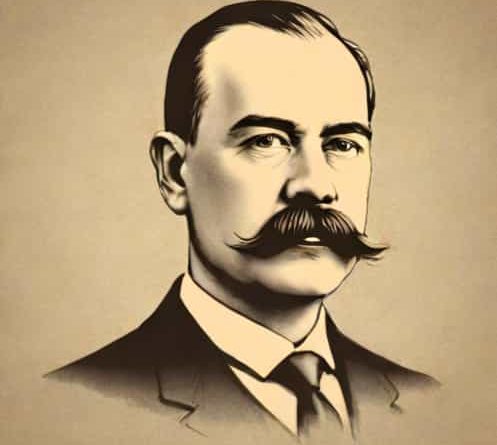
Herman Hollerith Invention Year
Herman Hollerith, a pioneering figure in the history of data processing, is best known for inventing the electromechanical tabulating machine, which revolutionized how data was collected and analyzed. Born in 1860 in Buffalo, New York, Hollerith displayed an early aptitude for mathematics and engineering. His invention emerged during a time when the United States was facing challenges in managing population data, particularly for the decennial census. Understanding the year of his invention and the impact it had on technology and society offers insight into how modern computing and data management began.
The Context Leading to Hollerith’s Invention
By the late 19th century, the U.S. Census Bureau faced an overwhelming task in processing the growing population data. The 1880 census had taken nearly a decade to tabulate, highlighting the inefficiency of manual counting. Hollerith, who graduated from Columbia University and had studied at the Stevens Institute of Technology, recognized the potential for mechanizing data processing. He sought to develop a system that could record, sort, and tabulate information quickly and accurately, addressing the urgent needs of the Census Bureau.
The Year of Invention
Herman Hollerith is credited with inventing his tabulating machine in 1884. This innovative device used punched cards to record data, an idea inspired in part by earlier work in the textile industry where punched cards controlled looms. Hollerith’s system involved encoding information onto cards through a series of holes, which could then be read and processed by an electromechanical machine. This approach drastically reduced the time and labor required for large-scale data tabulation.
Mechanics of the Tabulating Machine
The tabulating machine, developed by Hollerith in 1884, functioned through a combination of electrical circuits and mechanical components. Each punched card represented an individual record, such as a person in the census. The machine used electrical contacts to detect the presence or absence of holes, allowing it to count and categorize data efficiently. This method eliminated the need for manual tallying and minimized errors, making the processing of massive datasets feasible for the first time.
Initial Adoption and Census Implementation
Hollerith’s invention gained immediate attention from the U.S. Census Bureau. By the 1890 census, his tabulating machine was fully implemented, reducing the processing time from eight years, as experienced in 1880, to just one year. This remarkable improvement demonstrated the practical value of Hollerith’s system and solidified his reputation as an innovator. The success of the 1890 census also set the stage for the widespread adoption of his technology in government and commercial applications.
Formation of Hollerith’s Company
Following the success of his invention, Herman Hollerith founded the Tabulating Machine Company in 1896. The company provided data processing equipment to government agencies, businesses, and international organizations. The innovations he introduced, including punched card systems and tabulating machines, laid the foundation for modern computing and data management. In 1924, the Tabulating Machine Company merged with other entities to form International Business Machines (IBM), ensuring Hollerith’s influence extended well into the 20th century.
Impact on Technology and Society
Hollerith’s invention in 1884 had profound implications beyond the census. The tabulating machine accelerated the processing of data for insurance companies, railroads, and other industries requiring large-scale record-keeping. By mechanizing calculations, Hollerith not only improved efficiency but also introduced the concept of automated data handling, a precursor to digital computing. The punched card system became a standard method for data entry and storage for decades, influencing both hardware and software development in the early computing era.
Legacy of Hollerith’s 1884 Invention
The year 1884 marked a turning point in the history of information technology. Hollerith’s work paved the way for automated computation and inspired future inventors to explore new methods of processing and storing data. His approach demonstrated that complex societal problems, such as population management and business record-keeping, could be addressed through innovative engineering solutions. Today, Herman Hollerith is celebrated as a pioneer whose invention laid the groundwork for modern computers, database systems, and data analytics.
Key Features and Advantages of the Tabulating Machine
- Electromechanical operation allowed rapid processing of large datasets.
- Punched card system standardized data recording and storage.
- Minimized human error compared to manual tabulation.
- Reduced time for census processing dramatically, from years to months.
- Scalable design enabled adoption in government and private sectors worldwide.
Lessons from Hollerith’s Innovation
Hollerith’s invention underscores the importance of identifying practical problems and applying creative technological solutions. By addressing the inefficiency of census data processing, he not only solved a pressing societal need but also sparked a technological revolution. His work illustrates how innovation in one domain, such as government administration, can have far-reaching impacts on industries, technology development, and the broader economy. Hollerith’s success also highlights the role of timing and context; the growing population and administrative challenges of the late 19th century created the perfect environment for his invention to succeed.
Herman Hollerith’s invention year, 1884, represents a landmark moment in the history of technology. The electromechanical tabulating machine transformed data collection, processing, and analysis, reducing human labor while increasing accuracy and efficiency. Hollerith’s pioneering work laid the foundation for the development of modern computing systems and database management. By founding the Tabulating Machine Company and eventually contributing to the formation of IBM, his influence extended far beyond his initial invention. Understanding the context, mechanics, and impact of Hollerith’s 1884 innovation provides valuable insight into the origins of automated data processing and the evolution of information technology.
From the U.S. census to global industrial applications, Hollerith’s invention demonstrated how engineering ingenuity can address complex problems and shape the future. His work remains a testament to the power of innovation, highlighting that breakthroughs in technology often begin with a simple yet transformative idea. The year 1884 will always be remembered as the moment when Herman Hollerith changed the course of data processing and laid the groundwork for the digital age.