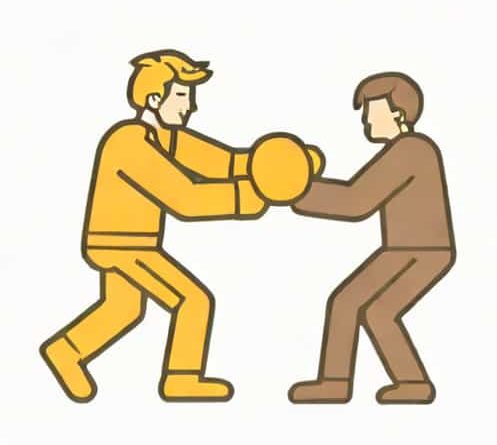
Is A Scuffle A Fight
When we hear the word scuffle, many people immediately think of a fight, yet the nuances of language make it important to understand exactly what a scuffle entails. Often used in everyday conversation, news reports, and even legal contexts, the term scuffle suggests a brief or minor altercation rather than a prolonged or severe fight. However, the boundary between a scuffle and a fight is not always clear, and exploring the definitions, examples, and contexts can help clarify whether a scuffle should be considered a fight in both common and formal usage.
Definition of Scuffle
A scuffle is typically defined as a short, confused struggle or physical tussle involving two or more people. Unlike a full-scale fight, which may be planned, intense, or prolonged, a scuffle is usually spontaneous, brief, and less severe in nature. The word often conveys the idea of a minor conflict, sometimes even playful or accidental, but always involving some degree of physical contact. Dictionaries often emphasize that scuffles are limited in scope and intensity compared to fights, which are more aggressive and deliberate.
Characteristics of a Scuffle
Several characteristics distinguish a scuffle from a larger fight
- Short DurationScuffles are typically quick, often lasting only a few seconds to a minute.
- Low IntensityWhile there may be pushing, shoving, or minor hitting, serious injury is usually unlikely.
- SpontaneityScuffles often occur suddenly, without prior planning or premeditation.
- Limited ParticipantsGenerally, scuffles involve a small number of people, unlike larger brawls or fights.
These characteristics make scuffles distinct from organized or more aggressive fights that may involve weapons, prolonged combat, or multiple participants.
Definition of Fight
A fight, by contrast, is a more general term that can cover a wide range of physical confrontations, from minor arguments escalating into pushing and hitting, to serious, violent encounters that can cause significant injury. Fights can be planned or unplanned, and they often imply a higher level of aggression, intent, or danger than a scuffle. The term is widely used in both casual speech and legal contexts to describe situations where physical confrontation occurs.
Characteristics of a Fight
Fights share some similarities with scuffles but differ in scale and seriousness. Key characteristics include
- Greater IntensityFights usually involve more aggressive or sustained physical contact.
- Potential for InjuryUnlike scuffles, fights carry a higher risk of causing harm or injury.
- Extended DurationFights may last several minutes, escalating as the participants engage more fully.
- Larger ScaleFights can involve multiple individuals or groups, sometimes resulting in chaotic situations.
Thus, while all scuffles involve some degree of fighting, not all fights can be classified as scuffles due to differences in intensity, duration, and scope.
Scuffle vs. Fight Key Differences
Understanding the difference between a scuffle and a fight often comes down to context, intensity, and intent. While the terms are sometimes used interchangeably in casual conversation, legal and journalistic standards often make distinctions between them. Key differences include
- SeverityScuffles are minor altercations, whereas fights are typically more severe.
- DurationScuffles are short-lived, often ending quickly, while fights can persist and escalate.
- IntentScuffles may occur spontaneously without serious intent to harm, while fights often involve deliberate aggression.
- ConsequencesFights carry a higher likelihood of injuries or legal implications compared to scuffles.
These distinctions are important in fields such as law enforcement, journalism, and even healthcare, where accurately describing the nature of a physical encounter can affect reporting, charges, and treatment.
Examples in Everyday Life
Scuffles often occur in situations where tensions flare briefly but do not result in prolonged aggression. For example, a scuffle might break out between two shoppers reaching for the same product in a crowded store, or during a heated sports event where players push and shove momentarily. These situations usually resolve quickly, sometimes with little more than a warning or minor intervention.
In contrast, fights may occur in bar altercations, street disputes, or planned confrontations where participants intend to dominate or harm each other. Fights can escalate into larger brawls or involve weapons, resulting in legal consequences or injuries requiring medical attention.
Legal Perspective
From a legal standpoint, the distinction between a scuffle and a fight can be significant. Minor scuffles may be classified as disorderly conduct, simple assault, or public disturbance, often resulting in less severe penalties. Fights, particularly those that cause injury, may be charged as assault, battery, or even more serious criminal offenses depending on intent and outcome.
Importance of Accurate Terminology
Accurate terminology is important in legal and official contexts to avoid misunderstandings. Labeling an incident as a scuffle may imply a minor altercation with limited consequences, whereas calling it a fight could suggest intentional aggression and potential criminal liability. Law enforcement officers, judges, and legal professionals rely on these distinctions to make informed decisions regarding charges, fines, or sentences.
while a scuffle is indeed a type of fight, it is generally considered a minor, brief, and less intense physical altercation. The primary differences lie in the severity, duration, and intent behind the encounter. Scuffles are spontaneous, low-intensity, and often resolved quickly, while fights can escalate, involve serious aggression, and result in greater harm. Understanding these distinctions is essential for clear communication, accurate reporting, and proper legal interpretation. Recognizing the nuances between a scuffle and a fight allows us to describe real-world situations more precisely and respond appropriately in both social and official contexts.