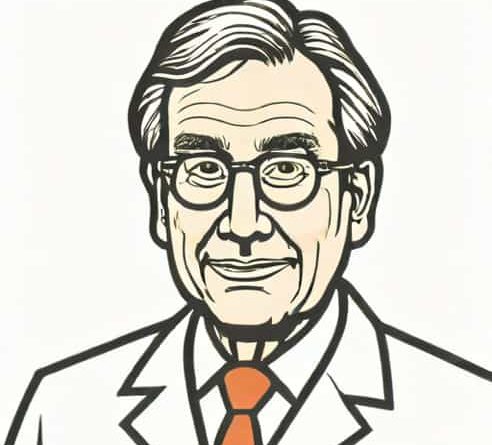
Scientist Pauling Or Engineer Torvalds
When people think about figures who shaped science and technology in the 20th century, two names often stand out in very different fields the scientist Linus Pauling and the engineer Linus Torvalds. Both men made significant contributions, yet their paths were not the same. Pauling focused on chemistry and humanitarian issues, while Torvalds transformed computing through software. Understanding their work, achievements, and influence provides insight into how scientific discovery and engineering innovation continue to shape our world today.
Background of Linus Pauling
Linus Pauling was born in 1901 in Portland, Oregon. He became one of the most influential chemists of his time, recognized not only for his scientific work but also for his humanitarian efforts. Pauling made groundbreaking contributions to the understanding of chemical bonds, molecular structures, and the role of vitamins in human health. He was awarded the Nobel Prize in Chemistry in 1954 and later the Nobel Peace Prize in 1962, making him one of the few individuals to win two separate Nobel Prizes in different fields.
Scientific Achievements
Pauling’s most famous scientific work centered around the nature of the chemical bond. His bookThe Nature of the Chemical Bondbecame a cornerstone for students and researchers alike. He pioneered the concept of hybrid orbitals and introduced electronegativity as a measurable property. His work also extended to understanding the structure of proteins, which influenced discoveries in biology and medicine.
Humanitarian Contributions
Beyond chemistry, Pauling became a passionate advocate for peace and nuclear disarmament. During the Cold War, he raised awareness about the dangers of nuclear weapons testing. His activism was met with both praise and criticism, but his commitment to humanitarian causes earned him the Nobel Peace Prize. Pauling also promoted vitamin C as a supplement for better health, though this part of his career sparked debate within the medical community.
Background of Linus Torvalds
Linus Torvalds, born in 1969 in Helsinki, Finland, represents a different type of innovator. He is best known as the creator of the Linux operating system kernel. Unlike Pauling, whose work was rooted in physical science, Torvalds focused on computing and open-source collaboration. His vision for a free, open, and adaptable operating system transformed how software development is approached worldwide.
Creation of Linux
In 1991, while still a student at the University of Helsinki, Torvalds began developing Linux as a personal project. His idea was to build a free operating system that anyone could use and improve. What started as a small project quickly grew into one of the most important open-source movements in history. Today, Linux powers servers, supercomputers, smartphones, and countless devices around the globe.
Impact on Technology
Torvalds’ work on Linux revolutionized the software industry. By embracing collaboration and allowing others to modify and improve his code, he set the foundation for the open-source model. This approach has not only shaped the technology industry but also influenced business models, educational initiatives, and community-driven innovation. Linux remains central to cloud computing, cybersecurity, and emerging technologies such as artificial intelligence.
Comparing Scientist Pauling and Engineer Torvalds
While Pauling and Torvalds operated in very different fields, there are notable similarities and contrasts in their contributions to society. Both were visionaries who challenged established systems and pushed their respective disciplines into new directions. However, their impact reached different audiences and solved different problems.
Scientific vs. Engineering Focus
- Linus Pauling focused on explaining the fundamental principles of nature, particularly chemical structures and bonding.
- Linus Torvalds focused on creating practical tools, such as an operating system kernel that could be applied across devices and industries.
Recognition and Influence
- Pauling received formal recognition through Nobel Prizes, cementing his legacy in both science and peace efforts.
- Torvalds gained recognition in the technology community, receiving awards such as the Millennium Technology Prize, but his legacy is more embedded in the widespread use of Linux.
Longevity of Contributions
- Pauling’s theories on chemical bonds remain part of every chemistry textbook and scientific curriculum.
- Torvalds’ Linux continues to evolve and adapt, ensuring it stays relevant in the fast-changing world of technology.
Global Impact of Their Work
Both Pauling and Torvalds changed the world, but in different ways. Pauling’s research influenced medicine, chemistry, and global peace discussions. His work helped shape modern chemistry and inspired countless students to enter the field. Torvalds’ creation of Linux provided the foundation for the digital world we rely on today, from web servers to mobile devices.
Education and Inspiration
Pauling’s life inspired young scientists to see chemistry not only as a tool for discovery but also as a way to promote human welfare. Torvalds inspired programmers and engineers to embrace collaboration, transparency, and innovation in building technology that benefits everyone.
Lasting Legacies
Pauling’s legacy remains tied to both science and peace activism, while Torvalds’ legacy lies in open-source software and its influence on the global economy. Together, they represent how different disciplines can leave equally lasting marks on history.
Lessons from Pauling and Torvalds
Looking at the achievements of Linus Pauling and Linus Torvalds, several lessons emerge for modern thinkers, students, and innovators
- Curiosity is a driving force-Pauling’s exploration of molecules and Torvalds’ exploration of software both began with a deep sense of curiosity.
- Impact comes in many forms-scientific discovery and practical engineering can both shape global progress.
- Collaboration is key-Pauling collaborated across scientific disciplines, while Torvalds built an entire movement around open collaboration.
- Legacy is not limited to one generation-both men’s work continues to influence new discoveries and technological breakthroughs decades later.
The scientist Linus Pauling and the engineer Linus Torvalds lived in different times and worked in different fields, but each made profound contributions to humanity. Pauling expanded our understanding of chemistry and advocated for peace, leaving a mark on science and global policy. Torvalds built a foundation for modern computing by developing Linux, which continues to power the digital age. Their stories remind us that whether through science or engineering, individuals have the power to change the course of history.