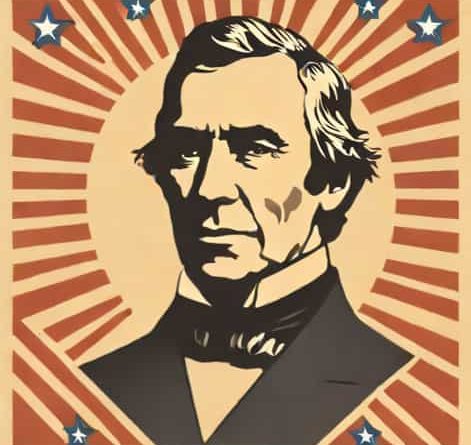
Zachary Taylor Political Party
Zachary Taylor, the 12th President of the United States, served from 1849 to 1850 and is often remembered for his brief tenure and unexpected death while in office. A prominent military leader before his presidency, Taylor became a national hero during the Mexican-American War due to his decisive victories. His political career, however, was closely tied to the Whig Party, a political organization that played a significant role in mid-19th century American politics. Understanding Taylor’s affiliation with the Whig Party helps to contextualize his presidency, his policies, and the broader political landscape of the United States during that period.
Early Life and Military Career
Zachary Taylor was born on November 24, 1784, in Orange County, Virginia, and later moved with his family to Kentucky. He pursued a military career, joining the United States Army in 1808. Taylor’s early military experience included service in the War of 1812, the Black Hawk War, and the Second Seminole War. Over decades of service, he gained a reputation as a disciplined and courageous leader. His successes in the military, particularly during the Mexican-American War, made him a household name and laid the foundation for his political career. Taylor’s appeal as a military hero transcended party lines, which was a crucial factor in his later presidential campaign.
Rise to National Prominence
Taylor’s victories at battles such as Palo Alto, Resaca de la Palma, and Buena Vista elevated him to national prominence. His leadership and strategic skills garnered public admiration, and newspapers frequently celebrated his heroism. As a result, Taylor became a symbol of national pride, which political leaders recognized as a valuable asset for electoral success. His military background made him an ideal candidate for the Whig Party, which sought to capitalize on his popularity to strengthen their political influence in the United States.
The Whig Party and Its Ideology
The Whig Party, active from the 1830s to the 1850s, emerged as a political counterweight to the Democratic Party. It attracted members who opposed the policies of Democratic presidents such as Andrew Jackson. The Whigs favored a strong legislative branch, modernization, and economic development through government-supported infrastructure projects. They were also concerned with national unity and the preservation of institutions. Taylor’s affiliation with the Whig Party reflected the party’s strategy of recruiting respected figures who could appeal to a wide range of voters, including those who were not traditionally aligned with party politics.
Reasons for Taylor Joining the Whigs
Despite his limited political experience, Taylor agreed to run for president as a Whig candidate in 1848. His decision was influenced by several factors
- National Recognition His military fame made him a popular candidate capable of winning broad support.
- Whig Strategy The party sought a candidate who could appeal to both Northern and Southern voters, balancing sectional tensions.
- Non-Partisan Image Taylor’s lack of prior political office allowed him to present himself as a neutral figure who could unite Americans across political divides.
Although Taylor had personal political views, he largely deferred to Whig leaders and advisors on policy matters, which helped secure party support and maintain cohesion within the campaign.
Presidency and Political Challenges
Zachary Taylor assumed the presidency on March 4, 1849. As a Whig president with minimal political experience, he faced significant challenges, particularly regarding sectional tensions over slavery. The issue of whether new territories acquired from Mexico would permit slavery was a major point of conflict. Taylor, while personally a slaveholder, opposed the expansion of slavery into newly acquired lands, a stance that sometimes conflicted with his Southern supporters.
Compromise and Leadership Style
Taylor’s approach to leadership differed from traditional politicians. He relied on common sense, pragmatism, and his military decisiveness rather than extensive consultation with party members. He opposed extreme measures from both pro-slavery and anti-slavery factions, advocating for moderation and practical solutions. YouTube and educational videos often highlight Taylor’s attempt to balance sectional interests while navigating the complex political environment of the United States in the late 1840s and early 1850s.
Relations with the Whig Party
While Taylor was a Whig, his independent stance sometimes caused tension within the party. Some Whig leaders expected him to follow the party line more closely, particularly on economic policies and slavery issues. However, Taylor’s reluctance to fully conform to the party platform showcased his commitment to personal judgment and national interest, reflecting the challenges of aligning military leadership experience with political party expectations.
The 1848 Election
The presidential election of 1848 marked Taylor’s rise to political power. Running as the Whig candidate against Democrat Lewis Cass and Free Soil candidate Martin Van Buren, Taylor won the presidency with widespread support. His military reputation, appeal as a political outsider, and ability to attract votes from multiple regions contributed to his victory. Historians often note that Taylor’s win illustrated the Whig Party’s strategic ability to leverage popular figures to maintain political relevance during a period of growing sectional tensions.
Electoral Support
- Southern States Taylor’s status as a Southern slaveholder helped him secure support in the South.
- Northern States His military accomplishments and moderate political stance made him acceptable to Northern voters wary of expansionist slavery policies.
- Border States Taylor’s image as a unifying figure appealed to states with divided loyalties on slavery and expansion.
Legacy and the Whig Party
Zachary Taylor’s presidency was cut short by his death on July 9, 1850, but his affiliation with the Whig Party left a lasting impact. Taylor exemplified the Whig strategy of promoting respected national figures to achieve electoral success. However, his untimely death and the growing sectional tensions over slavery contributed to the party’s decline in the 1850s. The Whig Party eventually dissolved, giving rise to new political alignments, including the Republican Party. Taylor’s presidency remains a notable example of a military hero transitioning into political leadership under the banner of the Whigs.
Impact on American Politics
Taylor’s tenure highlighted the challenges of governing amid deepening sectional divisions and the limitations of a president with minimal political experience. His independent approach demonstrated that party affiliation does not always dictate presidential decisions, especially when national unity is at stake. Scholars often use Taylor’s presidency to examine the intersection of military leadership, political parties, and policy-making in a divided America.
Zachary Taylor’s political party affiliation with the Whigs played a crucial role in his rise to the presidency and in shaping his approach to governance. As a military hero and a relatively inexperienced politician, Taylor’s presidency reflected both the strengths and limitations of relying on personal reputation within a party framework. His alignment with the Whigs provided electoral support and national recognition, while his independent judgment on key issues demonstrated the complexities of balancing party expectations with personal principles. Taylor’s legacy continues to offer insights into American political history, the dynamics of political parties, and the enduring impact of military leaders in shaping national leadership.