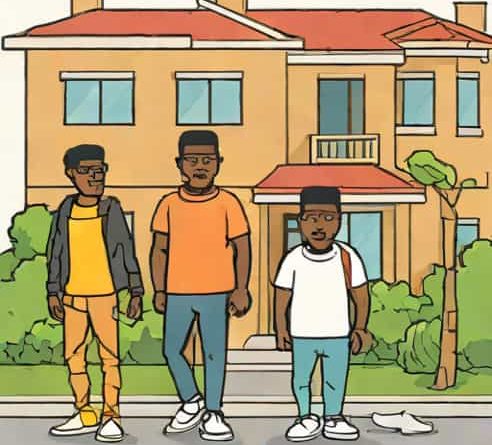
Is Boyz N The Hood
When people talk about socially conscious films from the 1990s, Boyz n the Hood often comes up as one of the most powerful and influential. Released in 1991 and directed by John Singleton, this movie is more than just a story about life in South Central Los Angeles-it is a reflection on community, race, violence, and personal choice. Many viewers still ask, What is Boyz n the Hood really about? or Why is it so important? To answer that, one must explore its themes, characters, and cultural significance in American cinema.
Understanding the Story of Boyz n the Hood
The film follows the life of Tre Styles, played by Cuba Gooding Jr., a young man sent to live with his father, Furious Styles, in South Central Los Angeles. His father, portrayed by Laurence Fishburne, becomes a guiding influence, teaching him about responsibility, integrity, and manhood. Alongside Tre are his childhood friends Doughboy and Ricky, half-brothers who take different paths in life-one towards crime and the other towards sports and potential success.
At its core, Boyz n the Hood is not only about surviving in a dangerous neighborhood but also about the choices young Black men must make in the face of systemic inequality, poverty, and violence. The film captures moments of friendship, love, frustration, and loss, allowing the audience to feel both the beauty and pain of life in the hood.
The Message Behind the Title
The title Boyz n the Hood carries deep meaning. It reflects how young men (boyz) are raised in environments where violence and poverty are normalized. The deliberate use of the letter z instead of s in boyz represents the urban dialect and identity of the community. The hood, short for neighborhood, symbolizes the confined space where opportunity is limited but dreams still exist. Together, the title suggests both identity and confinement-a generation growing up in difficult surroundings, struggling to find their place in society.
Major Themes and Symbolism
1. Fatherhood and Responsibility
One of the most powerful themes in Boyz n the Hood is fatherhood. Furious Styles is depicted as a strong, disciplined, and loving father who tries to guide Tre away from the dangers of the streets. His speeches about self-respect, community, and the importance of education highlight the role of a positive male figure in shaping a young man’s future. This stands in contrast to the absent or struggling parents in many similar communities.
2. Violence and the Cycle of Retaliation
Violence is a recurring element throughout the film, serving as both a reality and a commentary. The characters grow up in an environment where gunshots are common and revenge is seen as justice. Singleton portrays how this cycle of violence perpetuates itself, often taking away the lives of young men before they can achieve their potential. The tragic fate of Ricky underscores how quickly dreams can end in such a world.
3. Race, Poverty, and Social Injustice
Another central theme is the systemic racism and economic disparity that keeps many people trapped in impoverished neighborhoods. The film does not just blame individuals for their circumstances-it exposes the broader societal forces at play. From redlining to lack of access to quality education, Boyz n the Hood shows how institutional barriers shape the lives of its characters. Furious Styles’ monologue about gentrification is especially relevant, warning that the destruction of Black neighborhoods is not accidental but part of a larger system of control.
4. Friendship and Brotherhood
Despite its harsh setting, Boyz n the Hood is also a story about friendship and brotherhood. Tre, Ricky, and Doughboy share deep bonds that reflect the sense of loyalty and love within their community. Even when their paths diverge, the emotional connection remains. Doughboy’s reflection at the end-Either they don’t know, don’t show, or don’t care about what’s going on in the hood-summarizes the pain of being overlooked by society, while still holding onto hope and pride in one’s identity.
Character Analysis
Tre Styles
Tre represents the young man caught between two worlds-the violent environment of his neighborhood and the moral teachings of his father. His character embodies the struggle to make the right choices when surrounded by temptation and danger. Through Tre, the film explores how education, family, and discipline can help break destructive cycles.
Furious Styles
Furious is the moral compass of the film. His wisdom, firmness, and care serve as a counterpoint to the chaos around him. He is not perfect, but his strength lies in his belief that knowledge and self-respect can protect his son from the dangers of the streets. His dialogue gives the film its philosophical weight.
Doughboy
Doughboy, played by Ice Cube, is perhaps the most tragic figure. He is tough and rebellious but also deeply wounded by loss and neglect. His life illustrates how systemic oppression and lack of opportunity can push individuals toward crime. Yet, underneath his exterior, Doughboy is intelligent and sensitive-a man shaped by his environment rather than his true nature.
Ricky Baker
Ricky is the symbol of hope and potential. A talented athlete, he dreams of escaping his environment through sports. His character represents the fragility of dreams in a world where one wrong turn can end everything. His death is not only heartbreaking but also serves as a commentary on wasted potential in communities plagued by violence.
Impact and Cultural Legacy
When Boyz n the Hood premiered, it was an instant critical success and earned John Singleton an Academy Award nomination for Best Director-the first for an African-American and the youngest at the time. The film opened conversations about race, policing, and opportunity in America, and it remains relevant decades later.
Its raw realism and emotional depth inspired a generation of filmmakers and artists to tell authentic stories about urban life. Movies like Menace II Society and Juice followed its lead, while music and television also began to incorporate more honest portrayals of Black experiences in America.
Lessons from Boyz n the Hood
Beyond its narrative, Boyz n the Hood teaches valuable lessons about life, community, and perseverance. Some of these lessons include
- The importance of guidance and mentorship for young people.
- The need for understanding rather than judgment toward those living in difficult environments.
- The power of education and self-awareness as tools for liberation.
- The urgency of addressing systemic inequality rather than blaming individuals.
Boyz n the Hood is more than just a film-it is a reflection of a social reality that continues to affect millions. Its emotional storytelling, complex characters, and powerful messages make it timeless. Whether viewed as a coming-of-age story, a social critique, or a moral lesson, it remains a masterpiece that asks difficult but necessary questions about justice, identity, and survival.
Even today, watching Boyz n the Hood reminds us that understanding and empathy are key to breaking cycles of violence and inequality. It calls on viewers to see the humanity behind every story from the hood, proving that hope, love, and redemption can still exist even in the harshest places.