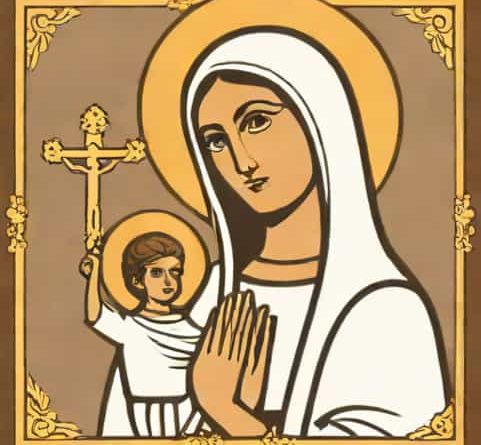
Patroness Of The Living Rosary
Throughout the history of Catholic devotion, the Rosary has remained a powerful spiritual practice that draws the faithful closer to God through meditation on the life of Christ and the intercession of Mary. Among the many devotions connected to the Rosary, the Living Rosary stands out as a communal form of prayer, where participants unite to complete the full set of mysteries together. Central to this devotion is the recognition of Mary as the Patroness of the Living Rosary, a title that reflects her guiding role in leading believers to Christ. This topic explores the meaning of this title, the history of the Living Rosary, and the spiritual significance of having the Blessed Virgin Mary as its patroness.
Origins of the Living Rosary
The Living Rosary was founded in the 19th century by Pauline Jaricot, a French laywoman known for her deep spirituality and commitment to missionary work. Her goal was to revive devotion to the Rosary in a time when faith was under pressure in post-revolutionary France. The idea was simple but profound gather groups of fifteen people, each committing to pray one decade of the Rosary daily. Together, the group would form a living Rosary, covering all fifteen mysteries that were part of the Rosary before the Luminous Mysteries were introduced by Pope John Paul II in 2002.
The Mission of Pauline Jaricot
Pauline Jaricot believed that prayer could transform individuals and societies. By organizing people into small groups dedicated to the Rosary, she created a spiritual network that spread devotion, encouraged unity, and supported missionary efforts. The movement grew rapidly, and within a short time, the Living Rosary became a worldwide devotion, sustained by Mary’s role as its heavenly protector and patroness.
Mary as Patroness of the Living Rosary
The title Patroness of the Living Rosary emphasizes Mary’s maternal intercession and her central place in the Rosary itself. Each mystery of the Rosary reflects moments from the lives of Jesus and Mary, making her not only a participant in salvation history but also a model for all believers.
Spiritual Meaning of Patroness
In Catholic tradition, a patroness is a heavenly advocate who offers protection, guidance, and prayers before God on behalf of those devoted to her. By invoking Mary as the Patroness of the Living Rosary, the faithful acknowledge her role as Mother of the Church and as the one who continually points to her Son, Jesus Christ.
Mary’s Role in the Mysteries
The Rosary’s structure highlights Mary’s presence at key events of salvation history
- In the Joyful Mysteries, she receives the Annunciation and nurtures the child Jesus.
- In the Sorrowful Mysteries, she shares in Christ’s suffering and stands at the foot of the Cross.
- In the Glorious Mysteries, she participates in the triumph of the Resurrection and is assumed into heaven.
- In the Luminous Mysteries, her guidance at the Wedding at Cana shows her ongoing intercession.
Her intimate connection with these mysteries explains why she is rightly called the Patroness of this devotion.
The Communal Dimension of the Living Rosary
The Living Rosary is more than an individual act of prayer; it is a shared devotion that brings people together. When each participant prays their decade, they contribute to the fullness of the Rosary as a collective act of faith. This unity mirrors the communal nature of the Church itself and reflects Mary’s role as a mother who gathers her children in prayer.
Unity Through Prayer
By making the Rosary a shared responsibility, the Living Rosary encourages solidarity among believers. Whether the members are family, parishioners, or international participants, their commitment creates a spiritual chain that links them together under Mary’s patronage.
Missionary Spirit
Pauline Jaricot originally tied the Living Rosary to the missions, with each group of participants supporting evangelization through prayer. The idea was that while missionaries spread the Gospel in distant lands, those at home could support them spiritually by entrusting their work to Mary, Patroness of the Living Rosary.
The Spiritual Benefits of the Living Rosary
Those who participate in the Living Rosary and invoke Mary as patroness discover many spiritual fruits that flow from this devotion.
- Deeper Connection with ChristBy meditating on the mysteries, participants reflect more deeply on the life of Jesus and His sacrifice.
- Stronger Marian DevotionSeeing Mary as Patroness fosters a closer relationship with her as a spiritual mother.
- Growth in CommunityThe shared responsibility strengthens ties among participants and encourages accountability in prayer.
- Support for MissionsThe devotion remains linked to missionary efforts, reminding the faithful of their duty to spread the Gospel.
Mary’s Patronage in Times of Trial
Throughout history, Catholics have turned to Mary in moments of crisis. As Patroness of the Living Rosary, she continues to offer hope and consolation. During times of war, persecution, or personal hardship, communities that practice the Living Rosary find strength in her intercession and protection. The communal prayer becomes not only a spiritual weapon but also a source of peace and trust in God’s providence.
Living Rosary in Modern Times
Although centuries have passed since its founding, the Living Rosary remains relevant today. With the challenges of modern life, many believers find comfort in uniting through prayer. Technology now allows groups to organize Living Rosaries across continents, showing that this devotion continues to evolve while preserving its essence.
Digital Communities
Parishes, schools, and online groups form virtual Living Rosaries, connecting people who might never meet in person. This global expansion reflects the universal mission of the Church and Mary’s role as Patroness of all believers.
Youth and the Rosary
The Living Rosary has also found a place among young Catholics, who are encouraged to embrace it as a way of deepening their faith. By participating, they not only grow spiritually but also keep alive a devotion that has shaped Catholic identity for generations.
How to Participate in a Living Rosary
Joining a Living Rosary is simple, yet spiritually rewarding. Typically, a group of twenty participants is formed, each assigned one decade of the Rosary. Together, the group completes the full set of mysteries daily. Some groups include more members to ensure broader participation, while others focus on smaller circles, such as families or local parish groups.
- Find or form a group committed to the Living Rosary.
- Accept responsibility for one decade each day.
- Pray faithfully, uniting your intentions with the group.
- Entrust your prayers to Mary, the Patroness of the Living Rosary, for guidance and intercession.
The devotion of the Living Rosary is a powerful reminder of the importance of prayer, community, and missionary spirit in the Catholic faith. With Mary as the Patroness of the Living Rosary, participants are assured of her maternal guidance and intercession as they meditate on the mysteries of Christ’s life. What began with Pauline Jaricot’s vision has grown into a worldwide devotion, uniting millions of believers under the mantle of the Blessed Virgin. By embracing this practice, Catholics continue to draw closer to Christ, strengthen their spiritual lives, and live out their mission as members of the global Church.